Few cities manage to pair steady economic output with a high quality of daily life. Utrecht stands out as a mid-sized Dutch city gaining global attention for its urban results. It shows how economic strength can align with livability and reliable mobility. Its central location connects major regions and supports its role as a national hub.
This article takes a closer look at how Utrecht functions across key urban areas and daily systems. It reviews patterns in housing, transport use, economic activity, and public space. The focus stays on how these elements work together in practice, shaping a city that performs with consistency and clarity at a manageable scale.
History shaping a walkable city

The urban form of Utrecht reflects a long history that still shapes how people move and use space today.
- Roman settlement origins
- Medieval religious center
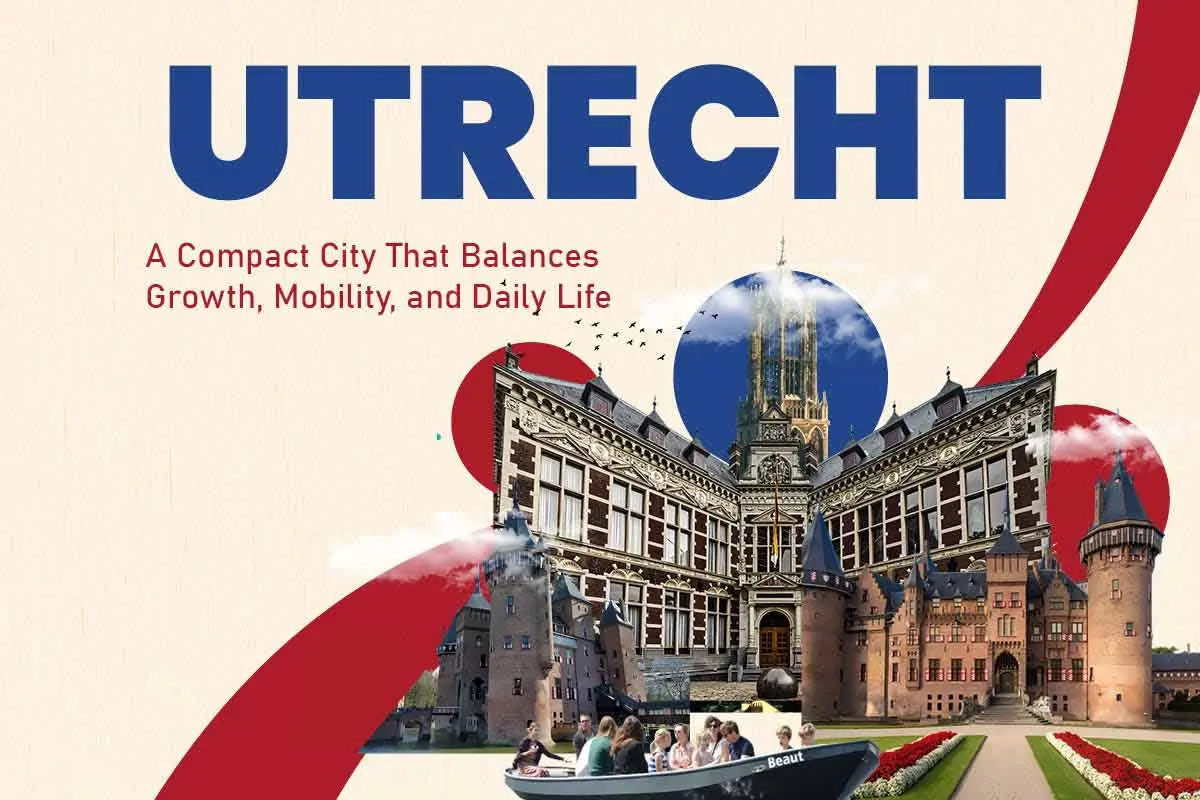
- The Dom Tower is a key landmark
- Preserved medieval core
- Canal system with wharf cellars
These elements create a compact city layout with short travel distances and clear street patterns. The historic core supports walking and cycling through narrow streets and active public spaces. The canal edges add ground-level activity and access. This structure supports daily movement without long travel, keeping the city easy to navigate and efficient for residents.
At the center of every journey
Utrecht sits at the geographic center of the Netherlands, giving it a strong national position. This location makes it a key rail and road hub, linking major routes across the country. Fast train connections reach cities like Amsterdam, Rotterdam, and The Hague within short travel times.
Reliable access supports business activity and daily commuting, making movement simple for residents and workers. The network reduces friction in travel and helps firms operate with efficiency. Central access also improves service reach and supports consistent urban function across sectors. This adds daily convenience.
Pedaling value into the city
Utrecht ranks among the world’s leading cycling cities, with high daily use across all age groups.
- Daily Use: Cycling handles a large share of trips, especially for short distances within the city.
- Economic Value: Estimates place annual cycling benefits in the hundreds of millions of euros through cost savings.
- Health Impact: Regular cycling lowers healthcare costs and supports an active population.
- Mobility Efficiency: Bike lanes and large parking hubs, such as those at Utrecht Centraal, bicycle parking, reduce congestion and improve flow.
- Urban Outcome: These habits support efficient movement and improve daily life quality across the city.
Together, these outcomes show how everyday cycling supports a more efficient and livable urban system.
Key sectors supporting a stable economy

A clear mix of sectors and strong institutional links supports steady economic activity in Utrecht.
| Category | Key Points |
| Core Sectors | Life sciences, information technology, creative industries |
| Talent and Research | Utrecht University supplies skilled graduates and supports applied research for firms and startups |
| Collaboration Model | Academic institutions, public bodies, and private companies support economic activity and knowledge exchange |
| Spaces for Growth | Business districts and innovation hubs provide space to test ideas and expand |
| Why Firms Choose the Region | Central location, reliable infrastructure, access to a skilled workforce |
This structure keeps the economy stable, competitive, and ready for long-term growth.
Research powering growth
Utrecht Science Park plays a central role in research and development within Utrecht, supporting high-value work across key sectors. Its main focus areas include health sciences and sustainability, which guide ongoing research and funding. The park operates through close partnerships between academic institutions, healthcare providers, and private firms, allowing shared knowledge and practical application.
This setup supports applied research and steady output. It contributes to regional growth through job creation, investment inflow, and consistent innovation, making it an important part of the metropolitan economy.
Stable ground for business growth
Utrecht offers a stable business environment that attracts international companies seeking reliability and efficiency. Clear regulations, strong infrastructure, and access to skilled talent support business operations. The city provides support services that help foreign firms set up and integrate into the local market.
Consistent economic performance and strong rankings add to investor confidence. Compared to larger cities such as Amsterdam, Utrecht offers lower costs and less congestion. This allows firms to operate with greater efficiency while maintaining access to major markets and networks.
Balancing livability and sustainability
A clear focus on daily comfort and sustainable planning shapes how people live in Utrecht.
Daily life
Utrecht ranks as a highly livable European city with strong access to healthcare, education, and everyday amenities. Costs remain more manageable compared to larger cities such as Amsterdam, making it practical for a wider range of residents. Short travel times across the city support daily convenience and reduce dependence on long commutes. A compact form allows higher density while maintaining access to green spaces, which supports comfort and balance in daily life.
Sustainable approach
Urban planning focuses on sustainable mobility and efficient energy use across the city. Policies support emission reduction through public transport, cycling, and compact development. Mixed-use areas allow people to live, work, and access services within a short distance. Climate adaptation measures address water management and heat resilience, ensuring the city remains functional under changing conditions.
These choices create a city that supports both everyday comfort and long-term resilience.
Historic charm with steady tourism

Utrecht offers a strong cultural identity shaped by history, public spaces, and local activity.
- Museums and galleries present art, history, and design.
- Festivals and events bring regular cultural activity throughout the year.
- Canal-side spaces create active areas for dining and walking.
- Historic features such as the Dom Tower add visual identity.
- Local markets and small venues offer everyday experiences for visitors.
Tourism remains steady and well-managed, allowing the city to host visitors while maintaining daily life for residents.
Trade-offs in a compact city

A closer look at current pressures and comparisons shows how Utrecht manages limits while maintaining its advantages.
| Challenges in utrecht | How it compares with larger cities |
| Rising housing demand affects affordability across Utrecht | Lower costs than Amsterdam make daily living more manageable |
| Congestion appears during peak hours despite strong transport systems | Less crowding allows smoother daily movement |
| Growth creates pressure on historic areas and urban form | Smaller scale supports a better balance between use and preservation |
| Competition for skilled talent and investment remains steady | Offers a stable alternative with easier access to jobs and services |
These contrasts show how Utrecht sustains a balanced position despite ongoing urban pressures.
Closing insight
Utrecht shows how a mid-sized city can deliver strong economic output with high daily comfort. Its compact form, central location, and focus on mobility support efficient movement and steady activity. Research, skilled talent, and sector diversity keep the economy stable.
At the same time, planning choices support livability and sustainability. While challenges remain, the city presents a clear model of balanced urban performance that other cities can study and adapt.