You recently came back from a foreign country with a new straightener, some type of coffee machine, or maybe even an online game console that you would not have had on the market at home. It is used upon arrival. 10 seconds later, and you have a spark, a little puff of smoke, and a really pricey paperweight on your counter.
This happens more than people admit. It’s not a defect. It’s not bad luck. It’s voltage.
Different countries use different voltage standards, and most people never think about it until something they own gets fried. The fix is a small box called a voltage converter, and once you understand what it actually does, you’ll wonder why it isn’t packed in the box with every appliance you buy from another country.
Why this keeps happening to people
The world does not have a common standard of electricity. Most of South America, the US, and Canada are 110-120V. It does use the standard voltage of 220-240V in most other parts of Europe, Asia, Africa, and Australia.
If you plug a 120 volt appliance into a 240 volt outlet, it’s equivalent to 2 times the voltage being put through the appliance.
Then you need to do that, and it should be the internal circuit.
This is the actual appearance in the real world:
Here’s how that plays out in daily life:
| Situation | What Goes Wrong Without a Converter |
| Bringing a US hair dryer to Europe | The motor burns out in seconds. |
| Using a UK kettle in the US | The kettle heats too slowly or trips the breaker. |
| Setting up a Japanese gaming console abroad | The console overheats or shuts down. |
| Running US medical equipment overseas | The device fails when you need it most. |
| Shipping factory equipment between regions | Motors run at the wrong speed and wear out fast. |
All of these are non-exceptional. They occur when businesses import equipment, travelers, students studying abroad, and expats establish a new home. This is a problem that one encounters when moving between voltage zones.
So what does a voltage converter actually do?
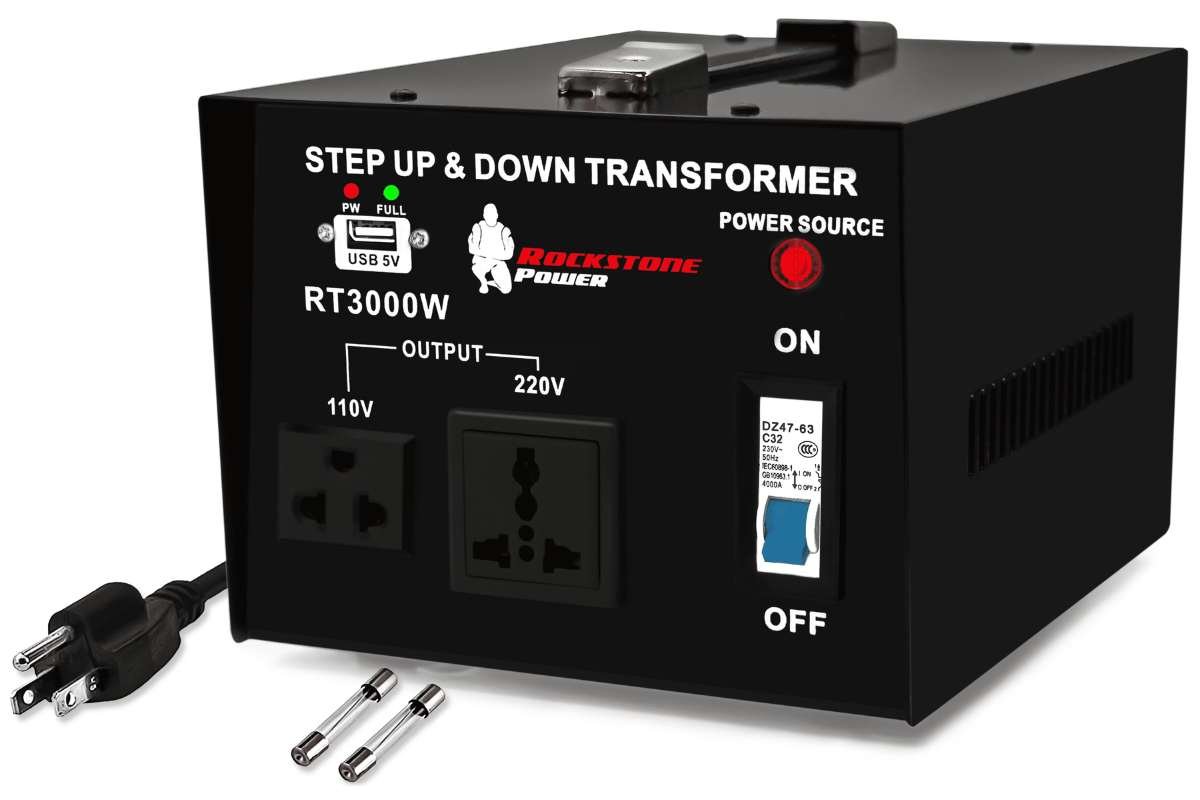
It’s like having a translator between two people who speak different “electrical languages.” The voltage your appliance requires is 120V. The wall outlet is a 240V outlet. The converter is placed in the middle and takes care of the power adjustments between the two parties.
This can go two ways:
- Step-down transformers convert higher voltage (e.g., 240V) to a lower voltage (e.g., 120V) suitable for a device designed for the lower voltage. This is the type of item many travelers require when they export US or Japanese electronics to Europe, Asia, or Africa.
- Step-up converters work in reverse and convert 120V to 240V for 240V devices. This is important when moving expats from Europe to North America with European appliances.
There are some converters that can be used in reverse, and they are referred to as step up/step down converters. These are not “dual voltage” appliances. A dual voltage appliance can be used with either voltage alone, and a converter changes the voltage from one voltage to a single voltage appliance.
Check the appliance label first
If it states “100-240V, 50/60Hz,” it means that it can be used in common voltage systems. If that’s the case, the plug adapter is generally only necessary when the plug does not fit into the local plug.
If it states any of the following, “120V” or “220 – 240V,” then it is a “Single Voltage” device and may require a converter when used in a country with a different supply voltage.
It is a useful test to save you from purchasing an unnecessary converter.
It’s not just about travel
The majority of people think the only time to use a voltage converter is when a tourist wants to use a hair dryer. In fact, they are in many more locations than these.
1. Remote work setups.
Many people today work for companies in another country, and end up having to send equipment, such as voltage monitors, special keyboards, or lab equipment that is designed for a different voltage than the outlet in their home country.
2. Home studios and creators.
Musicians and video editors will import gear such as synthesizers, amps, or lighting rigs, the areas where the best deals or rare models can be found, whether from the US or Japan. That $800 synth is a very costly shelf ornament if it doesn’t have the right converter.
3. Medical and mobility devices.
CPAP machines, powered wheelchairs, and nebulizers are frequently imported from other countries. Not only is it expensive, but it can be dangerous to get the voltage wrong on a medical device. When using medical equipment, always refer to the voltage, frequency, and power requirements as specified by the manufacturer, and never use a generic converter recommendation.
4. Small businesses and workshops.
A workshop purchasing second-hand power tools from an auction in another country, a bakery ordering a mixer from the USA, or a tailor importing an industrial sewing machine all face the same voltage problem.
5. Gamers and collectors.
Retro consoles, imported arcade cabinets, and region-specific electronics are becoming a pastime, and out-of-the-box voltage compatibility is almost non-existent.
The common denominator: more and more frequently, people are purchasing, traveling, and working across borders, and voltage mismatches are no longer an inconvenience. They’re a common occurrence of owning modern electronics.
How to pick the right voltage converter
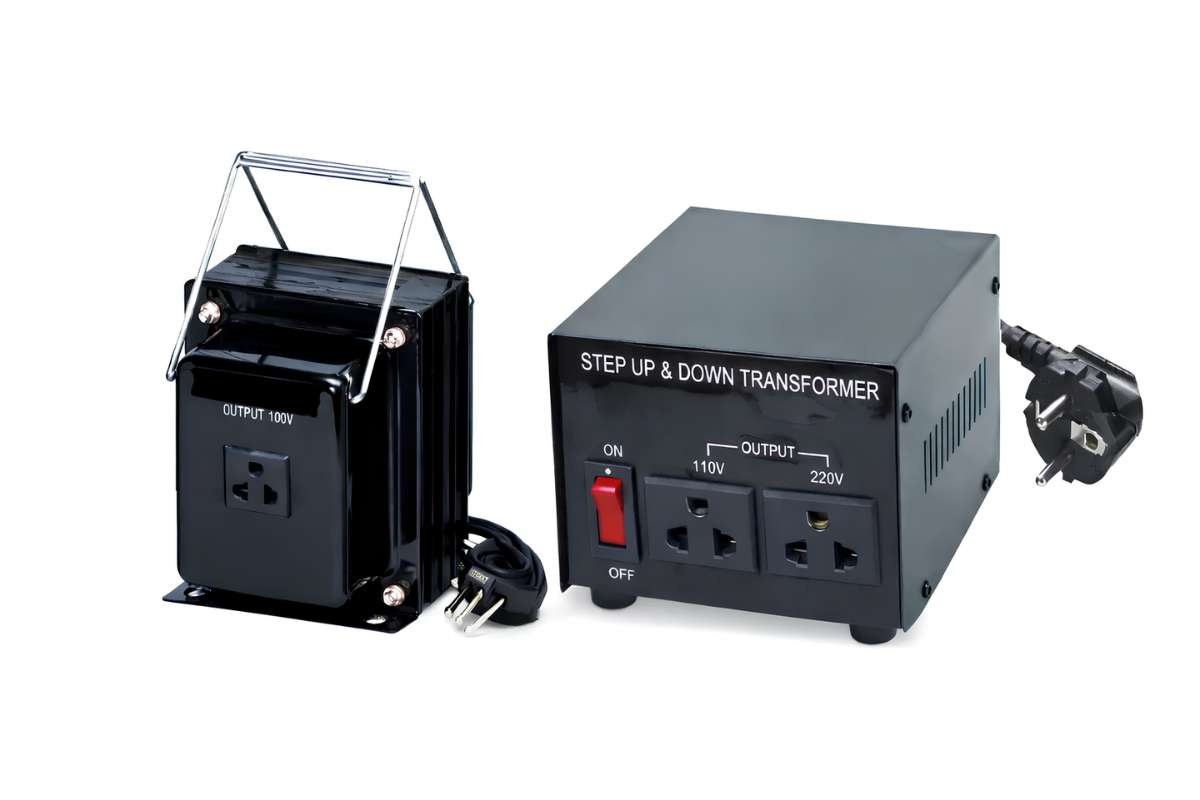
This is where many people fail to understand. They purchase solar products because it has the lowest price, set up a high-power device with high power, and still burn it out, simply because the converter was not rated for the high-power device.
The wattage is what’s most important. Each converter comes with a top wattage capacity, and the wattage of your appliance should be slightly below the wattage of the converter.
A simple test to do:
- Look on the label or manual (usually near the plug or on the base) to determine the wattage.
- If it indicates both the amps and volts, then multiply them (Amps x Volts = Watts).
- Select a converter that has a wattage rating that is well higher than the usual power consumption of your appliance. If you’re using something like a 1500W hair dryer, then a converter around 2000W or larger will provide you with some headroom.
- If you have any motor or compressor equipment, fridges, pumps, or power tools, then there is extra capacity in the startup surge, as these can use more power when they are switched on.
A quick reference for common devices:
| Device | Typical Wattage | Converter Size to Look For |
| Phone charger | 5 – 20W | Any small converter |
| Laptop | 45 – 90W | 150W+ |
| Hair dryer | 1200 – 1800W | 2000W+ |
| Electric kettle | 1000 – 1500W | 1800W+ |
| Microwave | 700 – 1200W | 1500W+ |
| Mini fridge | 100 – 150W (running), higher on startup | 500W+ |
| Power tool (drill, saw) | 500 – 1500W | 2000W+ |
Why choose the right voltage converter?
The best voltage converter is more than just a voltage transformer. The equipment model choice must meet the power requirements of the appliance, have sufficient capacity to ensure safe use, and be able to meet the needs of the device used.
For those who travel, home users, or businesses using imported equipment, using the right converter can safeguard costly electronics and prevent the need for expensive replacements.
Voltage converters are available in different power options for a wide range of appliances and equipment. This makes it easier to find a model that matches your device’s voltage and wattage requirements. Before choosing a converter, check your appliance’s voltage, frequency, and wattage, then select a model designed to handle those requirements.
Mistakes that actually fry devices
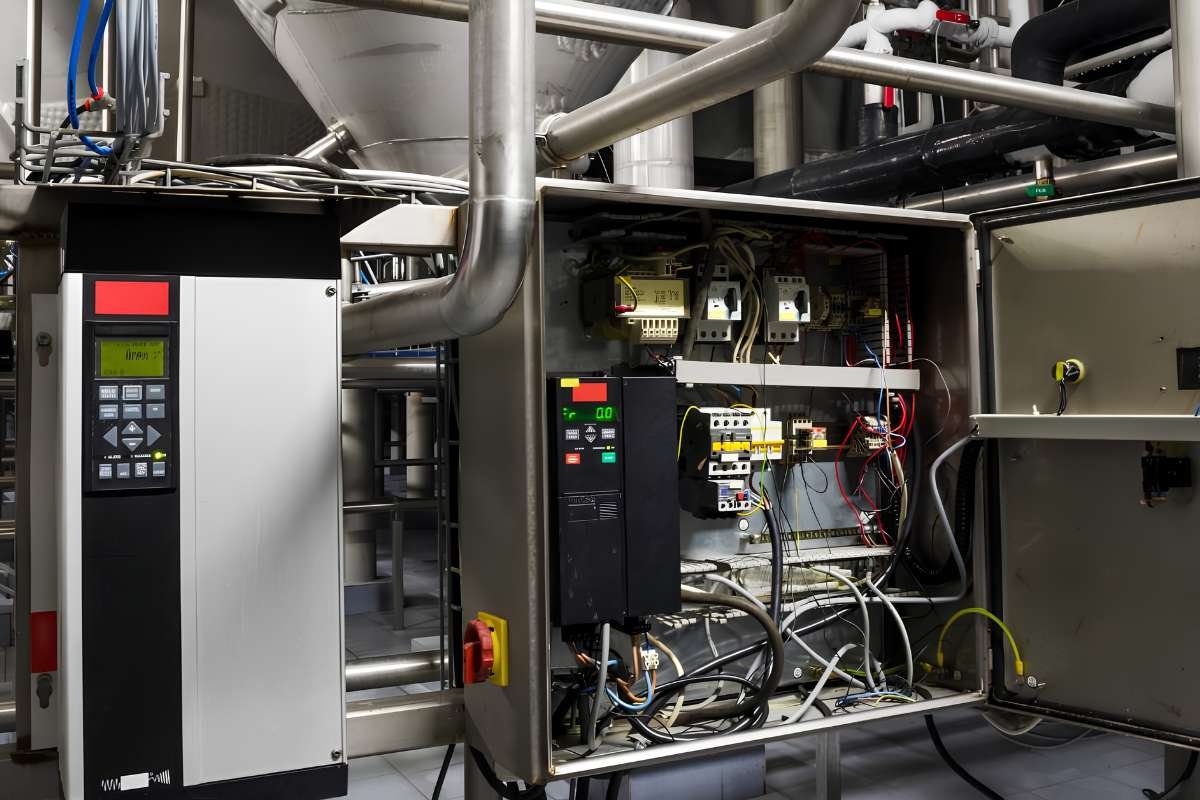
A converter doesn’t guarantee safety by itself. Most burnouts occur as a result of one of a few easily avoidable errors:
- Ignoring the frequency. Voltage isn’t the only difference between countries.50 Hz is commonly used in many countries in Europe and Asia, and 60 Hz is common in the U.S. Certain frequency-sensitive equipment like motors, compressors, clocks, and others might not work on another frequency.
- The power to start up is undersized. Any machine with a motor or compressor will be able to extract an additional amount of power for a brief time when it comes on. The running wattage might be insufficient for that “just barely” converter.
- Using a low-cost converter for sensitive electronic equipment. Simple converters do not necessarily provide clean or stable electricity. Converters for electronics work better with laptops, cameras, and audio equipment than appliances. If unsure, use the equipment manufacturer’s specifications.
- All countries in a region are assumed to be equal. The plug shape, voltage, and frequency are different in various countries of Europe and Asia. Don’t assume that it is “Europe” or “Asia” in general, but rather the specific country.
- Leaving it running unattended. Converters produce heat when they’re under load. Units that are low on cost or are overloaded and kept running for hours, particularly when high-wattage items are on, can be a fire hazard when not monitored.
A simple checklist before you buy
- Make sure that your appliance is already dual-voltage (e.g., 100-240V).
- Check the actual power use of your appliance, not an estimated power use
- Verify the voltage and frequency of the country that you are traveling to.
- Select the converter that has enough power for the usual operating power of the appliance.
- Regarding electronics, see the manufacturer’s voltage and frequency specifications
- If a motor or compressor is involved, allow for additional capacity for motor starting surge
- Testing the plugs on their own converting voltage does not change the type of plug.
Are you using the right voltage converter?
The correct voltage converter is not just a matter of numbers. When purchasing one, make sure you have the correct voltage, frequency, and wattage for your appliance of choice, and make sure that the appliance is already dual voltage. The converter’s ability to deliver power should also be taken into account, particularly if appliances are the ones being integrated with motors, compressors, or any other equipment that requires additional power when starting.
These checks can help to avoid overheating, electrical damage, poor performance, and replacing an imported appliance. It’s worth taking some time to get to know your appliance’s power requirements to make a much safer and appropriate choice of converter.
When it’s time to select a voltage converter, make sure to check the voltage and wattage capacity and other details before buying. Opt for a converter that is compatible with your appliance and provides the power the appliance requires.
Don’t simply match the volts; select the appropriate converter for the job.