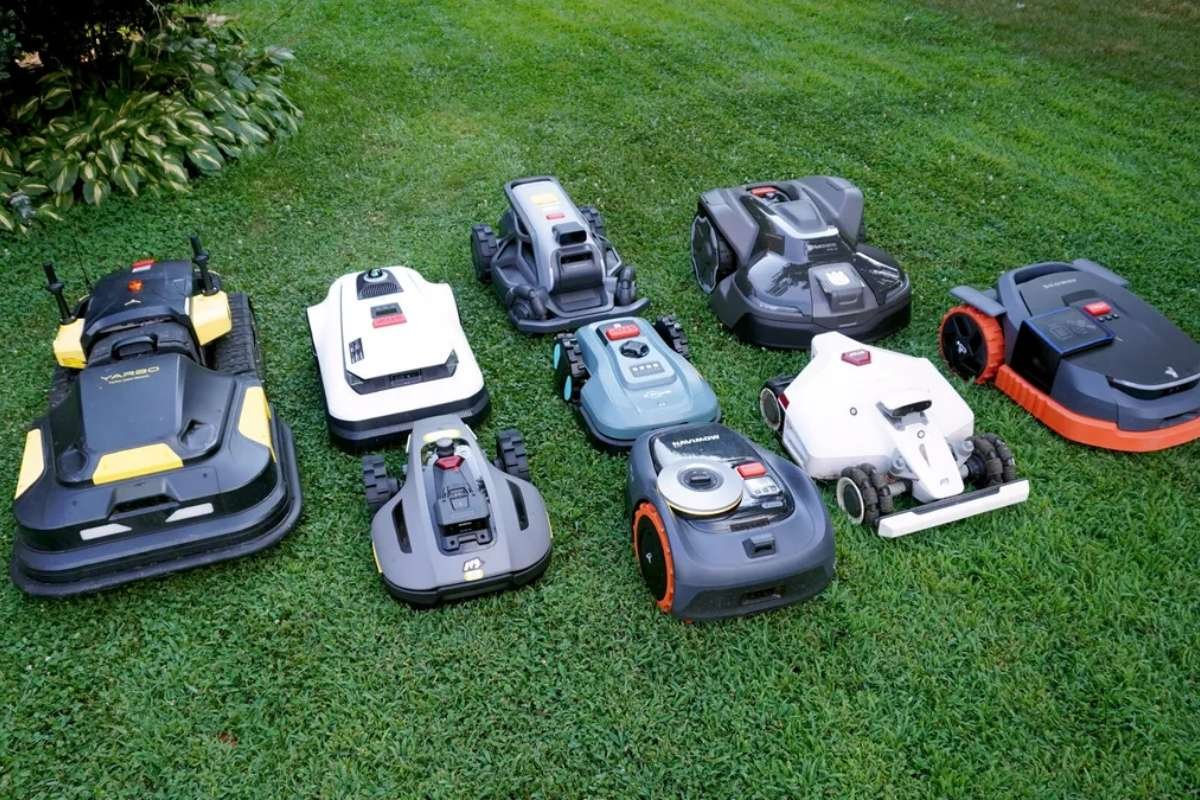
At 06:17, something activated in my yard without any human presence.
A low-profile machine detached itself from its charging dock, established satellite lock, verified perimeter boundaries, and began executing a task loop. It adjusted its route after detecting a fallen branch. It rerouted when a bird crossed its path. It corrected its blade height after sensing moisture in the soil.
I wasn’t mowing the lawn anymore.
The lawn was being maintained by an autonomous system.
These are the Best Robot Lawn Mowers of 2026 that map territory, avoid hazards, and refine behavior over time, exactly like the autonomous units we once only saw in near-future science fiction.
The difference? These robots aren’t patrolling Mars or guarding a dystopian city.
They’re deployed in backyards, executing precision maintenance while humans sleep, work, or forget the task exists at all.
This guide ranks the Best Robot Lawn Mowers not by hype, but by intelligence, autonomy, and real-world performance. What follows is an evaluation of which machines actually behave like autonomous agents and which still need babysitting.
Tech to Know Before You Buy One
Under the hood, navigation tech is what separates a smart mower from a confused one.
- RTK GPS: RTK-enabled mowers use correction signals to map lawns with near-centimeter accuracy. Think of it as satellite-level precision that lets the robot remember exact boundaries, routes, and no-go zones, ideal for complex or expansive yards.
- LiDAR & Vision Systems: LiDAR creates a 3D map of the yard, helping robots detect obstacles early and reroute smoothly. Vision-based systems rely on cameras and AI to recognize edges and objects, reducing the need for boundary wires. They’re simpler to deploy but can struggle in irregular layouts or low-contrast environments.
- All-Wheel Drive vs. Standard Wheels: AWD models behave like terrain vehicles, gripping slopes, bumps, and uneven ground with confidence. Standard wheel systems work well on flatter lawns but may lose traction on inclines or wet grass.
Choosing the right “brain” ensures your mower acts like a strategist, not a wanderer.
Criteria Used to Rank the Robot Lawn Mowers
To rank the Best Robot Lawn Mowers, we focused on how each machine thinks, not how loudly it advertises features. Every model ran in real yards over multiple weeks, across uneven terrain, curves, slopes, and imperfect edges, because lawns don’t behave like diagrams.
The rankings reflect five core criteria that determine real-world intelligence and reliability.
Navigation & Mapping Intelligence: Evaluated how each mower understands space and boundaries:
- RTK GPS systems for centimeter-level precision
- LiDAR or camera-based vision for obstacle detection without wires
Coverage & Efficiency: Each robot earned its place based on how efficiently it worked, not how fast it moved:
- Area covered per charge, from compact lawns to properties over one acre
- Obstacle avoidance accuracy and recovery behavior
- Performance on slopes, curves, and uneven terrain
Smart Controls & User Experience: Best robot lawn mowers need a smart interface:
- App-based scheduling and remote control
- Ease of setup and calibration
- Software stability and update reliability
Cut Quality & Lawn Consistency: Finally, intelligence had to show on the grass:
- Uniform cutting patterns
- Edge precision
- Mulching quality over time
These criteria shaped the intelligence hierarchy used throughout the rankings, prioritizing machines that operate independently, adapt quickly, and improve with use, rather than those that simply follow instructions.
Top 10 Best Robot Lawn Mowers Ranked by Price (Highest to Lowest)
1. ECOVACS GOAT GX-A2500

Best for: Up to ~1 acre
Why it stands out: Excellent RTK GPS accuracy with auto-mapping and strong coverage.
- Navigation: RTK GPS + sensor fusion
- Slope Handling: ~45%
- Runtime: ~180 minutes
- Cut Height: ~1.2″–2.4″
- Price Tier: ~$2,999
This mower delivers map precision found in premium units without wires or complicated installation. It handles larger areas efficiently and is quieter than traditional mowers. Its path planning and obstacle avoidance give it pro-grade performance.
Best for larger suburban lawns where perimeter wires are impractical.
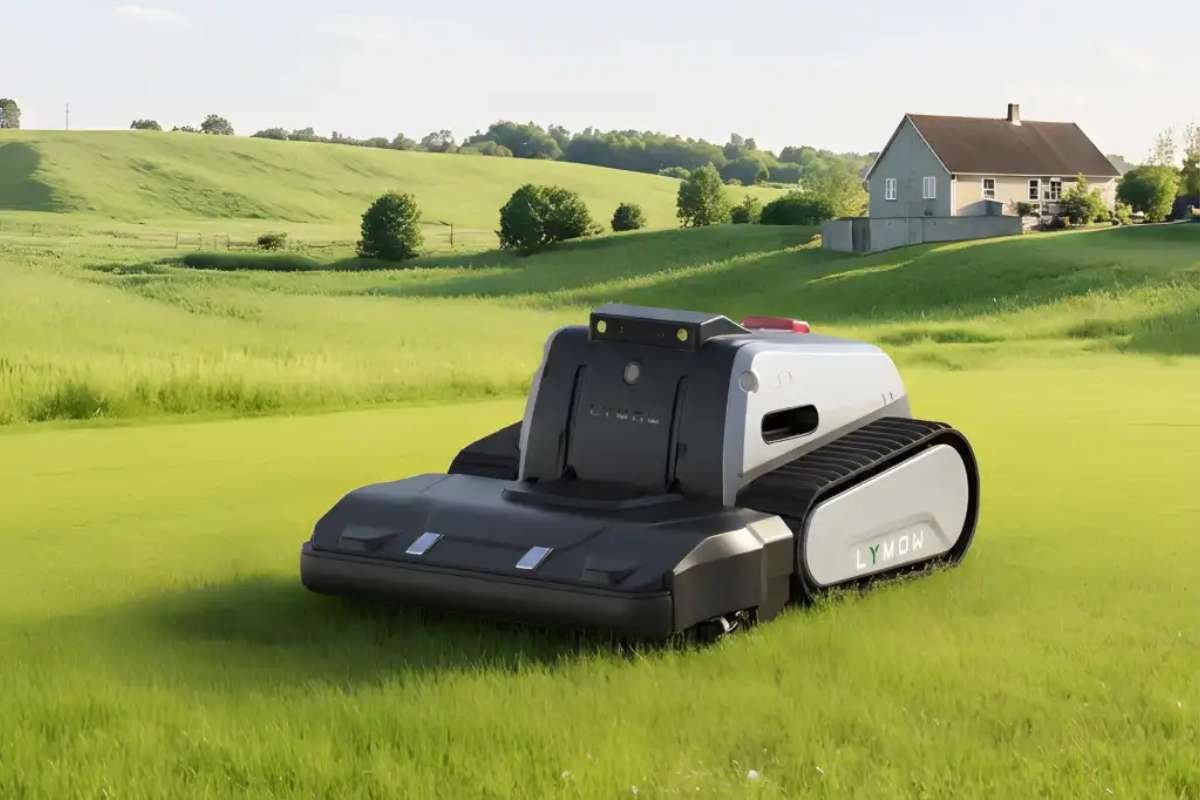
2. Lymow One Plus
Best for: Large lawns and extreme terrain
Why it stands out: Caterpillar tracks, RTK GPS, and raw climbing ability.
- Navigation: RTK GPS + AI
- Max Slope: ~45°
- Coverage: Large lawns
- Drive System: Caterpillar tracks
- Battery: ~15,000 mAh
- Price Tier: $2,999
This machine feels closer to an off-road rover than a mower. Tracks replace wheels, giving it the confidence to handle steep inclines, uneven soil, and terrain that defeats most consumer models. Early reviews focus heavily on its climbing power and stability on rough ground. Among reviewers dealing with slopes and hills, it’s often cited as one of the best robot lawn mowers available for demanding landscapes.
Best choice if your lawn looks more like a hillside than a backyard.
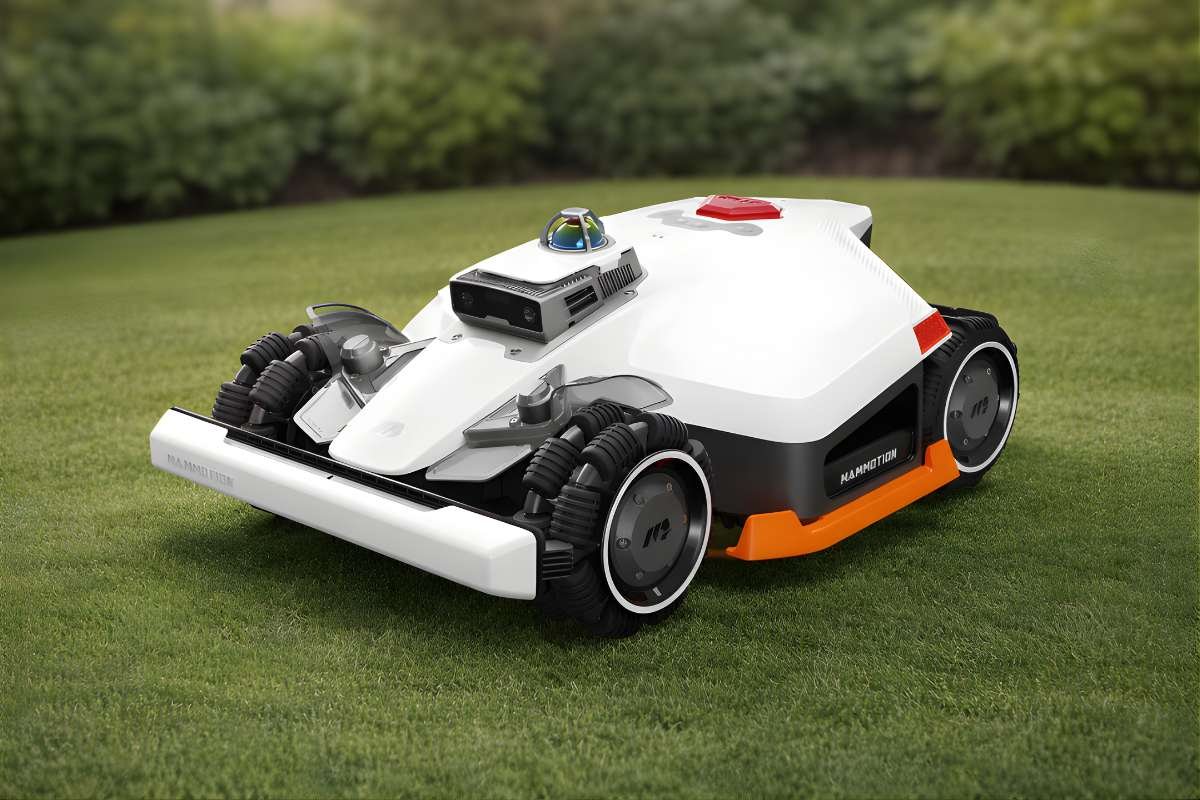
3. Mammotion Luba 3 AWD
Best for: Yards up to ~1.75 acres
Why it stands out: RTK + 3D LiDAR + AI vision with all-wheel drive.
- Navigation: 3D LiDAR + NetRTK + AI vision
- Max Slope: ~80%
- Runtime: ~ 150-180 minutes.
- Cut Width: ~15.8″
- Price: starts at $2,399
This is like a lawn Terminator; muscular, intelligent, and terrain-conquering. The Luba 3 AWD builds a 3D model of your property, detects obstacles (pets, toys, chairs), and handles steep slopes that others struggle with. Dual cameras and advanced AI make it one of the most capable autonomous mowers you can buy.
Best choice for large, irregular, or tech-savvy lawns.
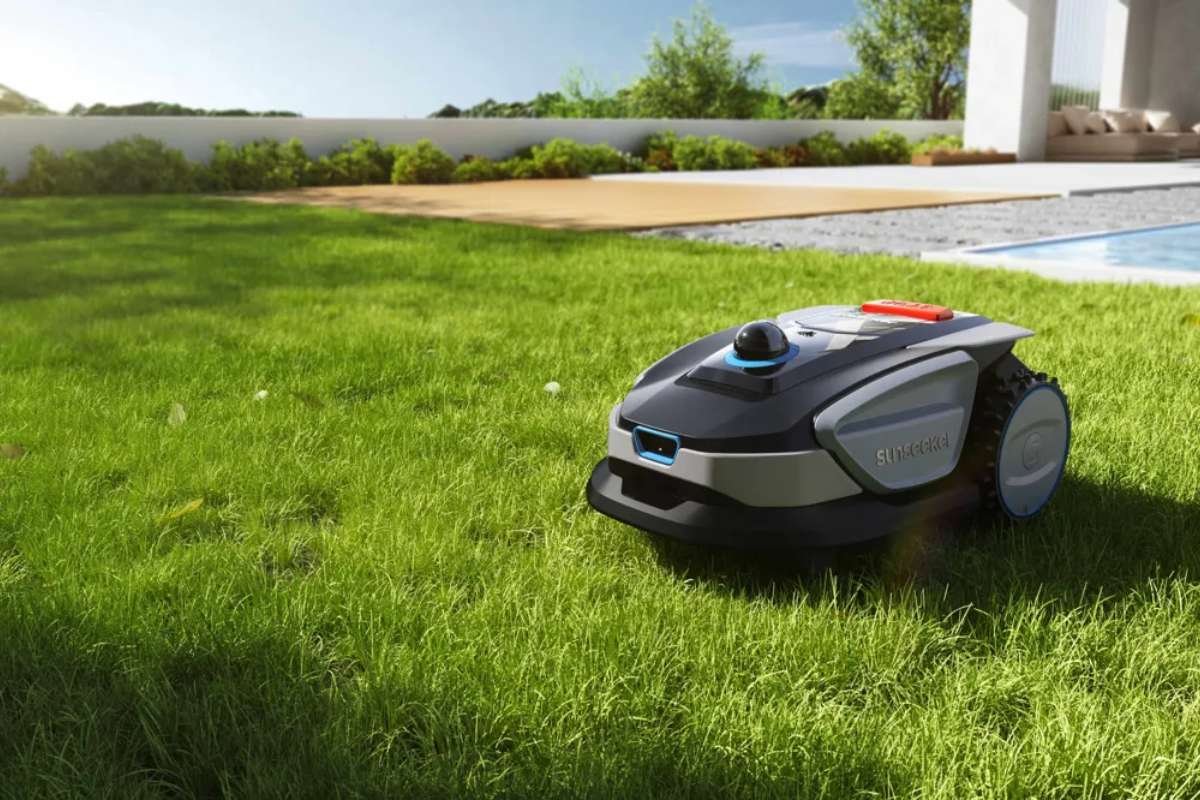
4. Sunseeker S4
Best for: Small yards demanding advanced autonomy
Why it stands out: 3D LiDAR scanning enables precise spatial awareness and zoning.
- Navigation: 3D LiDAR
- Max Slope: ~42%
- Coverage: Up to ~0.25 acres
- Smart Features: Multi-zone customization
- Battery/Runtime: ~90 minutes
- Price Tier: Starts at $2,000
This mower scans your lawn in three dimensions, building an internal model that it continuously refines. Route planning feels deliberate, almost surgical, especially in tight or complex layouts. Reviewers highlight its precision and futuristic navigation style.
Best choice if you want LiDAR-driven intelligence in a compact footprint.
5. Worx Landroid Vision L1300
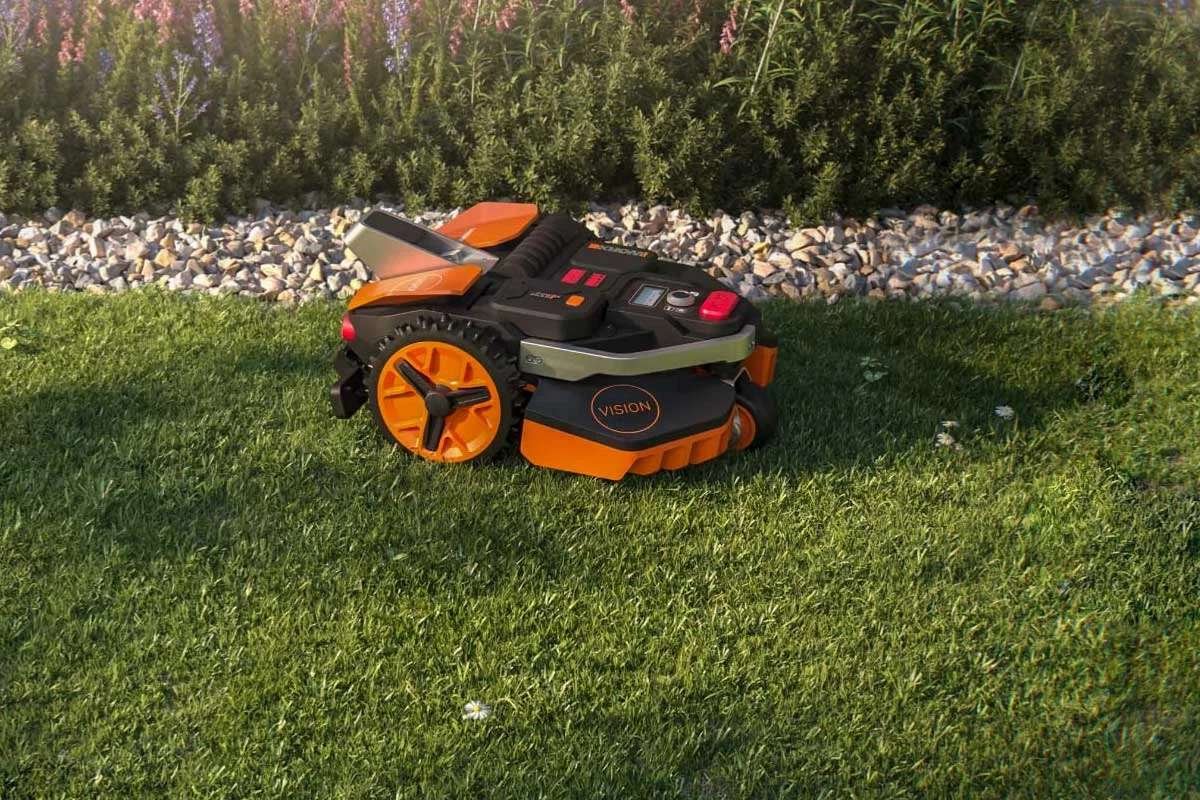
Best for: Medium lawns with minimal setup complexity
Why it stands out: Vision-based AI navigation removes the need for boundary wires or GPS.
- Navigation: HD camera + AI Vision
- Max Slope: ~30%
- Coverage: Up to ~1,300 m²
- Smart Features: Rain delay, self-learning edges
- Battery/Runtime: ~90–120 minutes
- Price Tier: starts at $1,999
If ease of setup defines your idea of the best robot lawn mowers, the Landroid Vision earns its place. This robot doesn’t map your lawn, it observes it. Using an onboard camera, it learns boundaries visually and adapts over time. Firmware updates expand its capabilities without hardware changes, giving it a future-proof feel.
Best choice if you want wire-free mowing without satellite complexity.

6. Greenworks Pro Optimow 50H
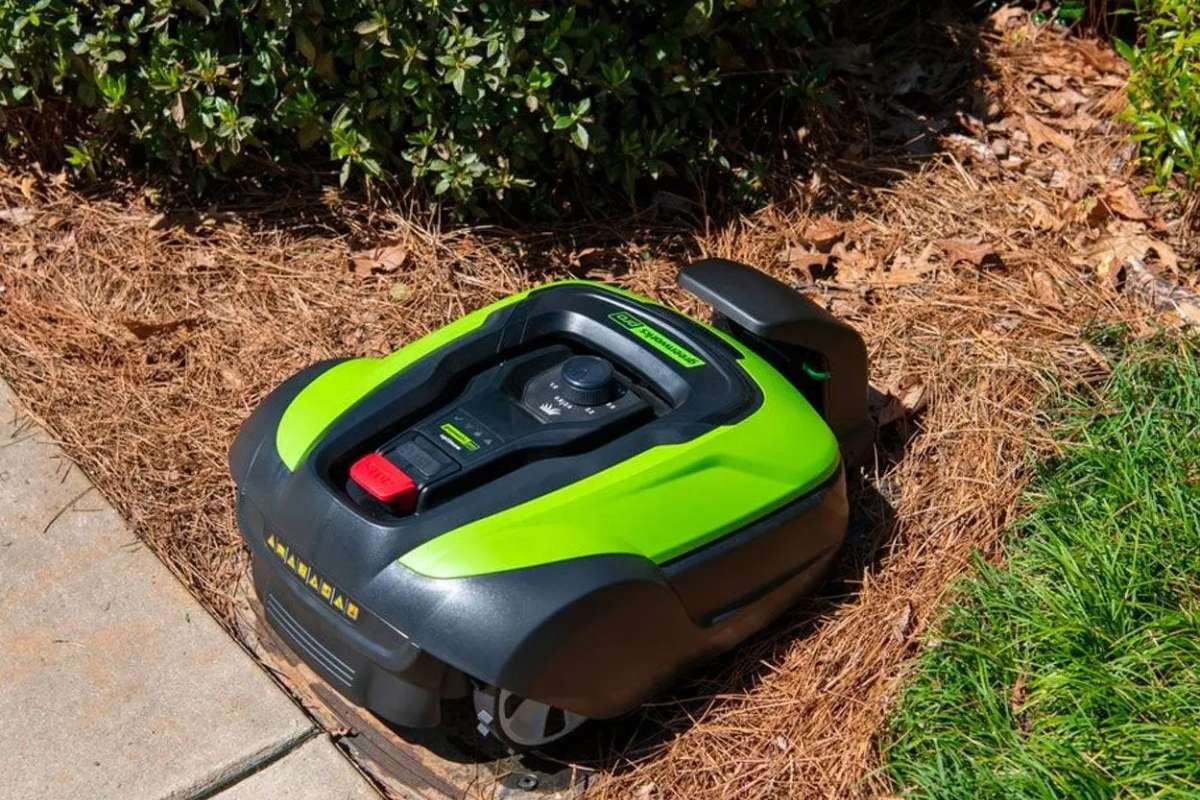
Best for: Medium-sized yards with traditional wired layouts
Why it stands out: Dependable performance and long runtime with a no-nonsense design.
- Navigation: Boundary wire
- Max Slope: ~35%
- Coverage: Up to ~0.5 acres
- Runtime: ~150 minutes
- Noise Level: Very quiet
- Price Tier: $1,599
This mower doesn’t pretend to be futuristic; it focuses on reliability. Once installed, it runs predictably and quietly, with safety sensors that perform well around pets and obstacles. Reviewers appreciate its long runtime and consistent cut quality.
Best choice if you value stability and proven systems over experimental tech.
7. YARBO M Series
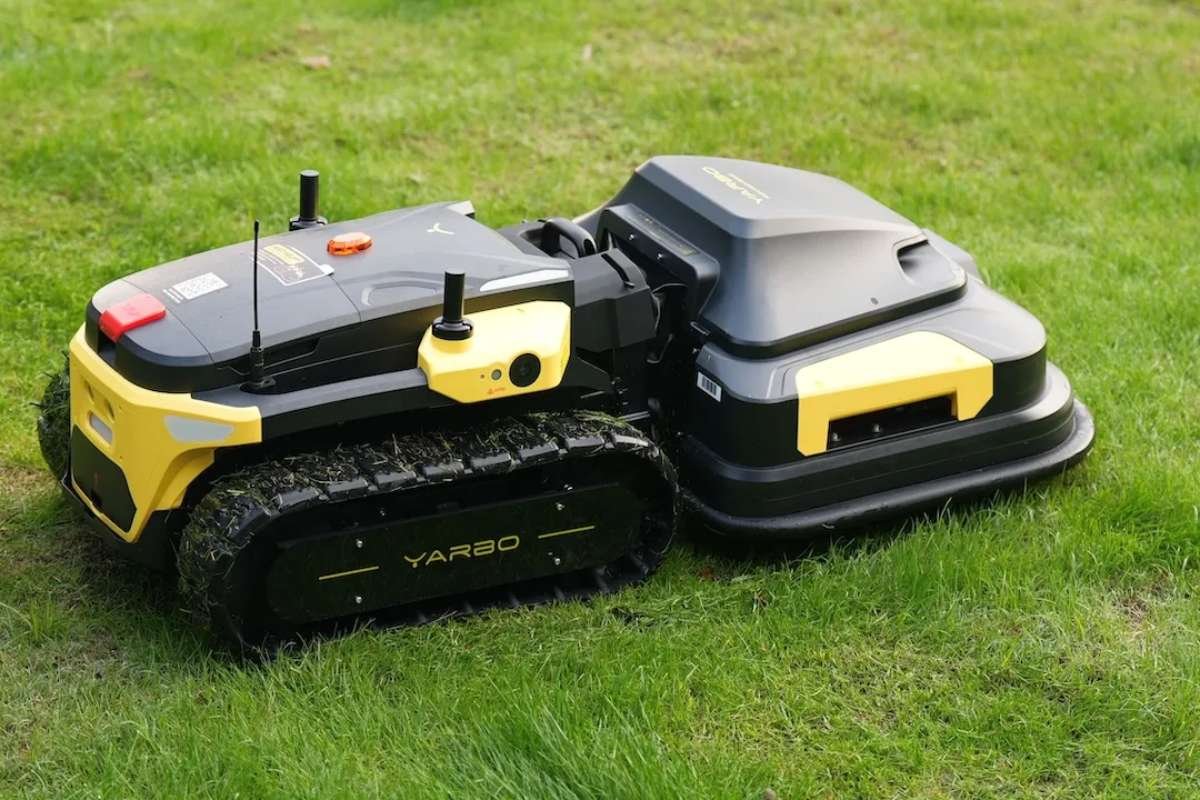
Best for: Users who want more than mowing
Why it stands out: Modular design transforms one robot into multiple yard tools.
- Navigation: Advanced autonomous system
- Max Slope: 70%
- Coverage: Medium to large yards
- Modularity: Mowing, debris clearing, trimming
- Ecosystem: Expandable hardware platform
- Price Tier: starts at $1,099
YARBO treats lawn care as a platform, not a task. Swap attachments and the robot evolves from mower to all-season yard assistant. Reviewers frame it as an investment in automation rather than a single-purpose machine.
Best choice if you want a robot that grows with your property’s needs.
8. Segway Navimow i105N
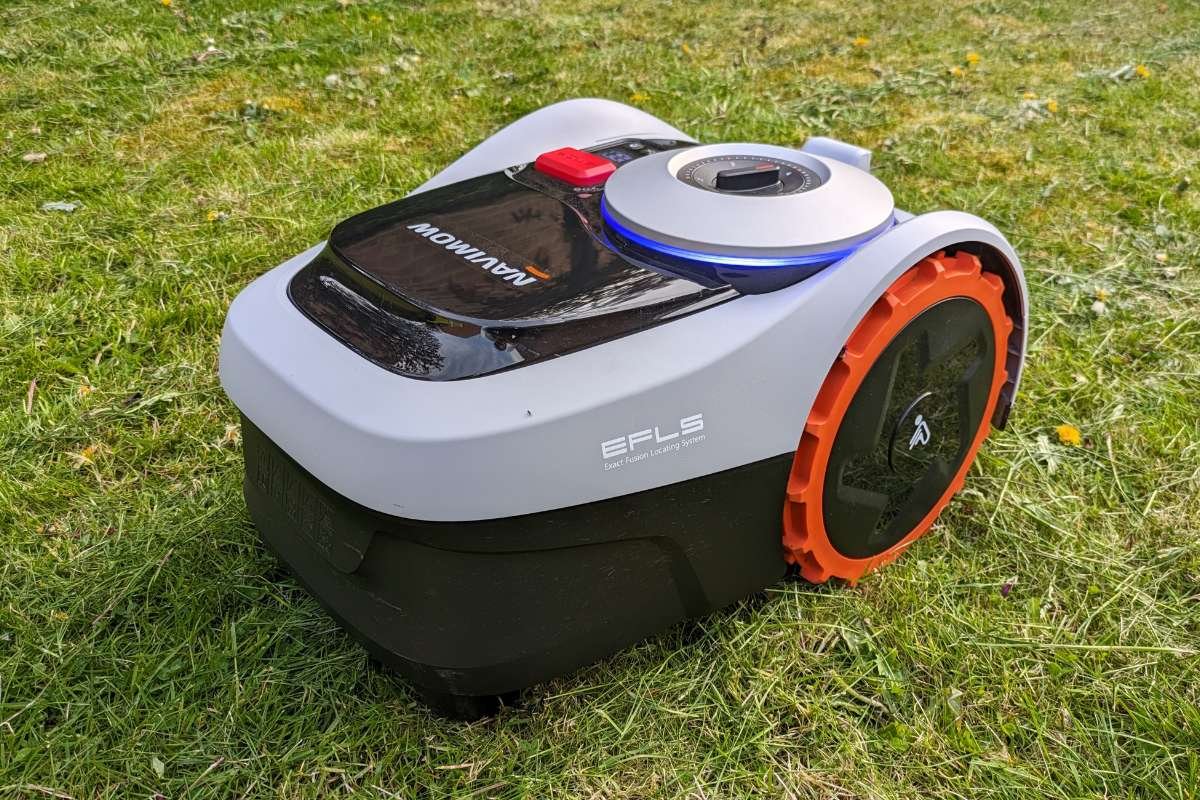
Best for: Small to mid-sized lawns (<0.25 acres)
Why it stands out: Combines RTK GPS with AI vision for wire-free installation and reliable navigation.
- Navigation: RTK GPS + AI Vision
- Max Slope: ~30%
- Coverage: Up to ~0.25 acres
- Battery/Runtime: ~120 minutes
- Cut Height: ~1.2″–2.4″
- Price: $999
Small but highly efficient, this mower navigates confidently around furniture, flower beds, and edges without the need for perimeter wires. Setup is fast, operation is quiet, and performance stays consistent across varied yard layouts. Many reviewers describe it as a benchmark entry point into the best robot lawn mowers category due to its balance of price and autonomy.
Best choice if you want simplicity without sacrificing autonomy.
9. Segway Navimow i2 AWD
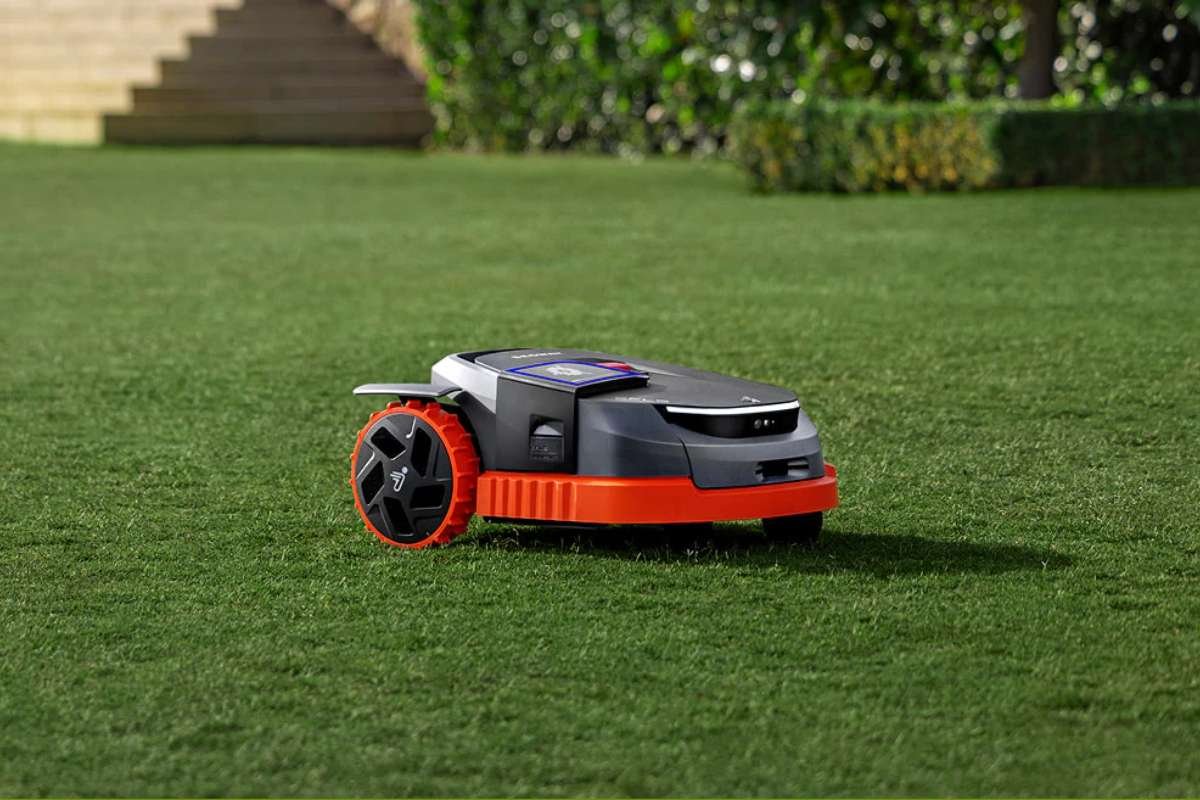
Best for: Small lawns with slopes and tight navigation
Why it stands out: All-wheel drive stability paired with Segway’s Xero-turn precision makes this a rare compact mower that handles difficult terrain confidently.
- Navigation: RTK GPS + AI mapping
- Max Slope: ~45%
- Coverage: Up to ~0.25 acres
- Drive System: AWD with Adaptive Drive
- Battery/Runtime: ~120 minutes
- Price Tier: starts at $999
This mower behaves like a nimble reconnaissance unit that is compact, calculated, and surprisingly capable on slopes where most small robots hesitate. The AWD system gives it confidence on inclines and uneven patches, while Xero-turn technology allows sharp cornering without turf damage. Reviewers consistently highlight its stability and value-to-tech ratio.
Best choice if you want advanced autonomy in a compact, budget-conscious package.
10. Mowro RM24-PRO
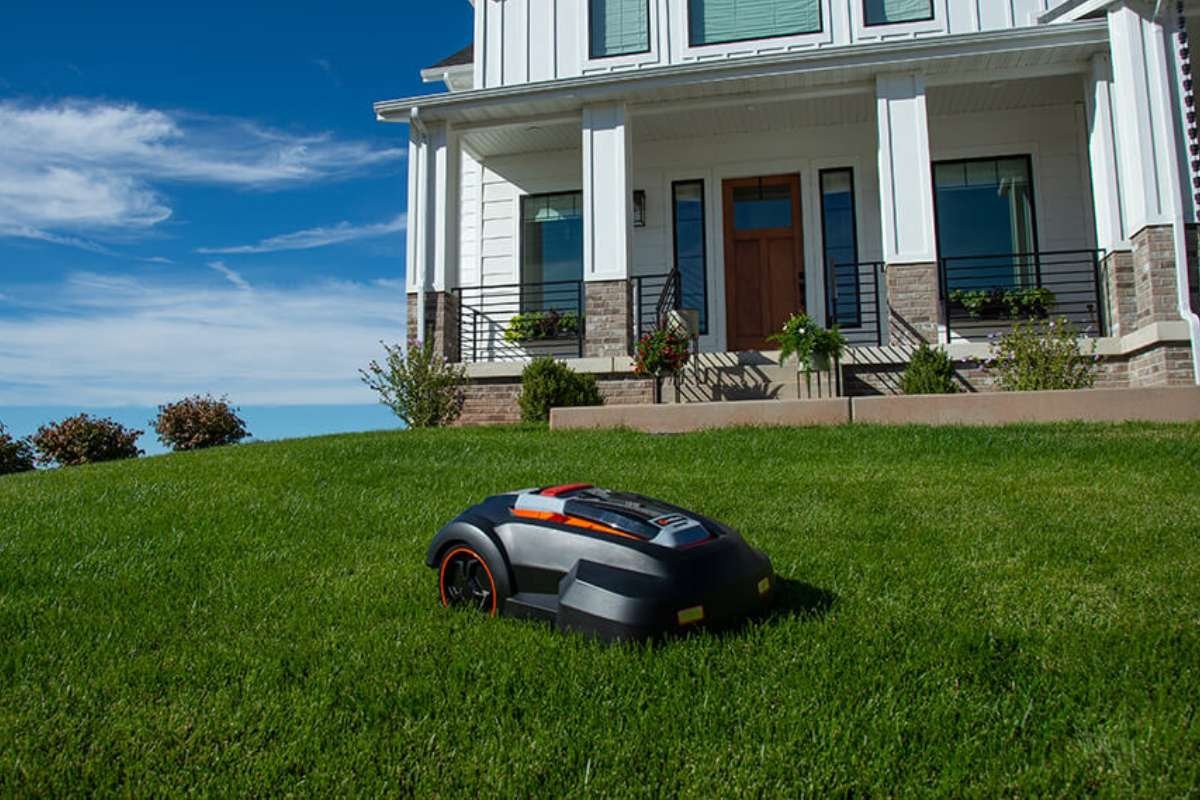
Best for: Medium lawns needing refined obstacle avoidance
Why it stands out: Ultrasonic sensors give it smooth, deliberate movement around obstacles.
- Navigation: Ultrasonic sensors + boundary wire
- Max Slope: ~20°
- Coverage: Medium lawns
- Control: App-based scheduling
- Noise Level: Low
- Price Tier: $649
This mower navigates like it senses space rather than follows lines. Ultrasonic detection allows it to glide around obstacles smoothly, reducing collisions and awkward stops. While it still uses boundary wires, its motion feels more deliberate than reactive.
Best choice if obstacle-heavy yards frustrate traditional wired robots.
Don’t Miss:
- 4 Innovative Ways Businesses Are Boosting Warehouse Robot Efficiency
- The Future of Healing Starts Here: Key Types of Medical Robots to Know
Buyer’s Guide to Best Robot Lawn Mowers
Yard Size Matters More Than You Think
Robot mowers aren’t one-size-fits-all. Coverage limits, battery capacity, and navigation systems scale with lawn size, and choosing the wrong class can mean inefficient cuts or constant recharging.
- Small lawns (<0.25 acres): Segway Navimow i105N, Navimow i2 AWD, Sunseeker S4
- Medium lawns (0.25–0.75 acres): Worx Landroid Vision, Greenworks Optimow, Mowro RM24-PRO
- Large lawns (>0.75 acres): ECOVACS GOAT GX-A2500, Mammotion Luba 3 AWD, Lymow One Plus
Smaller yards benefit from compact, agile units with faster setup, while larger properties demand stronger batteries, smarter mapping, and better slope handling to avoid missed patches.
Real Users, Real Insights
Homeowner feedback highlights where theory meets reality. Many users report that after switching to GPS-based or LiDAR-equipped robot mowers, lawn care becomes almost invisible, with quiet operation, daily trims, and consistently even grass without manual effort. One recurring theme: the mower works so quietly that it’s barely noticeable, even during daytime operation.
However, not all autonomy is equal. Several users caution that camera-only models can struggle with irregular or L-shaped lawns, occasionally missing edges or getting confused by shadows and complex borders. These experiences reinforce why advanced navigation like RTK GPS or LiDAR often justifies the higher price for non-standard yards.
In short, the smarter the tech, the less you have to think about your lawn.
Conclusion
Science fiction never warned us that the takeover would be quiet.
No uprising. No red eyes. No dramatic switch being flipped. Just a machine leaving its dock every morning, maintaining order, and returning without needing acknowledgment. That’s what the Best Robot Lawn Mowers of 2026 represent, not rebellion, but delegation perfected.
After testing these systems, one thing became undeniable: autonomy works best when you stop noticing it. The smartest mowers don’t announce themselves. They don’t need supervision. They don’t require intervention. They operate like background processes, solving spatial problems, adapting to terrain, and maintaining precision without human input.
This is the same trajectory every successful technology follows in science fiction and reality alike: from spectacle to infrastructure. From novelty to necessity.
Choose the wrong system, and you’ll manage it constantly. Choose the right one, and the machine fades into the environment, working, learning, and maintaining control while you move on to better uses of your time.
The future didn’t arrive with a bang.
It trimmed the grass while you weren’t looking.