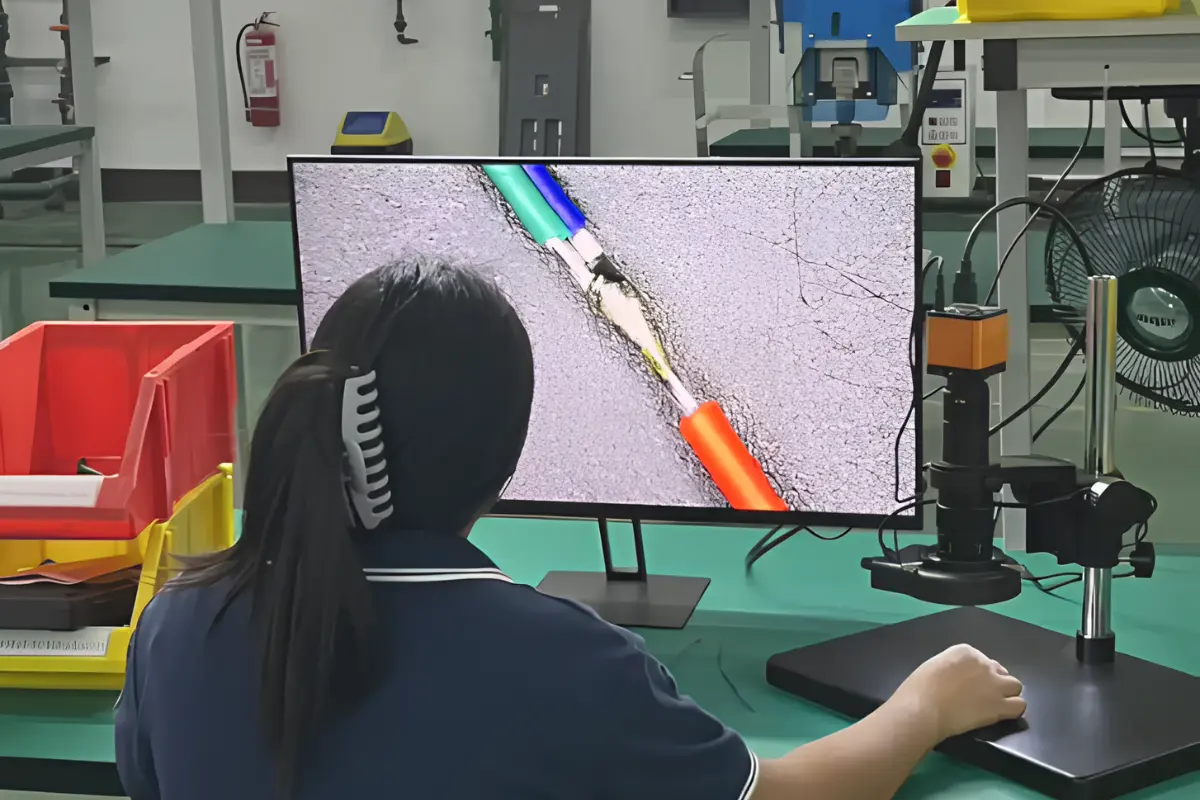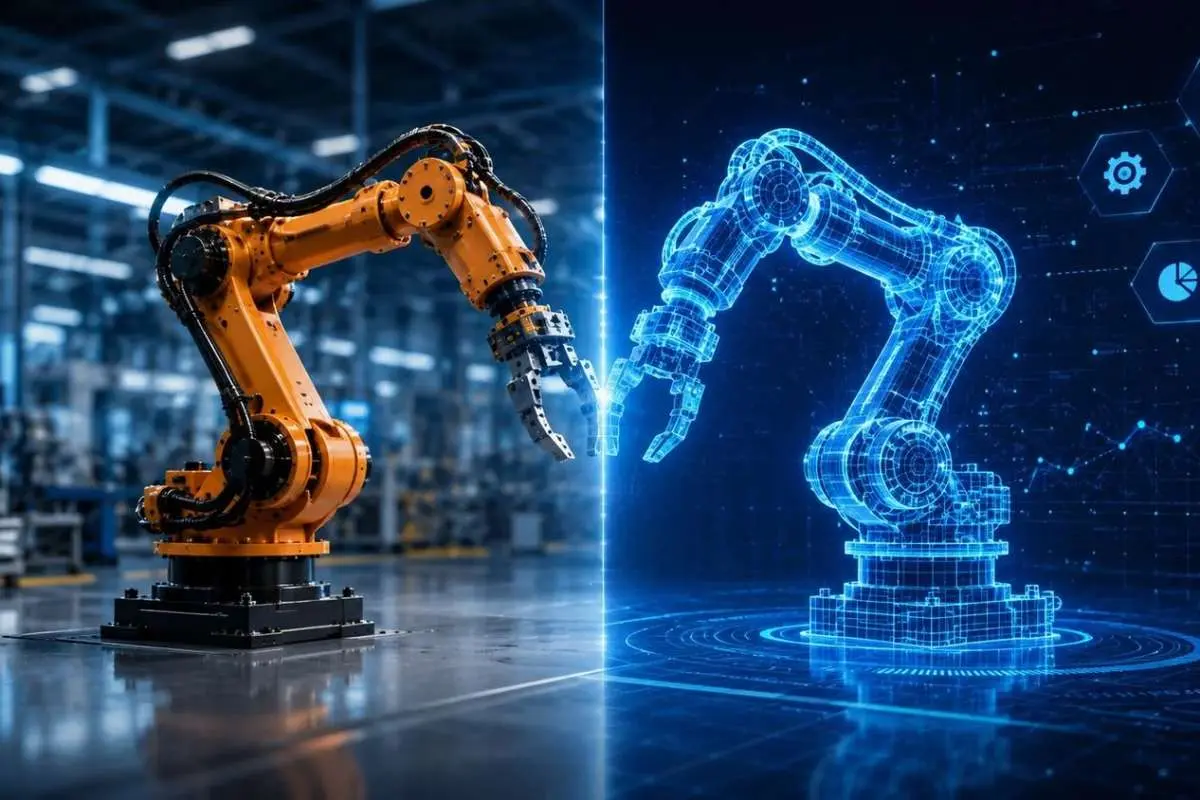
Various industry reports indicate that the integration of AI technology across manufacturing value chains continues, and AI-based defect detection is currently one of the top use cases for modern manufacturers. For instance, according to the 2026 report from Intel Market Research, nearly 75% of manufacturers are currently adopting AI-powered inspection systems to enhance quality control processes.
While the use of AI for defect detection in manufacturing offers superior accuracy and speed compared to human inspection, businesses can encounter several challenges when implementing AI-based defect detection solutions. The need to manage high upfront costs, collect vast sets of AI training data, and close skill gaps are just a few examples of commonly faced challenges. To overcome these obstacles and ensure successful project execution, companies should follow implementation practices derived from industry experiences of other manufacturers.
In this article, experts from Itransition, a company that helps manufacturers build and adopt AI-based defect detection systems, outline three practices that can streamline the implementation of these solutions.
Narrow down the implementation’s scope
As mentioned previously, high upfront costs are the major obstacle to implementing AI-based defect detection in manufacturing, which often leads to significant project delays. Nearly 31% of businesses that participated in the 2026 report from Global Growth Insights consider cost a barrier to adopting AI-based defect detection, with 23% delaying it due to high upfront investment needs.
Data preparation, software development, and its integration with existing IT systems are just a few of the factors that can constitute the total AI implementation cost. As complexity and scope of an implementation project increase, the cost impact of these factors also grows, sometimes exponentially. To minimize their impact – which can be especially important for SMBs operating with limited financial resources – companies can adopt a narrow-focused AI implementation strategy.
- By focusing on a single use case (one production line with high-volume quality issues, one specific step in manual quality inspections, etc.) rather than planning a full-scale quality control processes overhaul, manufacturers can reduce the scope of required software development, software integration, and data preparation activities, as well as associated costs.
- Targeting one particular use case accelerates the project’s completion, which helps manufacturers avoid the prolonged involvement of both internal and third-party IT teams, therefore reducing expenses involved in recruitment and staffing.
- Additionally, a narrow-scope AI strategy allows manufacturers to provide clear evidence of ROI before committing to a factory-wide investment, helping reduce financial risk and build stakeholder confidence in artificial intelligence.
Create a reliable data collection strategy

To efficiently distinguish between a “good” product or product part and a “defective” one in practice, an AI model needs to be trained on thousands of images containing various types of defects. However, since defect events in manufacturing are non-regular and images of defects must be collected under varied conditions, gathering enough data to cover all possible defect types can require significant time and effort.
As highlighted by the previously mentioned Intel Market Research report, data collection can account for up to 40% of total timelines in AI defect detection implementation projects. Such a high proportion of time and resources spent on data collection can lead to a range of issues for manufacturers implementing AI, like project budget overruns or implementation delays.
Building and adopting a reliable data collection strategy, one that would proactively address the scarcity of defect data needed to train AI models, can allow a company to optimize data gathering activities and therefore help it minimize the risk of issues mentioned previously. An effective strategy should align with a manufacturer’s data needs (the volume of data required, required image quality, etc.), take into account gaps in its existing datasets, and focus on filling these gaps through a combination of modern data acquisition techniques.
For instance, it can include a technique called synthetic data generation, which involves creating artificial data that mimics real-world data. Using image augmentation, which involves digitally placing 2D images of defects onto images of normal product parts, is one of the easier ways to generate the required datasets. There is also a more advanced approach called procedural generation that involves programmatically locating 3D defects on virtual models of product parts.
Transfer learning is another efficient method of overcoming data scarcity in AI-powered defect detection. In short, it involves selecting a pre-trained model that has already learned to classify images and recognize general visual features and then fine-tuning this model based on its specific defect detection needs. ResNet-50, VGG16, and YOLO are a few examples of pre-trained models which can be used for these purposes.
Build a comprehensive upskilling plan

Managing and maintaining AI-driven defect detection systems can require a broad range of specialized skills. For instance, as AI performance degrades over time (this phenomenon is called “AI model drift”), a company’s IT staff needs to regularly test model accuracy and fine-tune its performance when needed, which necessitates machine learning and data engineering competencies. Human inspectors, in turn, can need specialized expertise to efficiently work alongside AI on production lines, such as familiarity with dashboards displaying AI confidence scores or ability to provide feedback to the AI model for its continuous improvement.
Consequently, the successful implementation of AI-driven defect detection technology can require an upskilling program to ensure workers can effectively manage and maintain new systems. A company should start by estimating its needs for certain skills and execute a skills gap analysis to define particular training gaps among employees. Based on the analysis results, a manufacturer then should develop a tailored training plan that will help fill identified gaps.
It is highly recommended that a training plan combine various training formats, approaches, and techniques – a strategy commonly known as blended learning – to cater diverse learning preferences of workers and increase their training engagement. For instance, the plan can include hands-on workshops to help employees gain new skills through direct interaction with AI systems. It also can also involve digital learning courses, enabling even a geographically dispersed workforce to efficiently improve knowledge remotely.
Final thoughts
Driven by the need to accelerate quality inspections and enhance the accuracy of defect detection, manufacturing businesses across the globe continue to invest heavily in AI solutions. If you plan to follow the steps of previous AI adopters and leverage this technology to improve quality control processes, you should check the three practices listed in the article, since they can help you overcome common implementation pitfalls.
To ensure smoother AI implementation and maximize its ROI, you can also consider turning to experienced AI professionals. They can provide you with a tailored implementation strategy that aligns with your unique business goals and focuses on high-value use cases that directly support your business KPIs, as well as offer deep AI development expertise to help you build a secure, efficient, and future-proof AI-based defect detection solution.