Manufacturing companies deal with production schedules, inventory management, procurement, quality control, workforce planning, and customer orders every day. Managing all these processes through spreadsheets and disconnected systems often creates delays and costly mistakes.
This article explains what manufacturing ERP software is, how it works, its key features, the major business problems it solves, how to choose the right solution, leading ERP platforms in 2026, future industry trends, and real-world examples that show measurable results.
Manufacturing businesses deal with hundreds of moving parts every day. Raw materials must arrive on time. Production schedules must stay on track. Inventory levels need constant monitoring. At the same time, customers expect faster deliveries and consistent product quality.
Managing all these activities through spreadsheets, emails, and separate software often creates delays, errors, and unnecessary costs. Even a small mistake in inventory planning can slow production and affect customer commitments.
This is where manufacturing ERP software plays an important role. It brings production, inventory, purchasing, finance, quality control, and supply chain operations into one centralized system. Teams gain access to real-time information, which helps them make faster and more accurate decisions.
For example, if a furniture manufacturer receives a large order, the system can instantly show available materials, production capacity, purchase requirements, and expected delivery timelines. This visibility helps prevent shortages, reduce waste, and improve operational efficiency.
As manufacturing becomes more competitive in 2026, companies need better control over their operations than ever before. That is why businesses of all sizes are adopting ERP software to improve productivity, reduce costs, and support long-term growth.
What is manufacturing ERP software?
Manufacturing ERP software is an enterprise resource planning system designed specifically for manufacturing companies. It integrates all business operations into a single platform, enabling departments to work together with accurate, up-to-date information.
Instead of managing production, inventory, procurement, accounting, and quality separately, manufacturers can monitor all of these functions from a single dashboard.
A modern ERP software solution typically includes:
- Production planning
- Inventory management
- Material requirements planning (MRP)
- Procurement management
- Quality control
- Warehouse management
- Financial management
- Supply chain management
The goal is simple: improve efficiency while reducing waste and operational costs.
| Real-World Example: Cisco adopted an ERP-based system after experiencing major issues with its legacy software infrastructure. The company selected Oracle ERP and implemented a modern enterprise system to support growth and improve operational efficiency. The transition highlighted how centralized ERP systems can help organizations manage complex operations more effectively. Source: https://mbaknol.com/management-case-studies/case-study-cisco-systems-inc-s-erp-implementation/ |
Why does it matter?
Manufacturers generate massive amounts of data every day. Without a centralized platform, information becomes scattered across departments.
Manufacturing ERP software ensures that everyone works with the same information, reducing confusion and improving decision-making.
Key features every manufacturing ERP should have
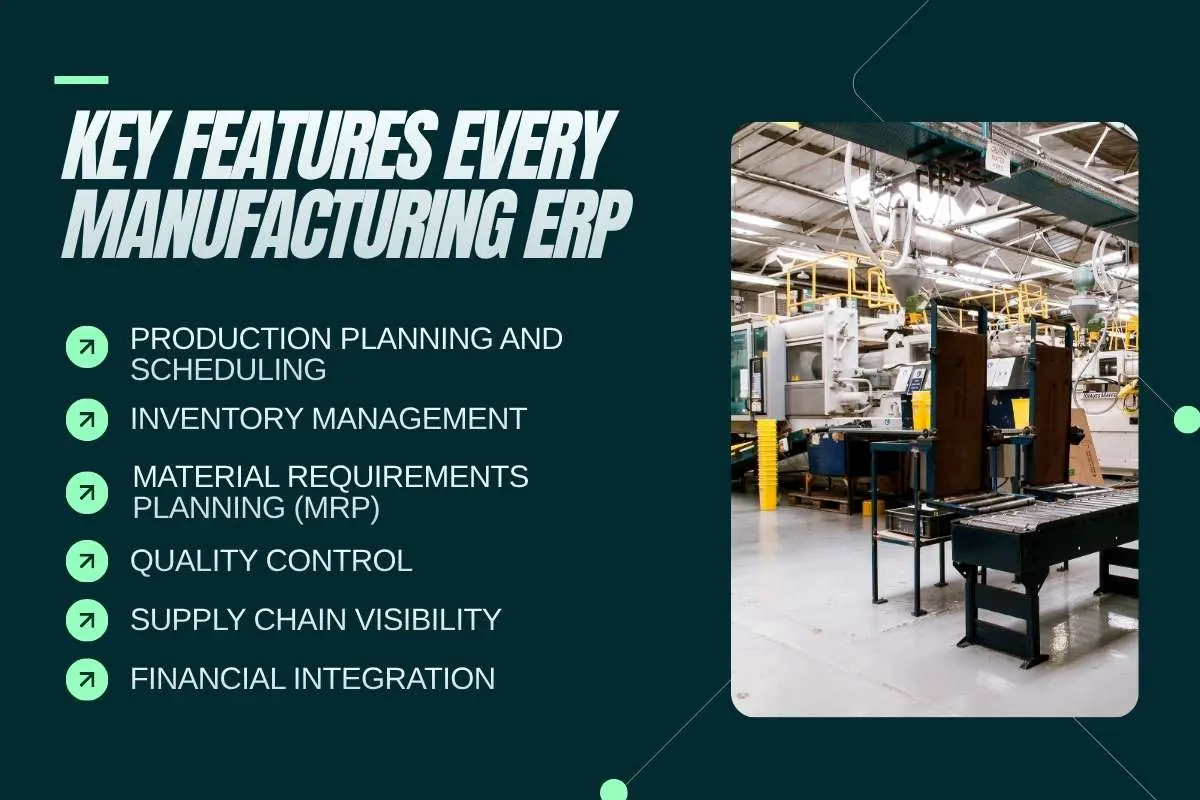
Not all ERP systems are designed for manufacturers. A good ERP software solution should help businesses manage production, inventory, purchasing, quality control, finance, and supply chains from a single platform. This improves efficiency, reduces errors, and supports better decision-making.
Let’s look at the most important features every manufacturing company should consider before choosing an ERP system.
1. Production planning and scheduling
Production planning helps manufacturers deliver products on time while using resources efficiently. A strong manufacturing ERP software system creates schedules based on inventory levels, machine capacity, workforce availability, and customer orders.
For example, if a factory receives a large order, the system can quickly check whether enough materials and resources are available to meet the deadline. This helps reduce delays and improve productivity.
2. Inventory Management
Inventory directly impacts production and profitability. Too much stock increases storage costs, while shortages can stop production.
Manufacturing software provides real-time inventory visibility across warehouses and production facilities. It helps businesses maintain optimal stock levels and automatically alerts teams when materials need replenishment.
3. Material requirements planning (MRP)
MRP helps manufacturers determine what materials are needed, how much is required, and when to place orders.
For example, if a furniture company plans to produce 500 tables, the ERP system automatically calculates the required wood, hardware, and finishing materials. This reduces waste, prevents shortages, and keeps production running smoothly.
4. Quality control
Maintaining consistent product quality is essential for customer satisfaction and compliance.
A reliable manufacturing ERP software solution tracks inspections, records quality checks, monitors defects, and generates compliance reports. This helps manufacturers maintain product standards while reducing costly errors and returns.
5. Supply chain visibility
Modern manufacturing relies on suppliers, warehouses, logistics providers, and distributors working together efficiently.
ERP software provides real-time visibility into the entire supply chain. Businesses can monitor deliveries, track inventory movement, and respond quickly to disruptions before they affect production.
6. Financial integration
Manufacturing operations and financial performance are closely connected. ERP systems integrate accounting with production, inventory, and procurement data.
This allows businesses to monitor costs, track profit margins, manage cash flow, and generate accurate financial reports from one platform. Better financial visibility supports smarter business decisions and long-term growth.
| Real-World Example: The benefits of ERP systems are not limited to large corporations. According to a case study published by Skynetiks, a manufacturing company implemented a cloud-based ERP solution that included production management, inventory control, and reporting tools. After implementation, the company achieved a 40% improvement in operational efficiency. The ERP system helped streamline workflows, improve inventory accuracy, and provide better visibility across business operations. As a result, managers could make faster decisions and improve overall productivity. |
When these features work together, ERP software becomes much more than a management tool. It acts as a central system that connects every part of the manufacturing process, helping businesses reduce costs, improve efficiency, and support long-term growth.
Biggest problems manufacturing ERP solves
Manufacturing companies handle production, inventory, suppliers, procurement, and customer orders every day. When these activities run through spreadsheets or disconnected systems, errors, delays, and miscommunication become common.
This is where manufacturing ERP software makes a significant difference. It brings all business operations into one platform, helping manufacturers work faster, reduce costs, and make better decisions.
Let’s look at the biggest challenges that ERP software solves.
1. Lack of real-time visibility
Many manufacturers struggle because they do not have access to real-time information. Inventory levels, production updates, and customer orders are often stored in different systems.
ERP software provides a centralized dashboard where managers can view live business data. This improves decision-making, reduces delays, and helps teams respond quickly to changing requirements.
2. Inventory errors and stock problems
Poor inventory management can lead to production stoppages or excess stock sitting in warehouses.
Manufacturing ERP software automatically tracks inventory movement and updates stock levels in real time. This helps manufacturers maintain the right inventory, reduce waste, and improve cash flow.
3. Production delays and scheduling issues
Production schedules often fail when departments work separately, or materials are not available on time.
By connecting production planning, inventory, procurement, and workforce management, ERP software helps businesses create accurate schedules and deliver orders on time.
4. Poor communication between teams
Sales, production, procurement, and finance teams often use different tools, making collaboration difficult.
Manufacturing software creates a single source of information for every department. Teams can access the same data, improve coordination, and reduce misunderstandings.
5. Rising operational costs
Manual processes consume time and increase the risk of costly errors.
ERP software automates routine tasks such as inventory tracking, purchasing, reporting, and production planning. This improves efficiency, reduces waste, and lowers operating costs.
6. Difficulty tracking business performance:
Without accurate data, it becomes difficult to understand how a manufacturing business is performing.
Managers often struggle to answer important questions such as:
- Which products generate the highest profit?
- Which production lines operate most efficiently?
- Where are delays occurring?
- How much inventory is tied up in storage?
Manufacturing software provides detailed dashboards and reports that help decision-makers monitor key performance indicators in real time.
This visibility supports better planning, forecasting, and long-term business growth.
| Real-World Example: The impact of ERP implementation can be significant. According to an ERP implementation case study, a manufacturing company using Odoo ERP achieved remarkable improvements after moving to an integrated system. The company reduced order processing time by 68%. Inventory accuracy improved by 85%. The monthly financial closing process also became much faster, dropping from 12 days to only 3 days. These improvements helped the company increase efficiency, reduce errors, and gain better control over daily operations. |
| Industry Feedback Manufacturing professionals often report challenges with disconnected systems, manual processes, customization costs, and poor shop-floor visibility. ERP platforms help address these operational gaps by centralizing workflows and improving data accuracy. Source: Reddit |
How to choose the right manufacturing ERP software?
Choosing the right ERP software is one of the most important decisions for any manufacturing business. The system you select will affect production planning, inventory management, purchasing, quality control, customer service, and overall business performance for years.
Many companies make the mistake of choosing software based only on price or popularity. However, the most expensive ERP system is not always the best fit. A successful ERP implementation depends on how well the software matches your business processes, growth plans, and operational requirements.
1. Understand your manufacturing process
Before comparing ERP solutions, take time to understand your manufacturing operations.
Every manufacturing business works differently. Some companies produce products in large batches, while others manufacture items only after receiving customer orders. Process manufacturers, such as food, chemical, or pharmaceutical companies, also have different requirements than businesses that assemble machinery, electronics, or furniture.
A good ERP software solution should support your specific production model instead of forcing your team to change established workflows.
The closer the ERP system aligns with your daily operations, the smoother the implementation process will be.
2. Focus on scalability
Many businesses purchase ERP software based on their current size. This often creates problems later when operations expand.
As your company grows, production volume increases, customer orders rise, and supply chains
become more complex. If your ERP system cannot handle these changes, you may need to replace it within a few years, resulting in additional costs and disruptions.
A scalable manufacturing software platform allows businesses to add new users, production facilities, warehouses, and advanced features without changing the entire system.
Think of ERP as a long-term investment. The right solution should support where your business will be five or ten years from now, not just where it is today.
3. Evaluate industry expertise
ERP vendors with manufacturing expertise understand industry challenges better than general software providers.
Manufacturers face unique issues such as production planning, machine utilization, inventory accuracy, quality management, and supply chain coordination. Vendors with experience in the manufacturing sector often provide features designed specifically for these challenges.
They also understand common implementation obstacles and can offer practical solutions based on previous projects.
When evaluating vendors, ask about their experience working with businesses similar to yours. Industry knowledge often leads to faster implementation, better support, and stronger long-term results.
4. Check integration capabilities
Modern manufacturing businesses use multiple software systems to manage different operations.
Your manufacturing ERP software should connect easily with these existing systems to create a seamless flow of information across the organization.
Common integrations include:
- Customer Relationship Management (CRM) systems for managing sales and customer data.
- Manufacturing Execution Systems (MES) for monitoring production activities.
- E-commerce platforms for handling online orders.
- Warehouse Management Systems (WMS) for inventory and logistics operations.
- Accounting and financial management software.
Without proper integration, employees often need to enter the same data multiple times, increasing the risk of errors and reducing efficiency.
A well-connected ERP system creates a single source of truth across the business.
5. Assess user experience
Even the most powerful ERP system can fail if employees struggle to use it.
Complex software often leads to frustration, low adoption rates, and incomplete data entry. This reduces the value of the entire investment.
Choose a manufacturing ERP software solution with a clean interface, simple navigation, and easy-to-understand dashboards. Employees should be able to access information quickly without extensive training.
Many successful ERP projects focus as much on user experience as they do on functionality. When teams feel comfortable using the system, adoption improves, and the business gains more accurate data.
This is why businesses should evaluate practical usability alongside technical specifications when selecting an ERP platform.
Important questions to ask ERP vendors
Before making a final decision, schedule detailed discussions with ERP providers and ask questions that help reveal the system’s long-term value.
Consider asking:
- Does the solution support my manufacturing process and production model?
- Can the software scale as my business grows?
- What implementation and training services are included?
- How frequently does the vendor release updates and improvements?
- What ongoing support options are available?
- What are the total long-term costs beyond the initial purchase?
- How long does a typical implementation take?
- Can you provide examples from similar manufacturing companies?
The answers will help you compare vendors more effectively and avoid unexpected challenges after implementation.
Top manufacturing ERP software in 2026
Choosing the right ERP system is one of the most important decisions for any manufacturing business. The best solution depends on factors such as company size, production processes, budget, customization needs, and future growth plans.
In 2026, manufacturers are looking for ERP platforms that do more than manage data. They want systems that improve production planning, track inventory in real time, automate routine tasks, and provide better visibility across the entire business. As a result, several ERP solutions continue to stand out in the manufacturing industry.
1. SAP ERP
SAP ERP is one of the most widely used enterprise solutions in the world. Large manufacturing companies often choose SAP because it can handle complex operations across multiple factories, warehouses, and locations.
The platform helps businesses manage production planning, inventory, procurement, finance, supply chains, and customer orders from a single system. It also provides advanced analytics that allow managers to make faster and more informed decisions.
For manufacturers handling thousands of products and large-scale operations, SAP offers the level of control and visibility needed to maintain efficiency and support long-term growth.
2. Microsoft dynamics 365
Microsoft Dynamics 365 has become a popular choice for manufacturers looking for a modern and flexible ERP solution. One of its biggest strengths is its ability to integrate smoothly with Microsoft tools such as Excel, Outlook, Teams, and Power BI.
This ERP platform helps manufacturers manage production schedules, inventory levels, purchasing activities, and financial operations while providing real-time business insights. Managers can access data from different departments in one place, making collaboration easier and improving decision-making.
Many growing manufacturers prefer Microsoft Dynamics 365 because it combines operational management with powerful reporting and business intelligence features.
3. Katana MRP
Katana MRP is designed specifically for manufacturers that need better control over production and inventory management. It is particularly suitable for small and medium-sized businesses that want a simple yet effective solution.
The platform provides real-time visibility into raw materials, work orders, production schedules, and finished goods inventory. This helps manufacturers avoid stock shortages, reduce excess inventory, and keep production running smoothly.
Businesses that manufacture products such as electronics, furniture, food items, or consumer goods often choose Katana because of its user-friendly interface and manufacturing-focused features.
4. Odoo manufacturing
Odoo Manufacturing has gained significant popularity in recent years because of its flexibility and affordability. Unlike many traditional ERP systems, Odoo uses a modular approach, allowing businesses to choose only the features they need.
Manufacturers can start with production management and later add inventory, purchasing, accounting, sales, customer relationship management, and warehouse management modules as their business grows.
This flexibility makes Odoo an attractive option for small and medium-sized manufacturers that want an ERP solution without making a large upfront investment. Its customization capabilities also allow businesses to adapt the system according to their specific operational requirements.
5. ERPNext
ERPNext is one of the leading open-source ERP platforms available today. It is widely used by manufacturers that require flexibility, customization, and cost-effective implementation.
The system includes features for production planning, inventory management, procurement, quality control, maintenance management, and financial operations. Since it is open-source, businesses can customize workflows and processes according to their unique manufacturing needs.
ERPNext is particularly appealing to organizations that want greater control over their ERP environment without relying heavily on expensive licensing models.
Future trends in manufacturing ERP
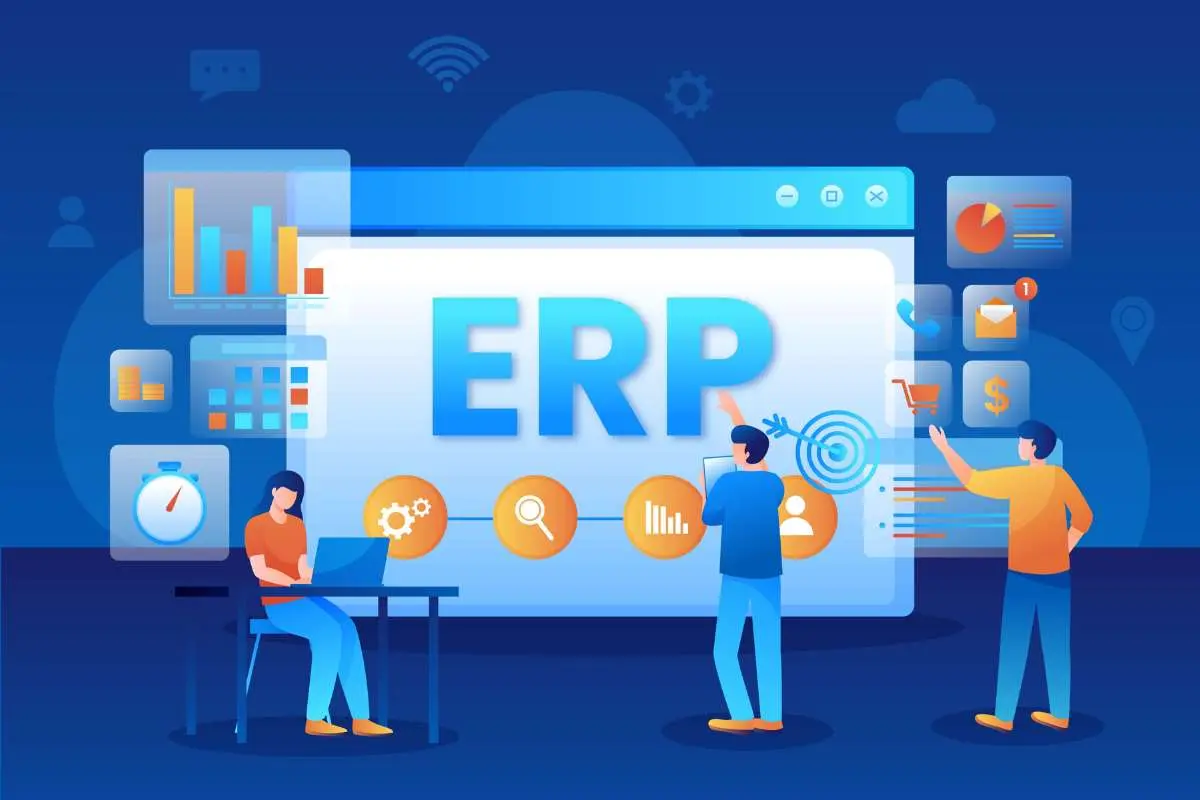
The future of ERP software is focused on smarter automation, real-time insights, and better connectivity. As manufacturing becomes more complex, ERP systems are evolving to help businesses improve efficiency, reduce costs, and make faster decisions.
Artificial Intelligence: AI is helping manufacturers predict customer demand, optimize inventory levels, and identify production issues before they affect operations. This leads to better planning and fewer disruptions.
Predictive maintenance: Modern ERP systems can collect machine data and detect early signs of equipment problems. This helps companies schedule maintenance before breakdowns occur, reducing downtime and repair costs.
Cloud-based ERP: Cloud technology is making ERP software more flexible and affordable. Businesses can access data from anywhere, receive automatic updates, and scale their systems as they grow.
Industrial IoT integration: Connected machines and sensors provide real-time production data directly to ERP systems. This gives manufacturers better visibility into factory performance and helps improve productivity.
Advanced Analytics: ERP platforms now offer powerful dashboards and reporting tools that help businesses track performance, identify trends, and make informed decisions faster.
Digital Supply Chains: Future ERP systems will provide greater visibility across suppliers, warehouses, logistics partners, and customers. This helps manufacturers respond quickly to supply chain challenges and improve coordination.
As technology evolves, manufacturing ERP software will become even more intelligent and proactive.
Conclusion
Modern manufacturing depends on speed, accuracy, and visibility. As production processes become more complex, managing inventory, procurement, production schedules, quality control, and customer orders through disconnected systems can create costly delays and inefficiencies.
This is why ERP software has become an essential tool for manufacturers of all sizes. It connects every part of the business into one centralized platform, helping teams work with real-time data, improve collaboration, reduce operational costs, and make faster decisions.
From production planning and inventory management to supply chain visibility and performance tracking, ERP systems provide the control manufacturers need to operate more efficiently and scale with confidence.
The businesses that succeed in 2026 and beyond will be those that use technology to improve productivity, adapt quickly to change, and make informed decisions. For many manufacturers, that journey begins with choosing the right manufacturing ERP software.
FAQs (Frequently Asked Questions)
1. What is Manufacturing ERP software?
Manufacturing ERP software is a business management system that integrates production, inventory, procurement, finance, quality control, and supply chain operations into a single platform.
2. How does Manufacturing ERP software improve efficiency?
It automates routine tasks, provides real-time data, reduces manual errors, improves production planning, and helps departments work together more effectively.
3. Is Manufacturing ERP software suitable for small manufacturers?
Yes. Many modern ERP solutions offer scalable pricing and modular features that make them suitable for small and medium-sized manufacturers.
4. What is the biggest benefit of Manufacturing ERP software?
The biggest benefit is complete operational visibility. Manufacturers can monitor inventory, production, orders, costs, and performance from one centralized system, leading to better business decisions.