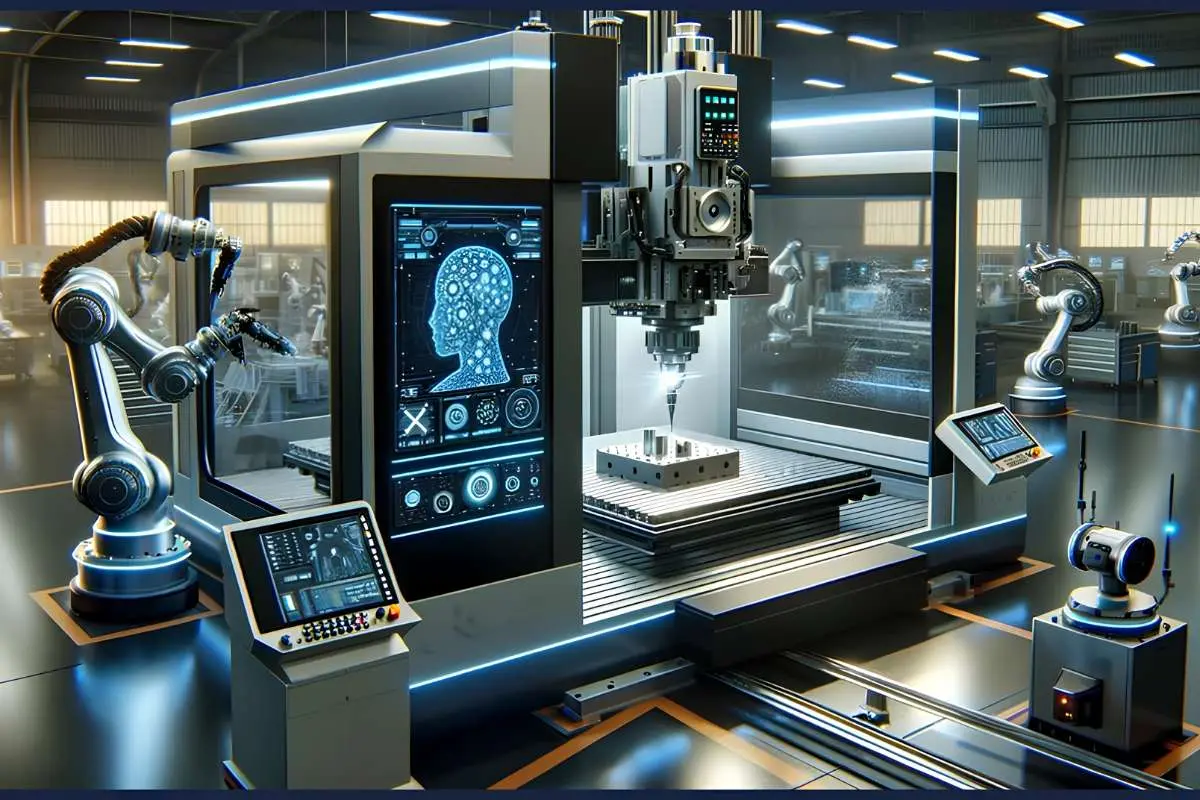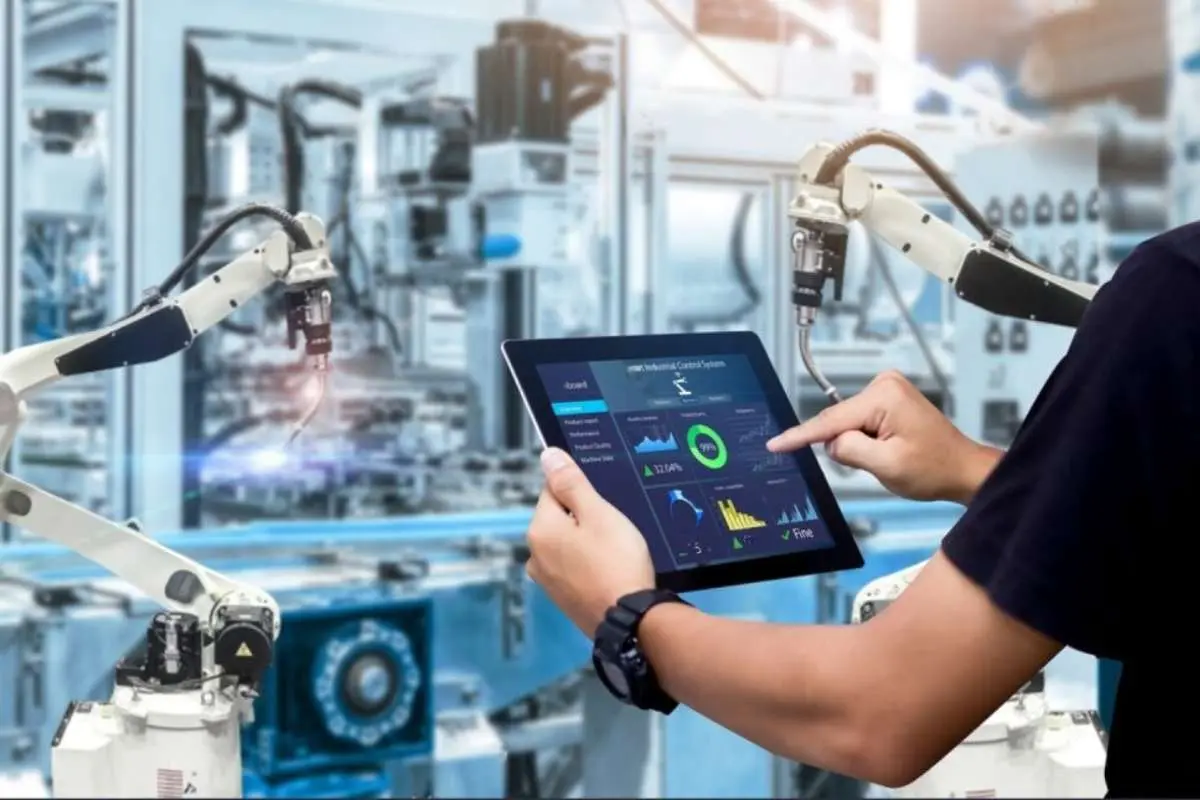
This blog explains how smart factory solutions are transforming modern manufacturing. It covers the technologies behind smart factories, their benefits, real-world industry examples, implementation challenges, future trends, and practical insights for businesses planning digital transformation.
What if your factory could warn you before a machine breaks down? What if production lines fixed errors before humans even noticed them? Sounds like science fiction, right? Yet many factories already work this way.
A car manufacturer in Germany reduced machine downtime by nearly 30% after installing sensors and AI-based monitoring systems. Workers stopped rushing to fix sudden failures because the machines started predicting problems early. That is the power of smart factory solutions.
Factories no longer depend only on manpower and paperwork. Modern businesses now rely on connected systems, real-time data, automation, and intelligent machines to improve productivity and reduce waste. Companies that ignore this shift risk slower growth, higher costs, and operational delays.
The manufacturing world has entered a new phase where speed, accuracy, and data matter more than ever.
What are smart factory solutions?
Smart factory solutions are advanced manufacturing systems that integrate automation, artificial intelligence, cloud computing, robotics, sensors, and data analytics to improve factory operations.
These systems create connected production environments where machines, devices, and software communicate in real time. The goal is simple. Increase efficiency, reduce errors, lower costs, and improve production quality.
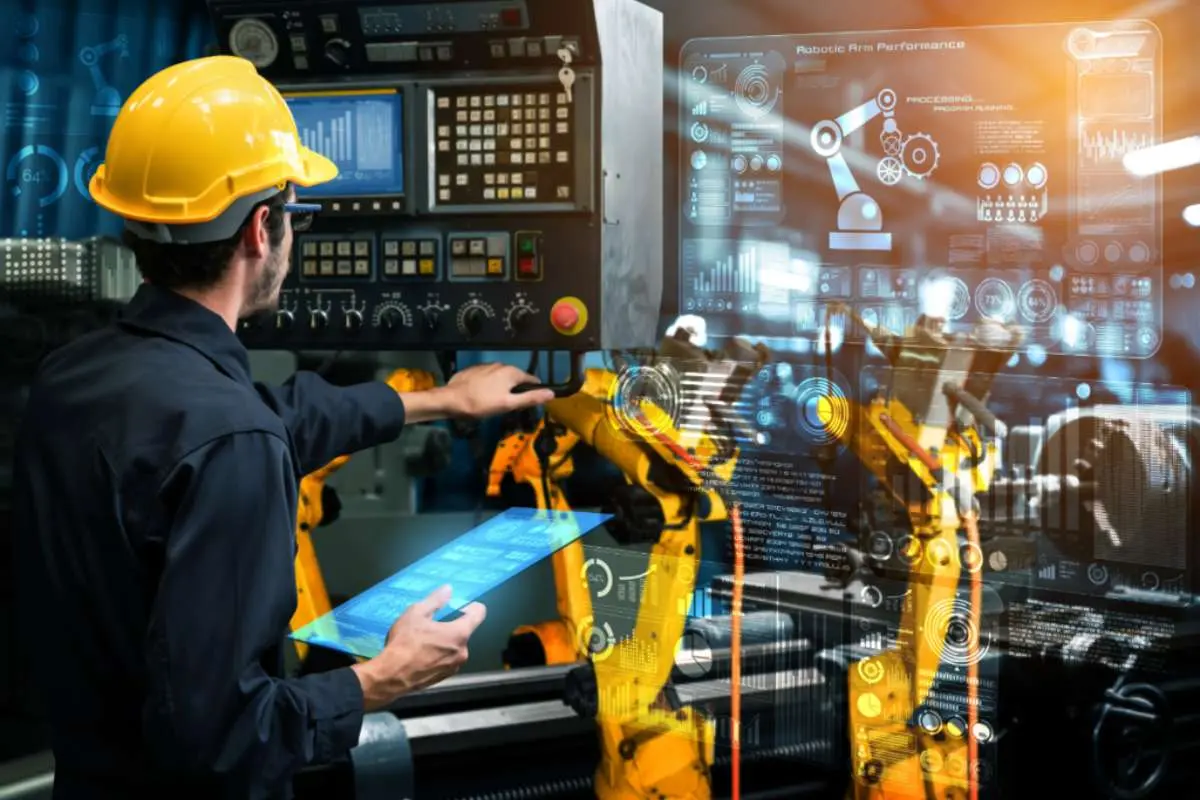
Traditional factories rely heavily on manual monitoring and fixed production methods. Smart factories operate differently. They collect live data from machines and analyze it instantly. Managers receive insights that help them make faster decisions.
For example, a food processing company in Japan (Japan Food Machinery Manufacturers’ Association (FOOMA) ) used smart factory solutions to monitor temperature and packaging quality during production. Sensors detected slight temperature changes that humans missed. The system automatically adjusted the machines and prevented product spoilage. This helped the company reduce waste and improve customer satisfaction.
Another good example comes from the automotive sector. Tesla uses highly automated production systems in its manufacturing plants. Robots handle repetitive tasks while software tracks production performance in real time. This setup improves efficiency and reduces delays.
These solutions also support predictive maintenance. Machines can identify unusual vibrations, overheating, or pressure changes before failure occurs. This prevents expensive downtime and extends equipment life.
Today, manufacturers across industries use smart systems to stay competitive in fast-changing markets.
Core technologies behind smart factory solutions
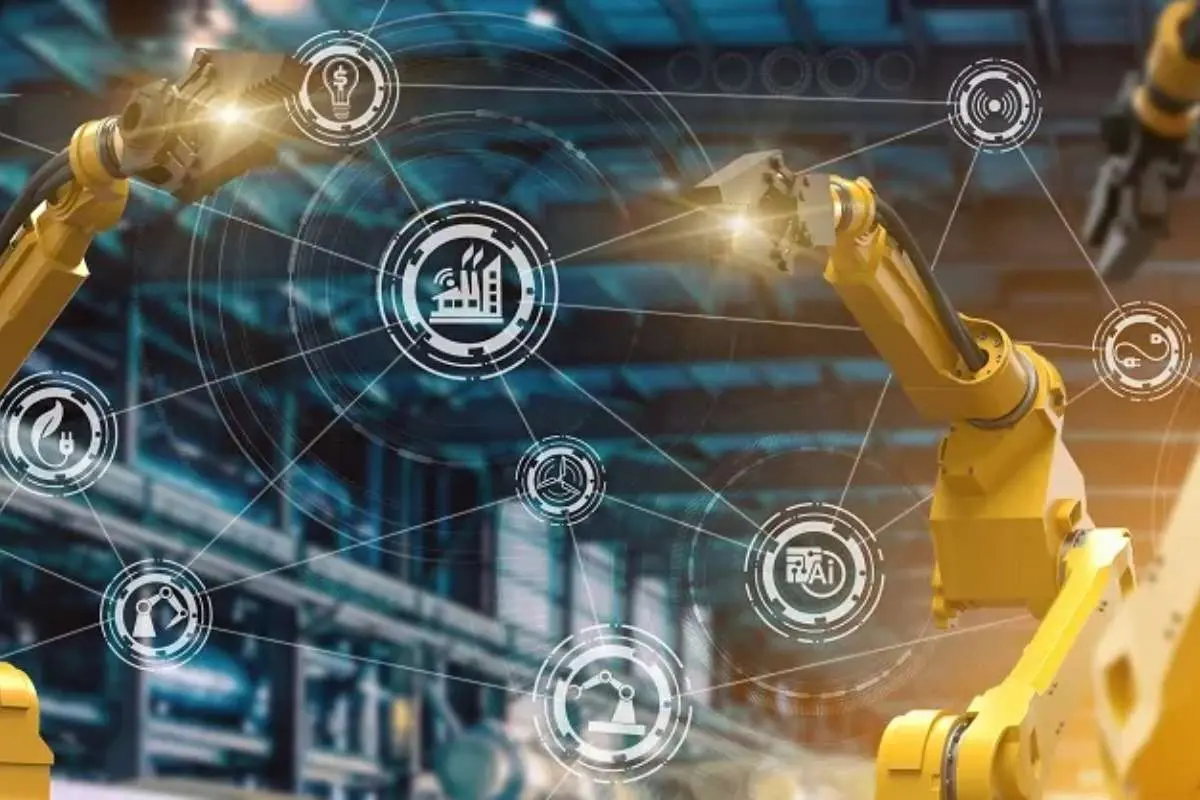
Modern factories no longer depend only on machines and manpower. Today, factories use connected technologies that help businesses produce goods faster, reduce mistakes, improve quality, and lower operational costs. These technologies work together like a smart ecosystem where machines, software, sensors, and data continuously communicate with each other.
This combination of automation, connectivity, and intelligent systems forms the backbone of modern solutions. Every technology has a specific role, but together they create highly efficient and intelligent production environments.
Let’s understand these technologies in detail with simple explanations and real-world examples.
1. Internet of things
The Internet of Things, also called IoT, is one of the most important technologies in modern manufacturing.
IoT connects machines, devices, sensors, and equipment through the internet. These connected devices constantly collect and share data in real time.
In traditional factories, workers often inspect machines manually. They check temperatures, machine speed, pressure levels, or production quality by physically visiting equipment. This process takes time and increases the chances of human error.
IoT changes this completely.
Factories install smart sensors on machines that monitor operations every second. These sensors collect information such as:
- Machine temperature
- Vibration levels
- Energy usage
- Humidity
- Pressure
- Production speed
- Product quality
The collected data moves instantly to software dashboards where factory managers can monitor everything remotely.
For example, imagine a factory machine overheating during production. In older systems, workers may notice the problem only after the machine stops working. That delay can cause expensive downtime.
With IoT sensors, the system detects abnormal heat levels immediately. Managers receive alerts on computers or mobile phones before the machine breaks down. Maintenance teams can solve the issue early and avoid production delays.
A real example comes from the textile industry in India. A textile manufacturer installed IoT sensors across spinning and weaving machines. The sensors monitored machine speed and fabric consistency continuously.
Whenever machines moved outside standard settings, workers received instant alerts. Within six months, the company reduced production defects by 18%. The business also lowered maintenance costs because teams identified issues before major breakdowns happened.
IoT also helps companies save energy.
Factories consume huge amounts of electricity. Smart sensors track power usage in real time and identify machines that waste energy. Businesses can then optimize machine operations and reduce electricity bills.
Many food manufacturing companies also use IoT to monitor storage temperatures. If refrigeration systems fail, the sensors immediately alert staff and prevent food spoilage.
This constant flow of live information helps factories become faster, safer, and more efficient.
2. Artificial intelligence
Artificial Intelligence, commonly called AI, allows factories to analyze massive amounts of data quickly and make smarter decisions.
Factories generate huge amounts of production data every day. Human workers cannot analyze such large volumes of information efficiently. AI systems solve this problem by processing data automatically and identifying useful patterns.
AI acts like a digital brain inside modern factories. It helps manufacturers:
- Predict machine failures
- Improve quality control
- Reduce waste
- Improve production planning
- Detect errors faster
- Optimize workflows
One of the biggest advantages of AI is predictive maintenance.
Machines rarely break down without warning signs. Small changes usually happen first, such as unusual vibrations, increased heat, slower speed, or abnormal noise. AI systems analyze these patterns and predict when equipment may fail.
This allows maintenance teams to repair machines before breakdowns occur.
For example, an automobile parts manufacturer used AI software to analyze machine vibration data. The system detected unusual motor behavior that workers had missed. Engineers repaired the motor before failure occurred, preventing several hours of production downtime.
AI also improves quality inspection.
In traditional factories, workers inspect products manually. Human inspection works well in some cases, but people can miss tiny defects during long working hours.
AI-powered cameras solve this problem.
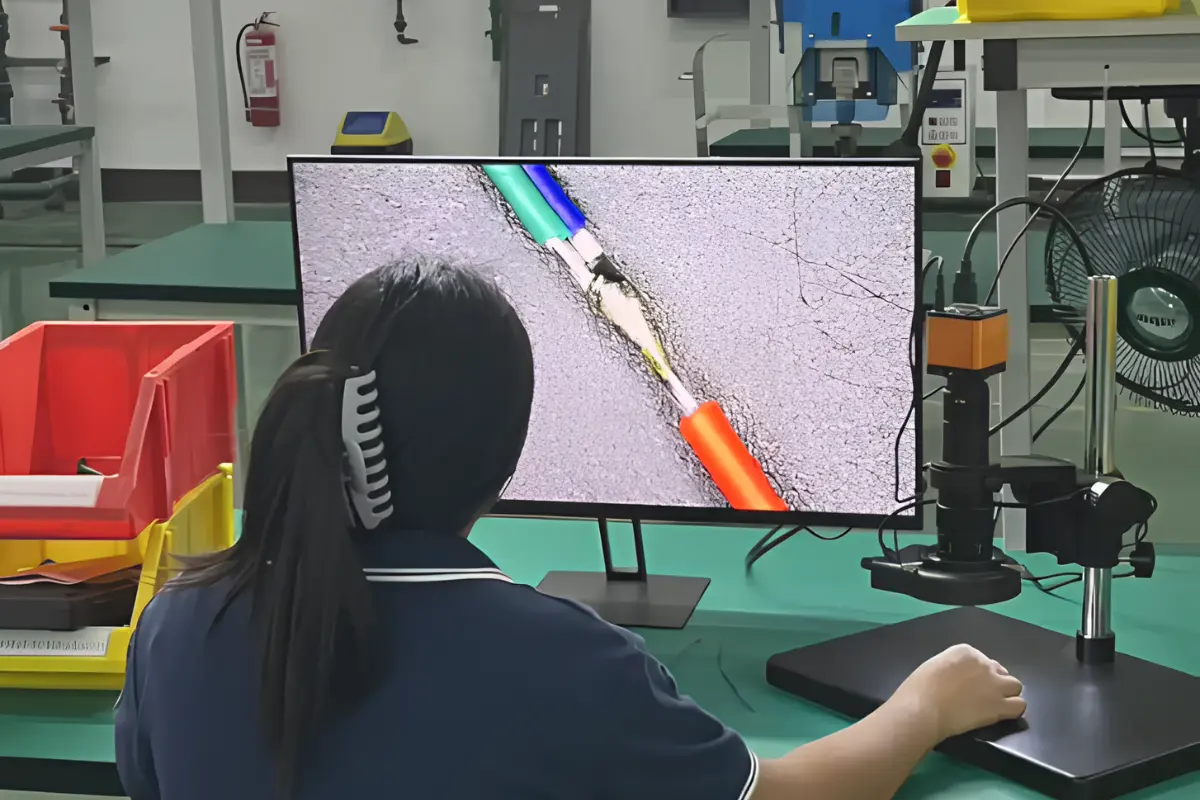
Electronics manufacturers use AI vision systems to inspect circuit boards at high speed. The cameras scan products and identify tiny defects that are almost invisible to the human eye.
The AI system compares every product against quality standards instantly. Defective products are removed automatically before reaching customers.
This improves product consistency and reduces returns.
AI also helps factories improve production scheduling. It studies demand patterns, inventory levels, and machine availability to create efficient production plans.
For example, during seasonal demand increases, AI systems can recommend production adjustments to avoid shortages.
Modern smart factory solutions rely heavily on AI because it helps businesses make faster and more accurate decisions.
3. Robotics and automation
Robotics and automation have transformed manufacturing across the world.
Robots perform repetitive tasks with speed, accuracy, and consistency. Unlike humans, robots do not become tired during long production shifts. This improves production efficiency significantly.
Factories use robots for:
- Welding
- Packaging
- Painting
- Product assembly
- Material movement
- Machine loading
- Heavy lifting
Automated systems also reduce human error.
For example, in car manufacturing plants, robotic arms weld vehicle parts with extreme precision. Every weld remains consistent, which improves product quality and safety.
In electronics factories, robots place tiny components on circuit boards much faster than manual workers.
Robots are especially useful in dangerous environments.
Chemical plants, mining sites, and metal factories often expose workers to heat, toxic chemicals, or hazardous conditions. Robots can safely handle these risky tasks while protecting employees.
A good example is ABB, which develops industrial robots used globally in manufacturing facilities. These robots help businesses improve production speed while increasing workplace safety.
Automation also supports warehouse operations.
Many logistics centers now use autonomous robots to transport goods across warehouses. These robots reduce manual labor and speed up delivery processes.
However, automation does not completely replace workers.
Instead, it changes job roles. Employees focus more on supervision, system management, quality analysis, and problem-solving instead of repetitive manual tasks.
Factories that combine skilled workers with automation often achieve the best results.
4. Cloud computing
Cloud computing helps factories store, process, and manage massive amounts of production data securely.
Modern factories generate huge volumes of information every second. Machines, sensors, production lines, and supply chains constantly produce data.
Managing this information using traditional local systems becomes difficult and expensive.
Cloud computing solves this problem by storing data on remote internet-based servers instead of only physical computers inside factories. This offers several advantages.
Factory teams across different locations can access live information anytime through cloud-based platforms.
For example, a manufacturing company with factories in different countries can monitor all operations from one central dashboard.
Managers can check:
- Production performance
- Machine health
- Inventory levels
- Supply chain status
- Maintenance schedules
- Product quality reports
in real time.
Cloud systems also improve collaboration.
Engineers, managers, suppliers, and maintenance teams can share information instantly regardless of location.
During the pandemic, many factories used cloud systems to monitor operations remotely when travel restrictions limited physical access.
Cloud computing also supports scalability.
As factories grow, they can easily increase data storage and processing capacity without buying expensive physical infrastructure.
Cybersecurity remains important in cloud environments. Manufacturers use encryption, access controls, and monitoring systems to protect sensitive operational data.
Today, cloud technology plays a major role in modern smart factory solutions because it supports connectivity, flexibility, and real-time decision-making.
5. Digital twins
Digital twins are one of the most advanced technologies used in intelligent manufacturing.
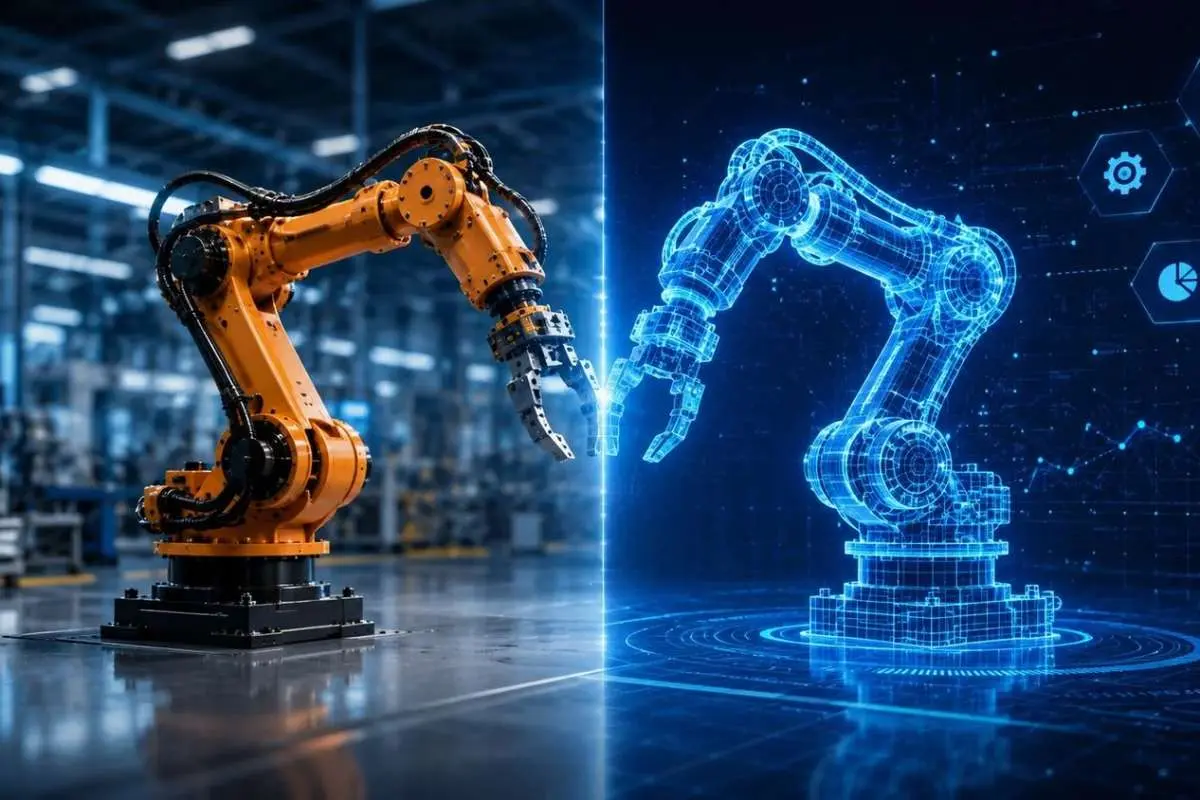
A digital twin is a virtual copy of a physical machine, system, or production process.
This virtual model behaves exactly like the real machine because it receives live data continuously from sensors installed on physical equipment.
Engineers use digital twins to simulate operations, test improvements, and predict problems before making changes in real factories.
Think of it like a virtual testing laboratory.
Instead of experimenting directly on expensive production systems, manufacturers first test changes in digital environments.
For example, aircraft manufacturers use digital twins to monitor airplane engine performance. The system studies engine temperature, pressure, and operating conditions in real time.
Engineers can identify wear and tear early and predict maintenance needs before engine problems occur.
This improves safety and reduces maintenance costs. Digital twins also help factories improve production efficiency.
Suppose a company wants to increase production speed. Engineers can test different production settings using the digital twin first. They study the results virtually before applying changes to the actual production line. This reduces risks and saves time.
Automobile manufacturers also use digital twins to design smarter assembly lines. They simulate factory workflows digitally to identify bottlenecks and improve efficiency.
As technology improves, digital twins are becoming more detailed and accurate.
Many experts believe digital twins will become a standard part of future manufacturing systems.
Key benefits of smart factory solutions
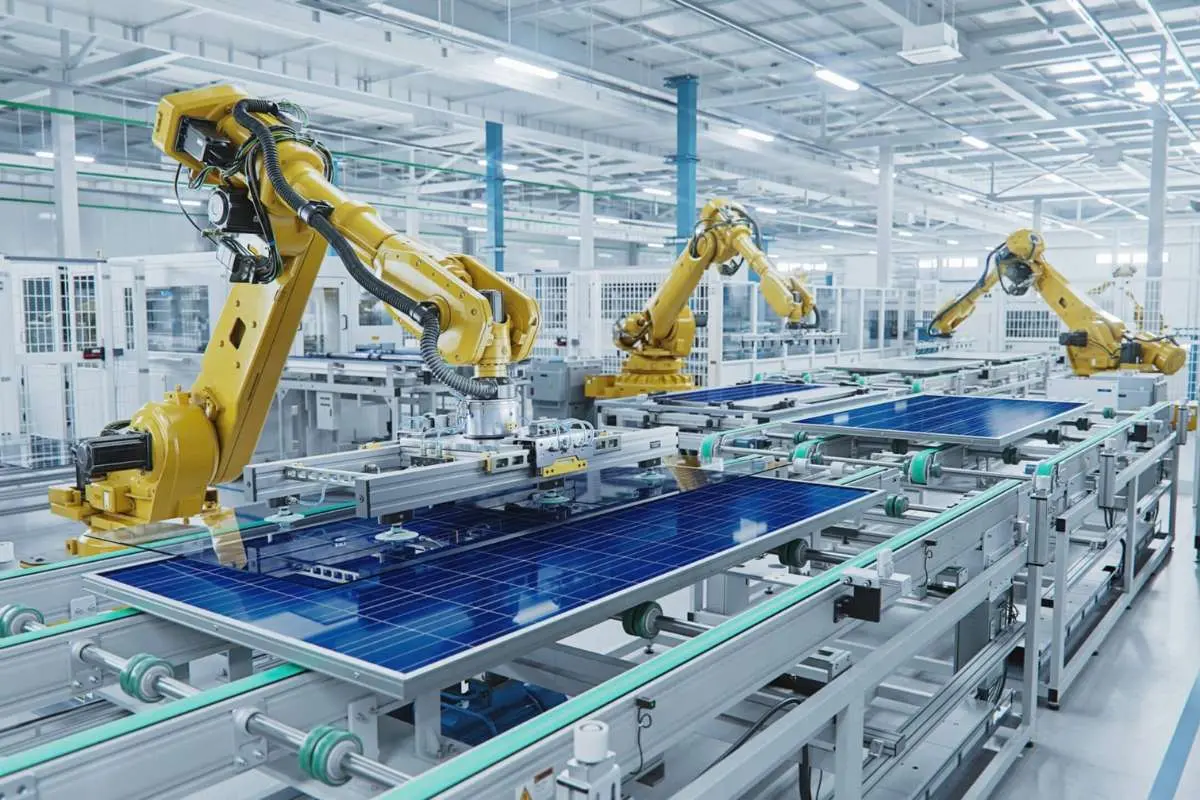
Manufacturers invest in smart factory solutions because the benefits directly improve business performance.
1. Better productivity
Connected systems reduce delays and improve workflow efficiency. Machines communicate automatically, which speeds up production processes.
A packaging company in South Korea improved production output by 22% after automating material handling operations.
2. Lower downtime
Unexpected machine failures cost businesses huge amounts of money. Predictive maintenance systems reduce downtime by identifying problems early.
A study by McKinsey & Company reported that predictive maintenance can reduce machine downtime by up to 50%.
3. Improved product quality
Smart monitoring systems detect errors faster than manual inspections. This improves consistency and reduces defective products.
Factories can track quality at every production stage instead of checking products only after manufacturing ends.
4. Energy efficiency
Energy costs continue to rise globally. Smart factory solutions help businesses monitor energy consumption and reduce waste.
An automotive plant in the United States used energy monitoring systems to optimize machine operations and lower electricity usage by 15%.
5. Safer work environments
Automation reduces the need for workers to perform dangerous tasks. Sensors and monitoring systems also improve workplace safety.
Robots now handle hazardous jobs in chemical plants, mining operations, and heavy industry
manufacturing facilities.
6. Faster decision-making
Real-time data allows managers to respond quickly to production issues. Businesses no longer rely only on historical reports.
Modern dashboards provide instant insights into inventory, machine health, and supply chain performance.
Smart factory solutions across industries
Different industries use these solutions in unique ways.
1. Automotive industry
Car manufacturers rely heavily on automation and robotics. Smart factories improve assembly speed, quality control, and inventory management.
BMW uses AI-powered systems to monitor production quality in real time. Automated inspections help maintain high manufacturing standards.
2. Healthcare and pharmaceuticals
Pharmaceutical companies use smart systems to maintain strict quality standards and track production accuracy.
Sensors monitor temperature and humidity during medicine production. This helps companies meet regulatory requirements.
During the pandemic, several vaccine manufacturers used smart solutions to scale production rapidly while maintaining quality control.
3. Food and beverage industry
Food manufacturers use automation to improve packaging, storage, and hygiene standards.
Smart sensors track freshness, temperature, and contamination risks throughout production.
A dairy company in Europe used automated cleaning systems and smart monitoring tools to reduce contamination risks significantly.
4. Electronics industry
Electronics manufacturing requires extreme precision. AI-based inspection systems help companies detect tiny defects quickly.
These solutions also improve supply chain management for electronic components.
5. Logistics and warehousing
Warehouses now use autonomous robots and AI systems to manage inventory and deliveries.
Amazon operates highly automated fulfillment centers where robots move products across warehouses efficiently.
Challenges in smart factory implementation
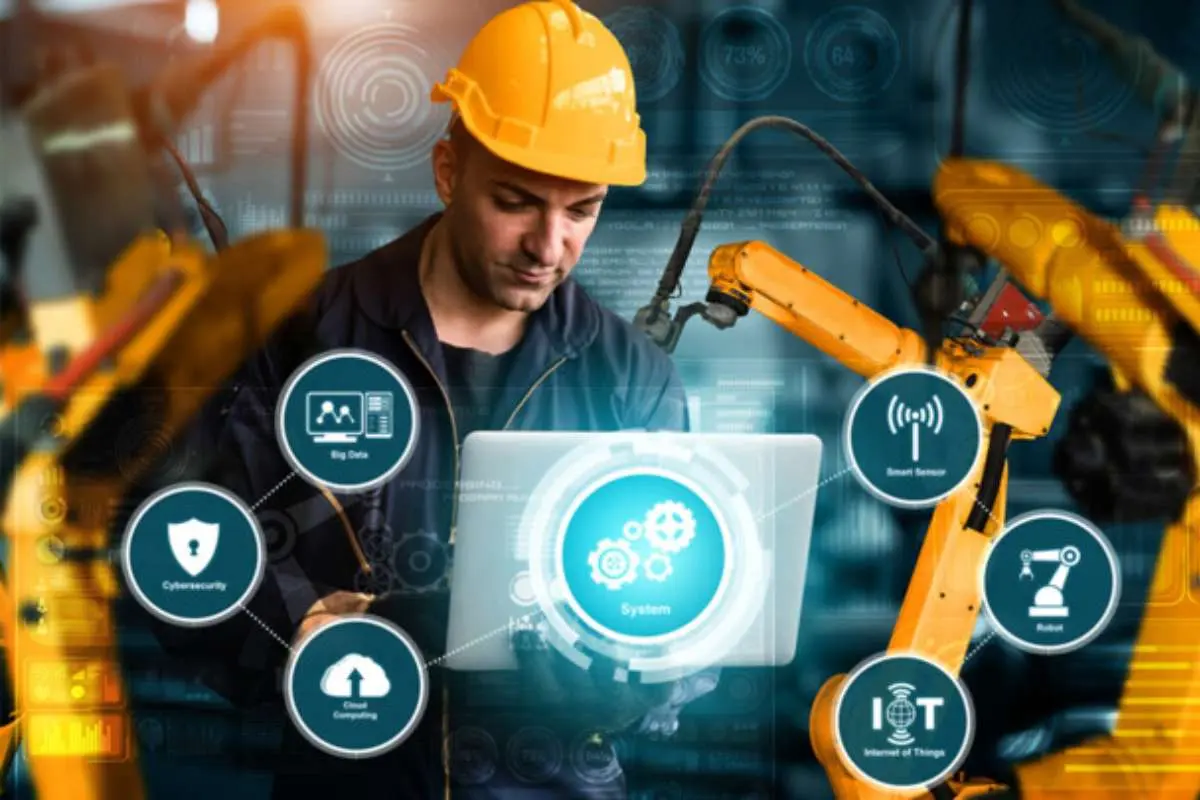
These smart solutions offer major benefits, but implementation comes with several challenges. Businesses often face issues related to cost, cybersecurity, workforce skills, and system integration during digital transformation.
1. High initial costs
Implementing smart factory solutions requires major investment in automation systems, AI software, sensors, cloud platforms, and employee training. Small and medium businesses often struggle with these expenses initially.
For example, a mid-sized automotive parts company in India delayed automation projects because of high setup costs. However, after gradual implementation, the company improved production efficiency and reduced downtime within two years.
Siemens also invested heavily in its smart factory in Germany. Although the setup cost was high, the company later achieved better productivity and fewer production errors.
2. Cybersecurity risks
Connected factory systems increase cybersecurity risks. Hackers may target factory networks, production data, and connected machines.
A major example involved Honda, which faced a cyberattack that disrupted manufacturing operations across multiple facilities.
Manufacturers now invest in advanced cybersecurity systems, encrypted networks, and real-time monitoring tools to protect industrial operations.
3. Workforce training
Employees need technical skills to work with AI systems, robotics, and digital platforms. Without proper training, businesses may struggle during implementation.
For example, a textile factory in Southeast Asia installed AI-powered inspection systems, but workers initially found the software difficult to use. After technical training sessions, production efficiency improved significantly.
BMW regularly trains employees to work alongside automation and robotics instead of replacing workers completely.
4. Integration problems
Many factories still use old machines that do not connect easily with modern digital systems. Upgrading these systems can become expensive and time-consuming.
A manufacturing plant in Latin America struggled to connect 20-year-old machines with new monitoring software. Engineers had to install additional hardware to support integration.
General Electric helps manufacturers modernize operations gradually instead of replacing entire systems at once.
5. Resistance to change
Some employees fear that automation may replace jobs, which creates resistance during implementation.
For example, workers at a European manufacturing company initially opposed robotic automation in packaging operations. Management later explained that robots would handle repetitive lifting tasks while employees moved into supervision and quality control roles.
Ford Motor Company supports workforce retraining programs during factory modernization projects to help employees adapt to digital systems.
Future of smart factory solutions
The future of manufacturing will become even more connected and intelligent.
Artificial intelligence will continue improving predictive maintenance and quality control systems. Factories will make faster decisions with less human intervention.
5G technology will also play a major role. Faster internet speeds will improve machine communication and support real-time automation.
Edge computing will help factories process data closer to machines instead of relying only on cloud systems. This reduces delays and improves efficiency.
Sustainability will become another major focus. Manufacturers will use smart factory solutions to reduce waste, lower emissions, and improve energy efficiency.
For example, green factories now use AI systems to monitor carbon emissions and optimize energy usage automatically.
Collaborative robots, also called cobots, will become more common. These robots work alongside humans safely and improve productivity without replacing workers completely.
According to Deloitte Insights, smart manufacturing adoption continues to grow as businesses prioritize efficiency, resilience, and digital transformation.
The factories of the future will not only produce goods faster. They will also become smarter, safer, and more sustainable.
Conclusion
A few years ago, factory managers depended on manual reports, delayed updates, and constant troubleshooting. Today, machines communicate instantly, software predicts failures early, and production lines adjust automatically. That shift is changing manufacturing forever.
A manufacturing company in Singapore recently reduced downtime by almost 40% after adopting predictive maintenance systems. Workers spent less time fixing emergency breakdowns and more time improving operations.
That is why smart factory solutions matter. They help businesses save money, improve quality, increase safety, and stay competitive in a fast-moving world. Companies that embrace innovation today will shape the future of manufacturing tomorrow.
FAQs
1) What are smart factory solutions?
A: Smart factory solutions are advanced manufacturing systems that use automation, AI, IoT, robotics, and real-time data to improve factory operations, efficiency, and production quality.
2) Which industries use smart factory solutions?
A: Industries such as automotive, healthcare, food processing, electronics, logistics, and pharmaceuticals use smart factory solutions to improve productivity and reduce operational costs.
3) What are the biggest benefits of smart factory solutions?
A: The main benefits include lower downtime, better product quality, improved safety, higher efficiency, faster decision-making, and reduced energy consumption.
4) Are smart factory solutions expensive to implement?
A: Initial costs can be high, but many businesses recover their investment through improved efficiency, reduced maintenance costs, and better productivity over time.