Every now and then, a city finds its way to you without warning. It does not arrive through plans or recommendations. It appears quietly, like a thought you cannot quite hold. That is how Pittsburgh entered Elias’s story.
He had no reason to pause by the river that evening. The air felt plain, easy to ignore. Still, something kept him there, standing near a bench facing the slow current.
That is where he noticed it. A small notebook with worn edges, left as if someone might return. He picked it up without thinking. Inside, a single line waited. “To understand this city, follow what it leaves behind.”
He paused, unsure why it stayed with him. Still, he kept it.
Page one: Echoes in iron and heat
The first entry reads like a recollection shaped by noise and motion. Fire runs through each line. Labor repeats in a steady rhythm, suggesting a city built on constant production. Elias follows the note toward the river’s edge in Pittsburgh, where old structures remain in place.
Rust clings to their surfaces, and the silence feels occupied. A passerby mentions how the city once produced a major share of the nation’s steel, and the statement settles with quiet weight. The notebook does not explain the industry. It records its imprint.
Elias begins to understand where the city’s economic identity took shape, grounded in manufacturing and trade, shaped by the rivers that hold everything together even now.
Page two: Foundations before the city
The story of Pittsburgh begins at the meeting of rivers, where early paths and decisions shaped what followed.
Points of history
- Early settlement formed where waterways meet, supporting movement and exchange
- Fort Duquesne marked a period of early control and conflict
- Fort Pitt replaced it, guiding a shift in power and direction
- Trade routes along the rivers encouraged steady settlement and small communities
- Immigration added language, skills, and varied cultural traditions
- Education, faith, and civic structures formed the base of early organization
- Industrial growth expanded through access to resources and a skilled workforce
- Steel production defined the city’s role and brought wider recognition
Each layer remains present, shaping how the city stands today and how it continues to be understood.
Page three: The city in moments

The next pages gather experiences instead of explanations. Elias follows them across Pittsburgh, letting each moment settle on its own.
- At PNC Park, the crowd builds in a slow rhythm. When the Pittsburgh Pirates take the field, energy shifts. Mentions of the Pittsburgh Steelers and Pittsburgh Penguins reflect a shared identity.
- Inside The Andy Warhol Museum, repetition shapes attention. Visitors move quietly. Art becomes a form of conversation.
- Along the river, older structures remain. They hold traces of industry, connecting effort with stillness.
Each moment stands without explanation. Elias notices how presence itself supports the city, as people gather, observe, and take part in what continues around them.
Page four: The quiet system
The notebook shifts tone here, its language becoming precise and measured. Elias walks through districts where glass buildings reflect steady activity in Pittsburgh. Offices, research centers, and institutional spaces fill the streets. Names such as Google, Microsoft, and Uber appear within everyday movement, blending into the city’s rhythm.
- Active Sectors: Robotics, healthcare, finance, and advanced manufacturing shape ongoing activity.
- Institutional Link: Point Park University within a wider academic and research network.
- System Observation: Education connects with research, while businesses align with skilled workers. Economic efforts focus on job creation, innovation, and long-term stability.
Elias understands that the city now moves through knowledge, structured with care and quiet intention.
Page five: The bridges

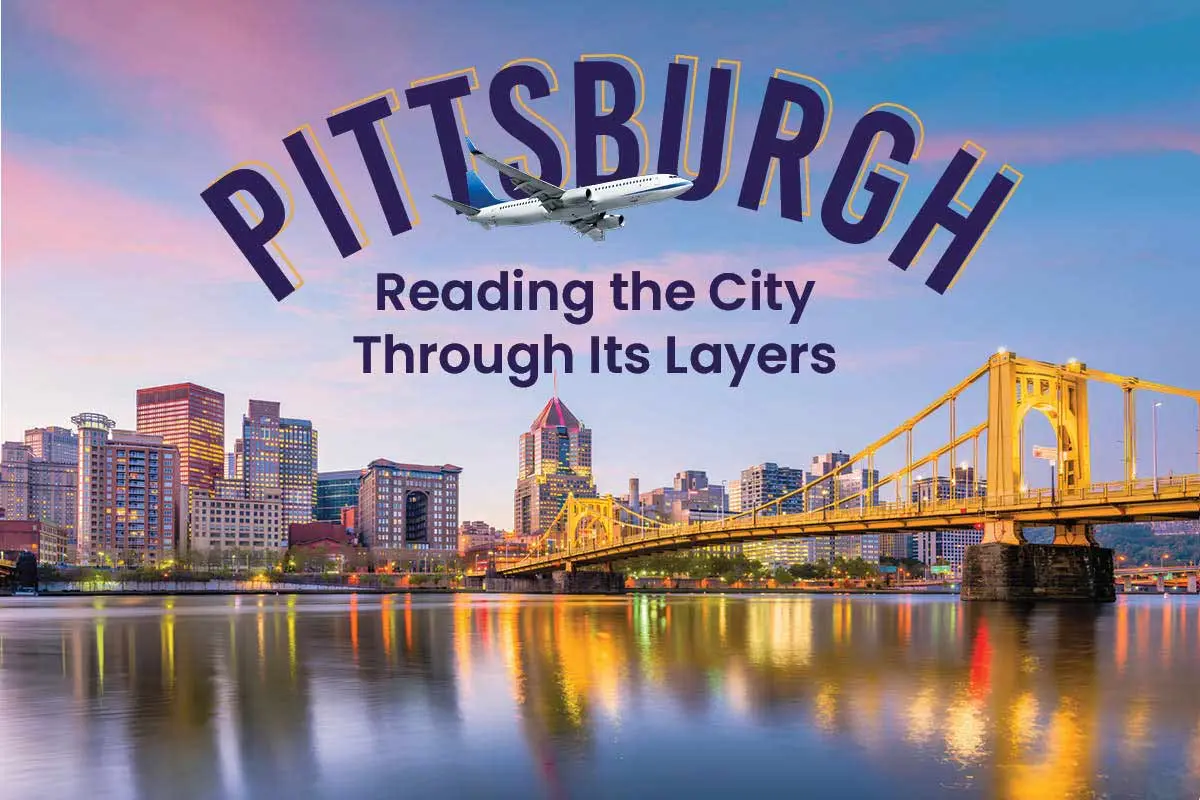
One page holds a single number. 446. Elias does not question it at first. As he walks through Pittsburgh, he begins to notice the bridges with sharper attention. Each one stands with purpose, linking parts of the city that would otherwise remain separate.
He stops midway across one span and looks outward. Movement continues in quiet patterns. People cross with intent. Vehicles pass without pause. Below, water carries its own steady rhythm.
The notebook offers a line: “Connection defines direction.” Elias reads it again, letting the meaning settle. The idea reaches beyond structure. It reflects how industries interact, how institutions align, and how communities remain linked through shared spaces.
He understands that these crossings shape more than movement. They reflect how the city holds itself together through connection, guiding how life continues across every part.
Page six: What the city builds next
The final entry opens with quiet clarity, guiding Elias toward what the city is building next in Pittsburgh.
Field Note 01: Movement: Elias walks through active streets in Pittsburgh. Construction sites rise in measured stages. Planning boards stand near fenced spaces. Change appears steady and visible.
Field Note 02: Focus Areas: The notebook points to robotics, artificial intelligence, and sustainability as key directions shaping current work.
Field Note 03: People and Work: Startups take root across the city. Global firms maintain a steady presence. Academic networks continue to hold skilled workers within reach.
Field Note 04: Stability: Healthcare and education remain constant, supporting daily life while new ideas take shape.
Elias notes that the future exists within these moments, present in every space where the city prepares for what comes next.
Page seven: Fragments of the city

The final chapter opens with a series of fragments, each revealing a different part of Pittsburgh.
- A city with 446 bridges connecting distinct areas across Pittsburgh
- An industrial past shaped by steel production and river-based trade
- A present defined by technology, research, and knowledge-based work
- A strong base supported by healthcare systems and educational institutions
- A cultural presence sustained through tourism and creative spaces
- A network where universities, businesses, and communities remain linked
- An economy that balances stability with new areas of activity
- A visible shift toward robotics, artificial intelligence, and sustainability
- Public spaces that continue to carry memory through structure and use
- A city that builds through connection, observation, and steady effort
Each line stands on its own.
Together, they form a clear understanding without repetition, allowing Elias to see the city through concise, lasting impressions.
Epilogue: The last page
Elias returns to the bench where he first found the notebook in Pittsburgh. The river moves with the same quiet rhythm as before. The city feels unchanged, yet his understanding has shifted.
The final page carries a simple line: “Cities are understood through what they sustain.” He reads it once more, then places the notebook back where it rests.
Pittsburgh no longer feels tied to a single identity. It holds industry, culture, business, and forward direction within the same space. Each element stands with a purpose.
Elias walks away with a clearer sense of what he has seen. The bridges remain in view, the water continues its course, and the city carries its purpose in a quiet, steady way that endures.