What actually makes a manufacturing process “smart”?
A factory can have sensors on every machine, dashboards on every wall, and enough software to make your head spin, yet still not be smart. The real change happens when machines, people, production data, and business systems work together to make better decisions.
So, what does a smart manufacturing process actually look like from start to finish? It starts with capturing what is happening on the shop floor, then turning that information into something useful. The right smart manufacturing technologies help teams spot problems, respond faster, and improve how production runs. This article breaks down how that process works, step by step, without getting lost in the tech.
Start with the production problem, not the shiny technology
The smartest place to begin is not with a new machine, app, or dashboard. It is with a problem that is costing you time, money, or both.
Maybe a machine keeps stopping. Scrap is climbing. Production cycles are getting slower. Or managers are still piecing together data from spreadsheets and paper records.
A useful smart manufacturing process starts by asking: Where could better information or automation make the biggest difference?
That could mean:
- Reducing unplanned downtime
- Finding the cause of quality problems
- Improving slow production cycles
- Getting better visibility into the shop floor
- Replacing manual data collection
- Handling changing production demand
You do not need to digitize the whole factory at once. For smart manufacturing for small businesses, starting with one machine, process, or production line can be far more practical. Solve one clear problem, measure the result, then build from there.
The goal is not more technology. It is better production.
Map the process before you start connecting everything
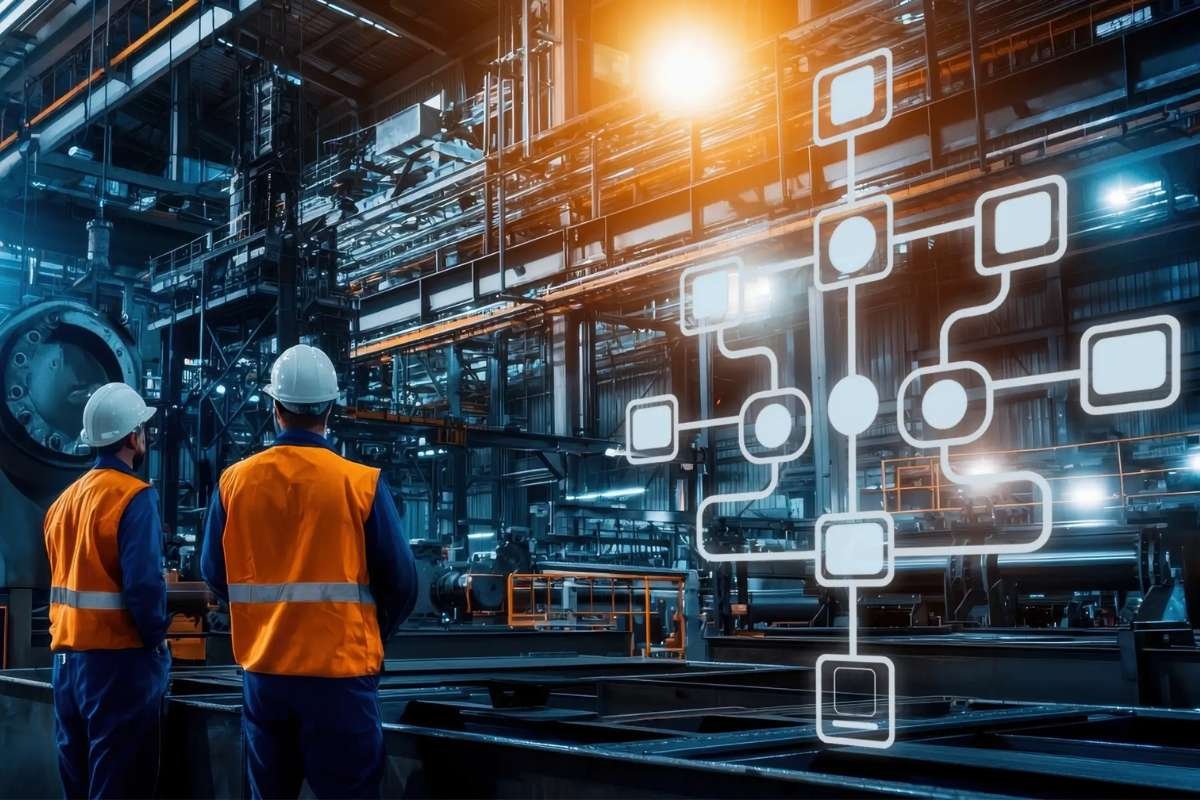
Before you connect a single machine, map how work actually moves through the factory. Otherwise, you risk giving a digital makeover to a process that was already messy.
A simple way to see it is:
Production input → Machine/process → Data capture → Analysis → Decision → Action → Feedback
For each step, ask:
- What happens here?
- Where is data created?
- Who uses it?
- Which decisions are still manual?
- Where do delays or errors show up?
- What happens when something goes wrong?
This gives you the foundation for a smart manufacturing process that does more than collect numbers. The useful part is the feedback loop. Data should lead to a decision; that decision should lead to action, and the result should feed back into the process.
Imagine a machine begins showing unusual vibration. Instead of waiting for a breakdown, the system flags the change. Maintenance checks the machine, fixes the issue, and production keeps moving. That is the difference between data sitting in a dashboard and data doing a job.
The business case can be meaningful too. Deloitte’s 2025 survey of 600 manufacturing executives found that respondents reported an average 10% to 20% improvement in production output after implementing smart manufacturing initiatives. That is a survey finding, not a promise for every factory.
Connect machines, people, and data without creating another headache
Once you know how the process works, it is time to connect the pieces. The goal is not to make every machine talk to every system just because it can. The goal is to make useful information move where it is needed.
| Part | What it does |
| Sensors | Capture things like temperature, speed, pressure, or vibration |
| Machine data | Shows what equipment is doing during production |
| Industrial IoT | Connects machines and moves their data |
| Edge computing | Processes data close to the machine for faster responses |
| Cloud systems | Store and analyze larger volumes of data |
| Production software | Brings production information together |
| People | Interpret the information and decide what happens next |
The important bit is what happens after the data is collected. A factory can have thousands of readings and still gain little from them if those readings sit in separate systems that never communicate.
This is where a smart manufacturing process starts becoming useful. Machine data can be combined with quality, maintenance, or production information to give teams a clearer picture.
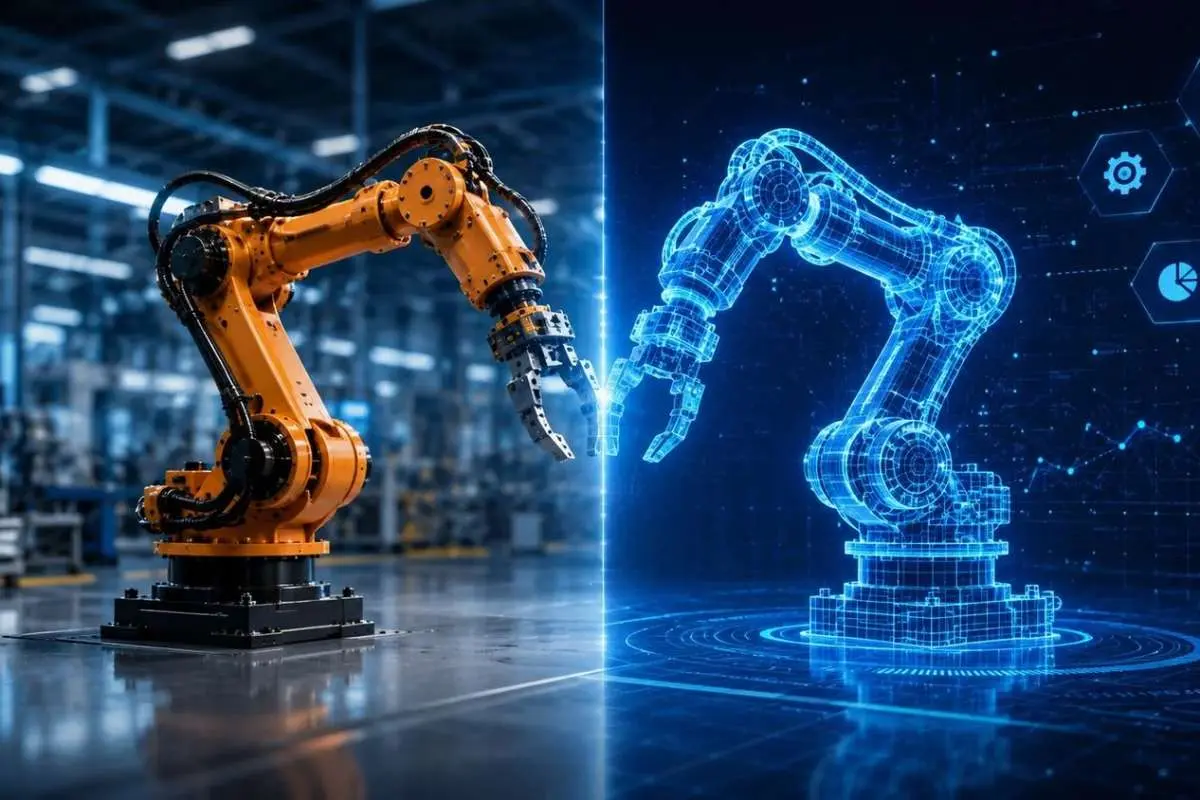
And when a digital view of a machine or process is useful for testing changes or studying performance, what is a digital twin can enter the picture. It gives teams another way to understand the real thing without immediately changing it.
Technology matters, but the connection between data, systems, and people matters more.
The technologies that turn raw production data into useful action
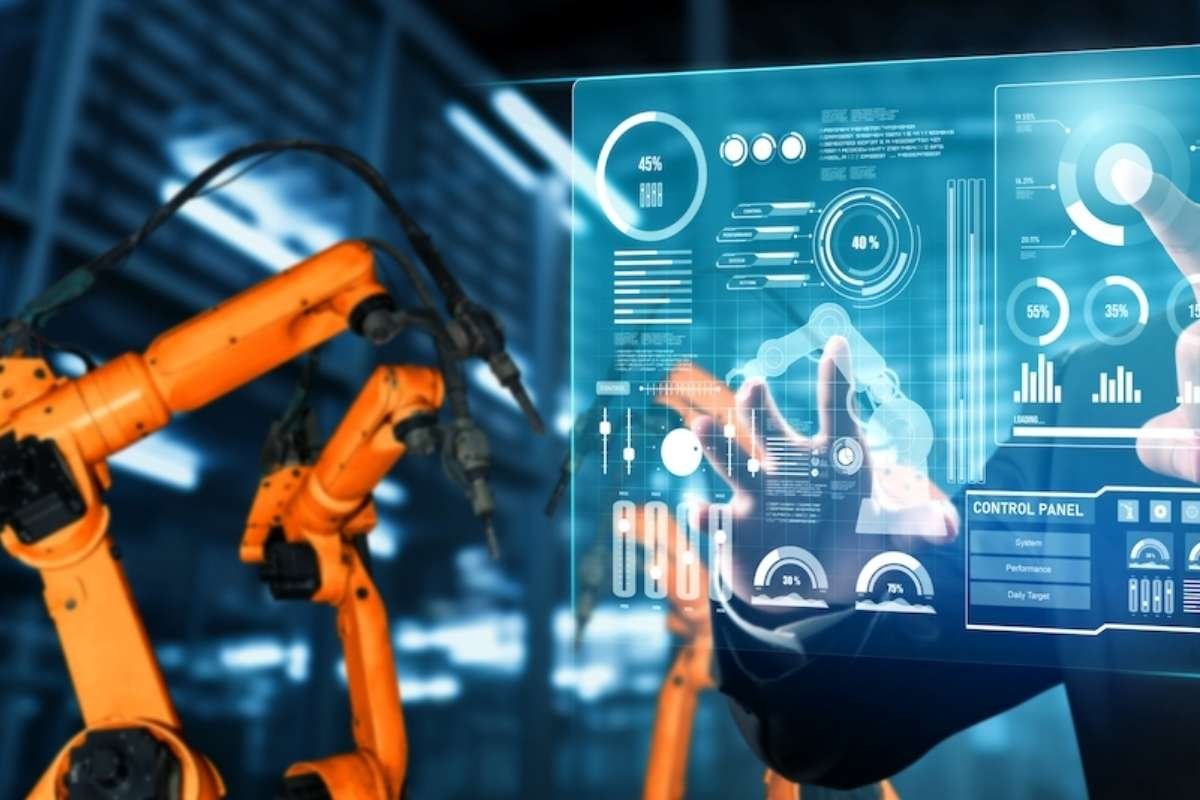
The technology layer is where things get interesting. But you do not need to throw every new tool at the factory and hope something sticks. Each one should solve a clear production need.
The tools doing the heavy lifting
- Sensors and connected equipment capture machine conditions such as temperature, speed, pressure, and vibration.
- Automation and robotics handle repetitive, precise, or physically demanding tasks.
- Analytics turn production data into patterns teams can understand and act on.
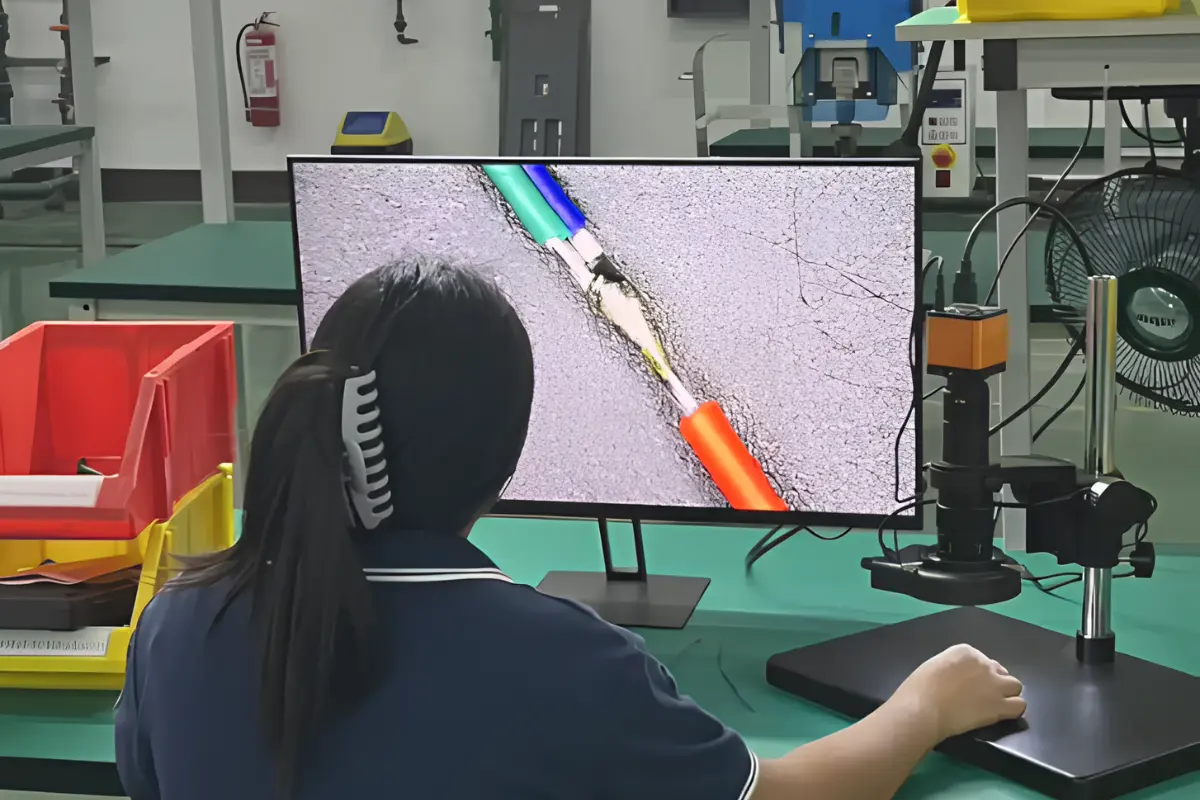
- Machine vision checks products for defects without relying only on manual inspection.
- AI and machine learning can spot patterns and support predictions from large amounts of data.
- Digital twins create digital models of machines or processes for testing and analysis.
- MES and production systems help track what is happening across production and keep information organized.
This is where smart manufacturing tools become useful. They connect the data to the people and decisions that need it.
For example, a sensor detects unusual machine vibration. Analytics spot a pattern, the system sends an alert, and an operator checks the equipment before the issue becomes a breakdown. That is useful technology. A dashboard nobody looks at? Not so much.
Deloitte’s 2025 Smart Manufacturing Survey found that 57% of surveyed manufacturers use cloud computing and 57% use data analytics at the facility or network level, while 46% use IIoT.
The goal is simple: make the smart manufacturing process more responsive, not more complicated.
Measure the process to see whether it is actually getting better
Once the process is running, you need to know whether it is actually improving. A smart factory should make it easier to answer a few basic questions:
- Is production getting faster?
- Is downtime falling?
- Is quality improving?
- Are operators spending less time chasing information?
- Is the available capacity being used better?
You do not need 50 metrics to answer them. A handful of smart manufacturing metrics can give you a much clearer picture. OEE, downtime, cycle time, first-pass yield, and scrap are useful places to start, depending on what you are trying to improve.
The trick is to measure what matters. If downtime is your biggest problem, track downtime before obsessing over cycle time. If quality is eating into margins, scrap and first-pass yield deserve more attention.
Then there is smart manufacturing ROI. The financial case should connect those improvements to real business value, such as more output, fewer rejected products, lower maintenance costs, or better use of existing capacity.
That is what makes the smart manufacturing process worth measuring. You are not collecting numbers for decoration. You are checking whether the factory is getting better.
Where smart factories go wrong during implementation
A factory can spend heavily on new software and still end up solving the wrong problem. That is where many smart manufacturing mistakes begin. The issue is rarely a lack of technology. More often, the rollout gets ahead of the people and the process.
- Too much, too soon
Trying to transform the entire factory at once can make a simple improvement project unnecessarily complicated. Starting with one process, machine, or production line gives the team room to learn before expanding.
- Technology before the problem
Choosing a tool before defining the problem is another easy trap. If nobody can clearly explain what the technology is meant to improve, it probably is not ready to be implemented.
- Forgetting the people and the data
Operators know where processes break down, so leaving them out can create systems that look good on paper but fail on the floor. Poor or disconnected data creates a similar problem.
And while Industry 4.0 vs smart manufacturing can help clarify the broader concepts, the practical focus should stay on what improves the factory.
A smart manufacturing process works best when technology follows the problem, not the other way around.
What a practical smart manufacturing rollout looks like
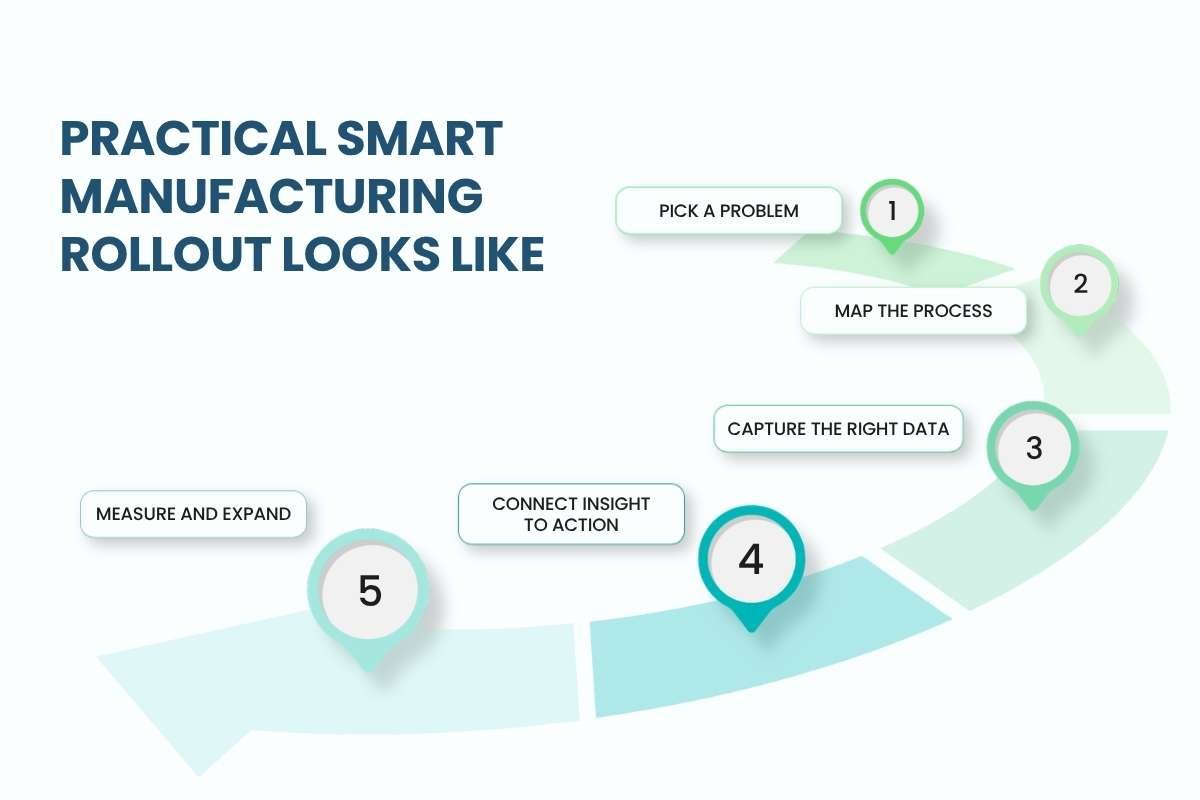
A practical rollout does not need to become a giant transformation project. Start small, prove the result, then build on it.
| Step | What to do | Example |
| 1. Pick a problem | Choose one issue worth fixing | Frequent machine downtime |
| 2. Map the process | Understand where the problem occurs | Find where delays begin |
| 3. Capture the right data | Collect only useful information | Track machine condition |
| 4. Connect insight to action | Turn data into a response | Alert maintenance before failure |
| 5. Measure and expand | Check the result, then scale | Reduce downtime with smart manufacturing and apply what works elsewhere |
The best rollouts are iterative. One improvement that works on the shop floor is worth more than a grand plan that never gets there. That is how a smart manufacturing process grows without becoming a headache.
Conclusion: Make the factory smarter one process at a time
A factory does not become smart because it has more machines, sensors, or software. It becomes smarter when those tools help people see what is happening, understand why it is happening, act on it, and learn from the result.
That is the real value of a smart manufacturing process. You do not need to overhaul the entire factory to get there. Start with the process where better information could make the clearest difference, fix what is not working, measure the result, and then decide where to go next.
Small improvements can build into something much bigger. The factory gets better, the team learns what works, and the next improvement becomes easier to tackle.
If you want to go deeper into the bigger picture, Smart Manufacturing is the natural next step.
FAQs
1. What is a smart manufacturing process?
A smart manufacturing process uses connected machines, production data, software, and people to monitor operations, make decisions, and improve production.
2. How does a smart manufacturing process work?
It captures production data, analyzes it, identifies useful insights, triggers action, and uses the results to improve the next production cycle.
3. What technologies are used in smart manufacturing?
Common technologies include sensors, industrial IoT, robotics, machine vision, AI, machine learning, analytics, digital twins, and MES systems.
4. Why is data important in smart manufacturing?
Data shows what is happening during production, helping teams identify problems, make faster decisions, reduce waste, and improve overall performance.
5. How can manufacturers start smart manufacturing?
Start with one clear production problem, map the process, collect relevant data, connect it to action, measure results, and expand what works.