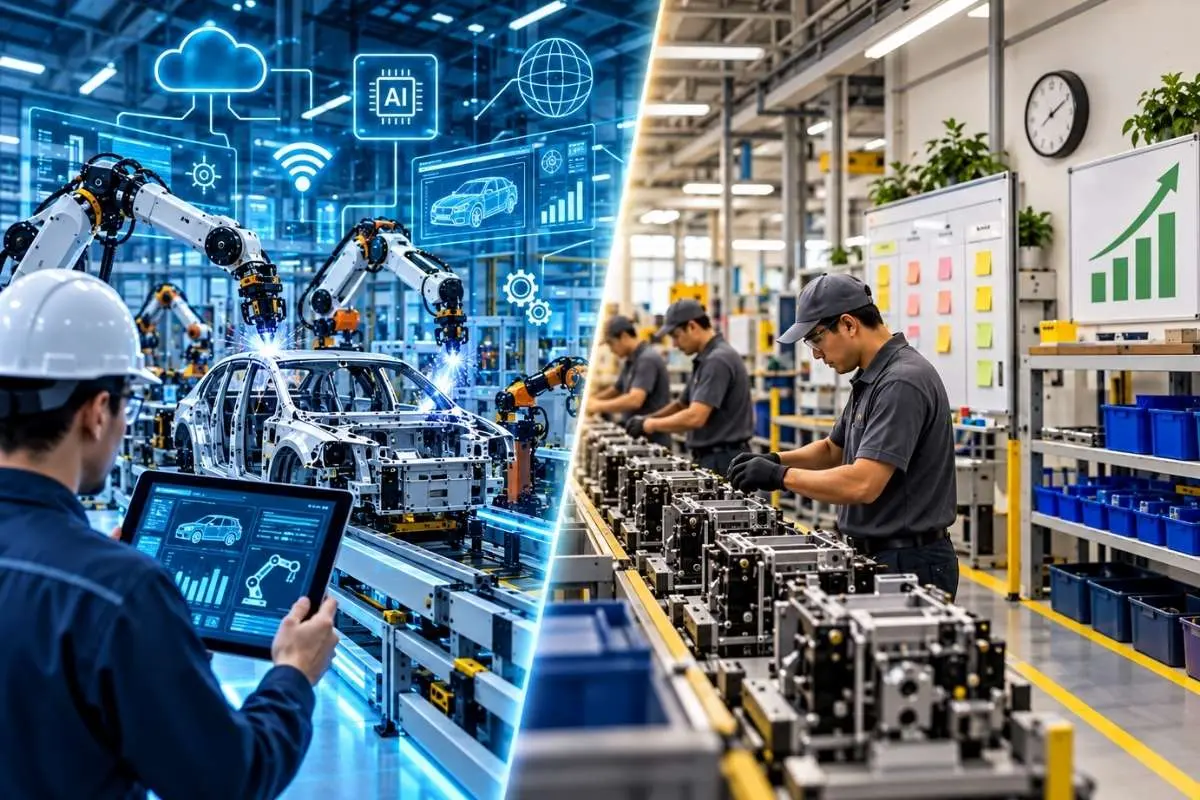
Smart manufacturing mistakes usually start before the technology does
A factory invests in sensors, connects a few machines, builds a shiny dashboard, and waits for the “smart” part to kick in. Then reality arrives. The machines are connected, but downtime is still happening. The data is flowing, but nobody knows what to do with it. The dashboard, meanwhile, has become excellent at displaying problems.
That is where many smart manufacturing mistakes begin. The problem is rarely the technology alone. Poor planning, weak processes, unclear goals, and rushed implementation can derail an otherwise useful project.
The good news? You do not need to avoid digital transformation. You just need to avoid learning its most expensive lessons the hard way.
1. Starting with technology instead of the factory problem
It is easy to get distracted by the shiny stuff. A new sensor promises better visibility, analytics promises smarter decisions, and automation promises fewer headaches. Before long, the factory had several new tools but no clear problem to solve.
Start with the factory instead. Ask:
- Where are we losing time, money, or quality?
- What information are we missing?
- Who needs that information?
- What decision should it help them make?
This is where many smart manufacturing mistakes begin. Collecting more data does not help if nobody knows what to do with it.
A better approach is simple: problem → data → action → measurement.
Define the problem, collect the right data, decide what action it should support, then measure the result. A clear smart manufacturing process keeps technology in its proper role: solving an operational problem, not creating another one.
2. Buying smart manufacturing tools without a clear use case
More technology does not automatically mean better operations. You can connect dozens of machines, collect thousands of data points, and still struggle to explain why yesterday’s production target was missed.
That is the tool-first trap.
Before choosing smart manufacturing tools, ask what the technology will actually help someone do.
Useful technology:
Helps a team make a faster or better operational decision.
Expensive decoration:
Adds another screen that nobody checks after the first two weeks.
The right tool should also fit the way your factory works. Think about existing workflows, employee skills, maintenance needs, and production goals. A solution that looks impressive in a demo but feels awkward on the shop floor will not magically become useful after deployment.
That is another common source of smart manufacturing mistakes: choosing technology because it can do something, rather than because the factory actually needs it.
3. Treating data quality as someone else’s problem

Data is the less glamorous side of smart manufacturing, but it is also where many projects quietly go wrong. A dashboard cannot fix messy inputs, no matter how impressive it looks.
Common problems include:
- Inconsistent machine data
- Missing production records
- Disconnected systems
- Unclear data ownership
- Different definitions for the same metric
These are the kinds of smart manufacturing mistakes that can make good technology produce questionable results. Even smart manufacturing metrics are only useful when the data behind them is reliable, and everyone agrees on what they actually measure.
The need for solid data foundations is becoming harder to ignore. Deloitte’s 2025 Smart Manufacturing and Operations Survey found that 57% of surveyed manufacturers use cloud computing and 57% use data analytics at the facility or network level.
The takeaway is simple: connecting more systems is not the same as creating trustworthy data. Before chasing another data point, make sure the ones you already have can be trusted.
4. Expecting a new system to fix an old process
Putting technology on top of a weak process rarely fixes it. It often just creates a faster, more expensive version of the same problem.
Take a paper inspection checklist. Moving it into software may make the records easier to store, but it will not fix unclear responsibilities, poor inspection timing, or missed follow-ups.
Before bringing in smart manufacturing technologies, take a close look at how the work actually happens. A useful starting point is to:
- Map the current process
- Find the biggest bottlenecks
- Remove unnecessary steps
- Decide what is worth automating
- Get operators involved before rollout
The goal is not to automate everything. It is to make the process work better, then use technology to support it.
Skipping that step is one of the more costly smart manufacturing mistakes, especially when a shiny new system ends up solving a problem nobody actually had.
5. Ignoring the people who have to use it
The people closest to the work often spot problems long before a dashboard does. Operators know which machine behaves strangely. Maintenance teams know which fixes keep coming back. Leave them out, and you may miss the most useful feedback you have.
Common mistakes include:
- Introducing systems without enough training
- Designing workflows without operator input
- Expecting instant adoption
- Measuring deployment instead of actual usage
This is where smart manufacturing mistakes can become people problems. A system may be technically successful but still fail if employees find it confusing, slow, or disconnected from their daily work.
The challenge matters for smart manufacturing for small businesses too. Smaller teams often have fewer people to train and less room for an expensive rollout that nobody uses.
Deloitte’s 2025 survey found 48% of respondents faced moderate to significant challenges filling production and operations management roles, while 35% cited adapting workers to the “Factory of the Future” as a top concern. Workforce readiness clearly deserves a seat at the planning table.
6. Chasing ROI without measuring the right thing

A smart manufacturing project does not need to produce a huge return overnight. What matters is knowing which business result you expect it to improve.
Depending on the project, that could be:
- Less unplanned downtime
- Higher throughput
- Lower scrap
- Better product quality
- More available capacity
- Lower maintenance costs
This is where smart manufacturing ROI needs a little discipline. Set a baseline before implementation, define the target, and decide when you will measure the result. Otherwise, “ROI” can quickly become a very confident number looking for evidence.
The same technology can deliver very different results depending on the process, problem, and starting point. Deloitte’s 2025 survey reported average net improvements of 10% to 20% in production output, 7% to 20% in employee productivity, and 10% to 15% in unlocked capacity among surveyed manufacturers.
Smart manufacturing mistakes often happen when these kinds of figures are treated as promises rather than potential outcomes. Your factory gets its own baseline, not someone else’s headline number.
7. Scaling before the pilot has earned it
A pilot works. Great. Time to roll it out across the entire plant, right? Not quite.
A pilot needs to prove more than “the technology works.” Before scaling, check whether:
- The problem was real.
- The solution improved an operational outcome.
- Employees can use it comfortably.
- The data is dependable.
- The economics make sense.
- The process can be repeated elsewhere.
A digital twin can also help when you want to understand how a process might respond to changes before making a larger investment. For a quick example, what is a digital twin is worth exploring before taking that step. A digital representation of a process or asset can help teams understand or test changes before making larger investments. The pilot should still prove the real-world case first.
Scaling too early is one of those smart manufacturing mistakes that can turn a promising experiment into a plant-wide headache. Get one use case right, learn from it, then earn the right to go bigger.
8. Forgetting that connected factories create new risks
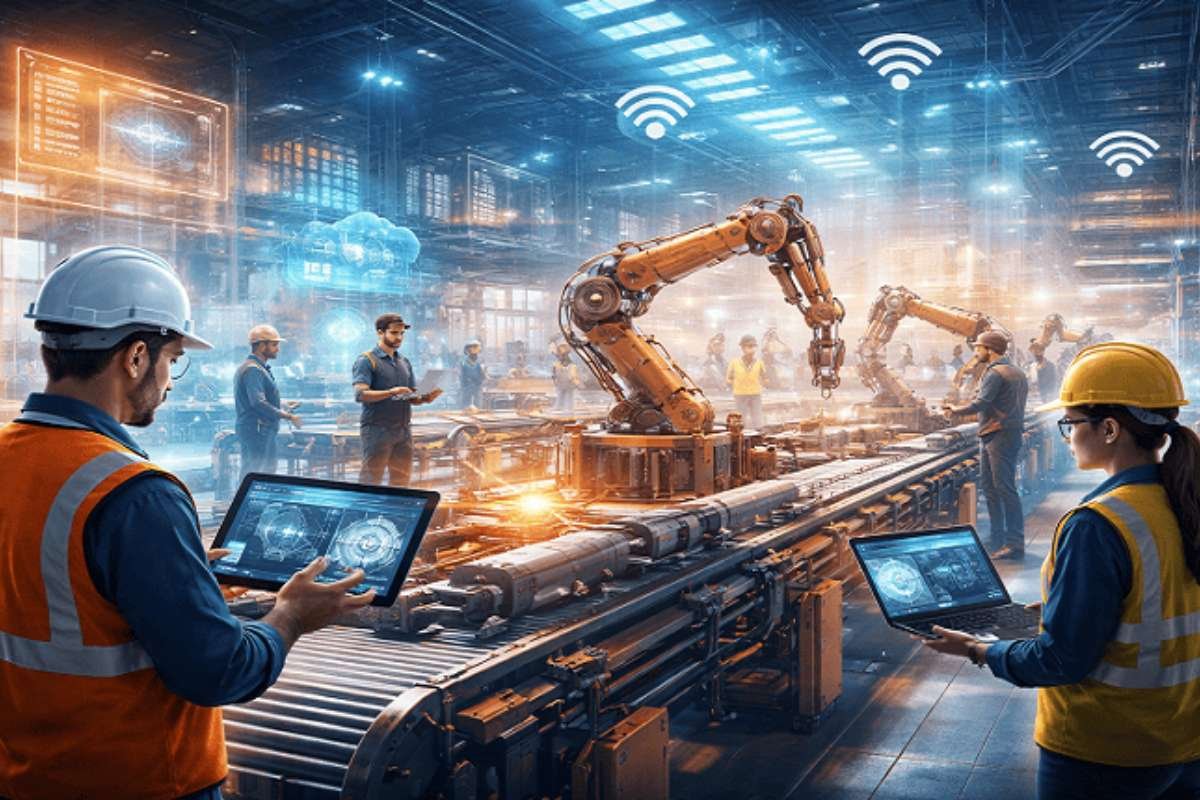
Connecting machines, software, networks, and data can make a factory more capable, but it also creates more points that need attention. One weak connection can affect systems that once worked independently.
You do not need to turn every smart manufacturing project into a cybersecurity exercise. Start with the basics:
- Control who can access systems
- Know what is connected and where
- Review risks regularly
- Assign clear ownership
- Build security into system design
The bigger point becomes clearer when you look at Industry 4.0 vs smart manufacturing. Digital transformation can create new operational opportunities while introducing new dependencies at the same time.
A connected factory should be easier to manage, not easier to disrupt.
Conclusion: The smartest move is avoiding the expensive lesson
The goal is not to avoid technology. It is to avoid deploying it without a clear reason, a workable process, reliable data, prepared people, or a way to measure what actually improved.
The path forward is straightforward:
- Start with the problem you need to solve.
- Build a process that supports the goal.
- Choose technology that fits the process.
- Bring your people along.
- Measure what changed.
- Scale what works.
The smartest factories are not necessarily the ones with the most sensors, software, or connected machines. They are the ones that use technology to solve real operational problems and make better decisions.
So before adding another system, ask: What will this help us do better?
That question alone can prevent plenty of smart manufacturing mistakes and keep your investment focused on results. If you are ready to build the bigger picture, start with smart manufacturing, from the fundamentals to the technologies that make it work.
Smart Manufacturing Mistakes FAQ
1. What are the most common challenges when implementing smart manufacturing?
Legacy equipment, integration issues, limited budgets, skills gaps, and difficulty connecting new systems with existing factory infrastructure.
2. How can manufacturers choose the right smart manufacturing technology?
Compare each technology against production goals, compatibility, scalability, maintenance needs, security requirements, and expected business value.
3. What role does cybersecurity play in smart manufacturing?
Cybersecurity protects connected machines, production systems, sensitive data, and operational networks from unauthorized access and disruption.
4. How long does it take to implement smart manufacturing?
Timelines vary widely. A focused pilot may take months, while broader factory transformation can require several years.
5. Can existing factory equipment be used in smart manufacturing?
Yes. Many manufacturers can modernize legacy equipment using sensors, gateways, or integration layers instead of replacing every machine.