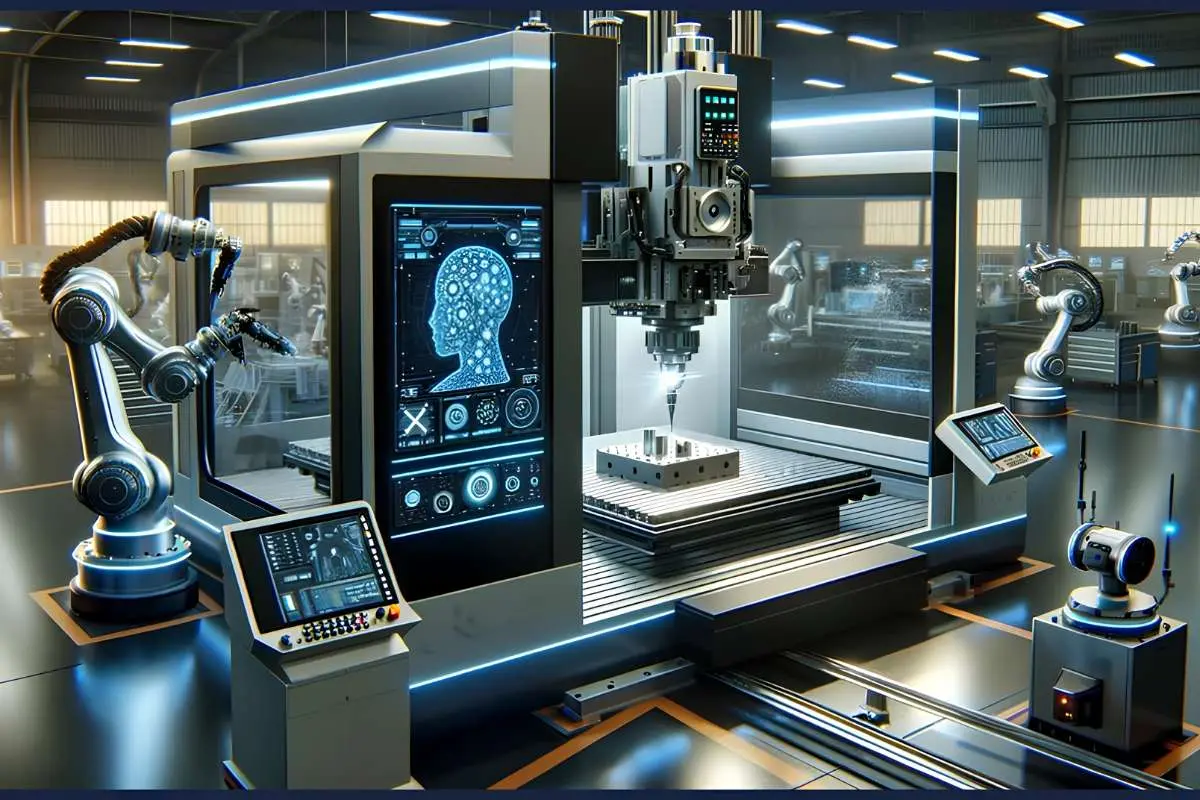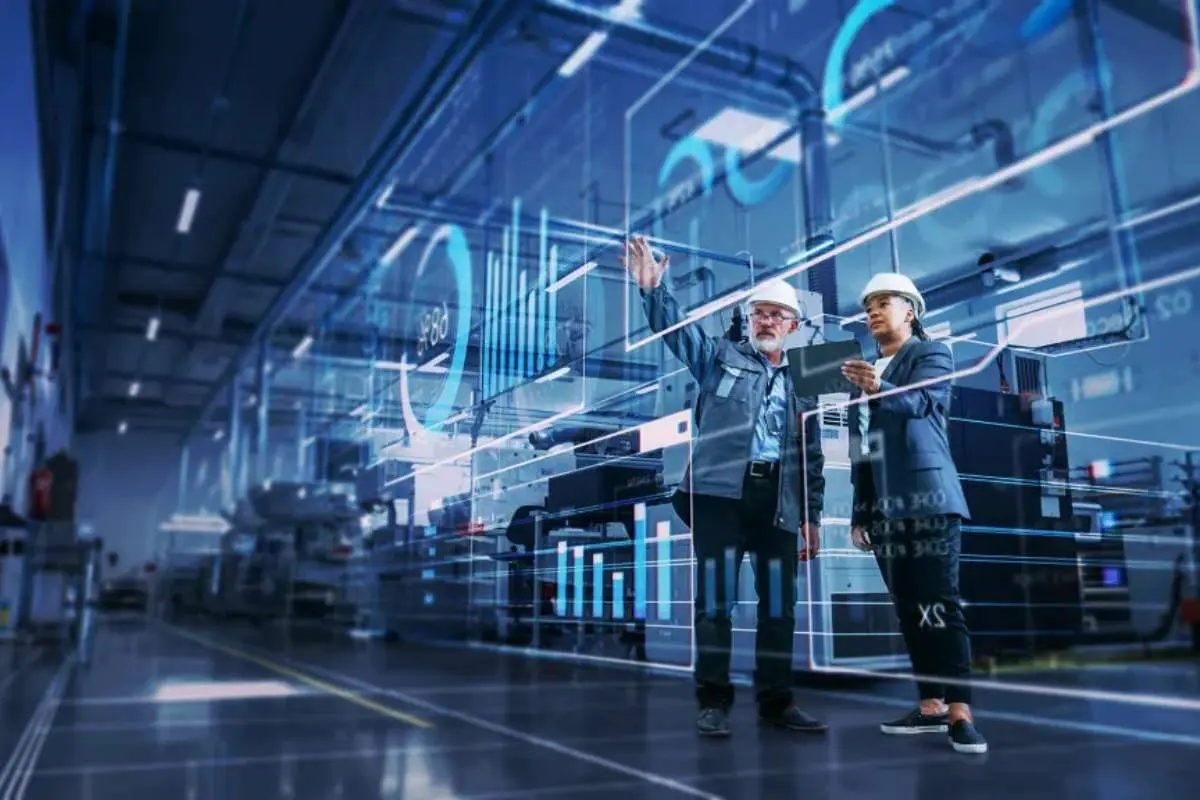
A smart factory can sound like a simple recipe: add more robots, sensors, and software, then wait for the magic to happen. Real factories are rarely that cooperative.
Siemens offers a useful case for understanding the Siemens smart manufacturing strategy, connecting the physical factory with digital models, automation, software, and data instead of treating each as a separate upgrade. Its Electronics Works Amberg is a good example of that thinking in practice.
So, what does Siemens actually do differently, and what can manufacturers learn from it? Understanding what a digital twin is a good place to start.
The Siemens approach starts by connecting the physical and digital factory
A useful way to understand the Siemens smart manufacturing strategy is to look beyond individual machines. Siemens describes its wider industrial strategy as combining the real world of industry with software, data and AI, with digital tools spanning areas from design and engineering through production and operations.
That changes the order of things. A technology-first factory might buy automation, connect machines, collect data and then wonder what to do with it. Siemens’ approach is closer to:
Model → connect → simulate → automate → measure → improve.
That logic also sits behind the smart manufacturing process. The process comes first because even the fanciest technology is not particularly useful if it is disconnected from how work actually happens. The goal is a continuous flow of information between the digital and physical sides of production, so decisions can improve the factory rather than simply decorate it with more software.
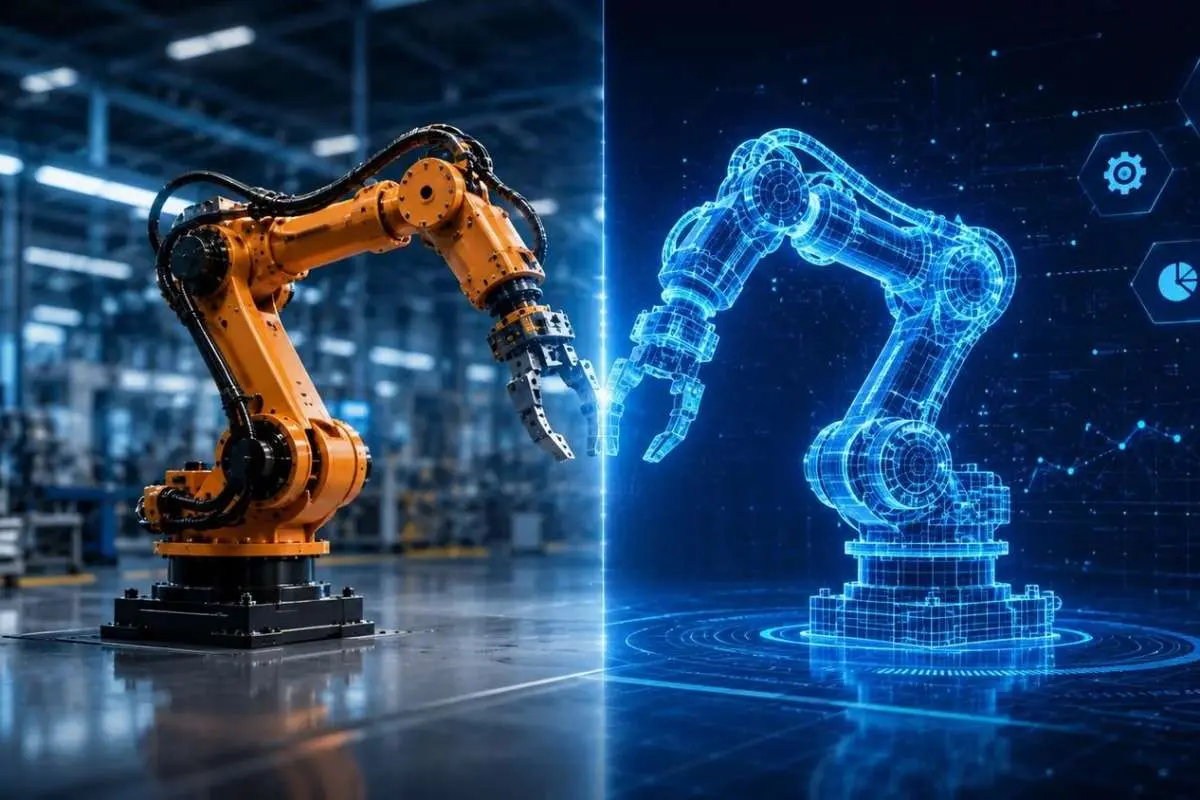
Digital twins give Siemens a way to test the factory before changing it
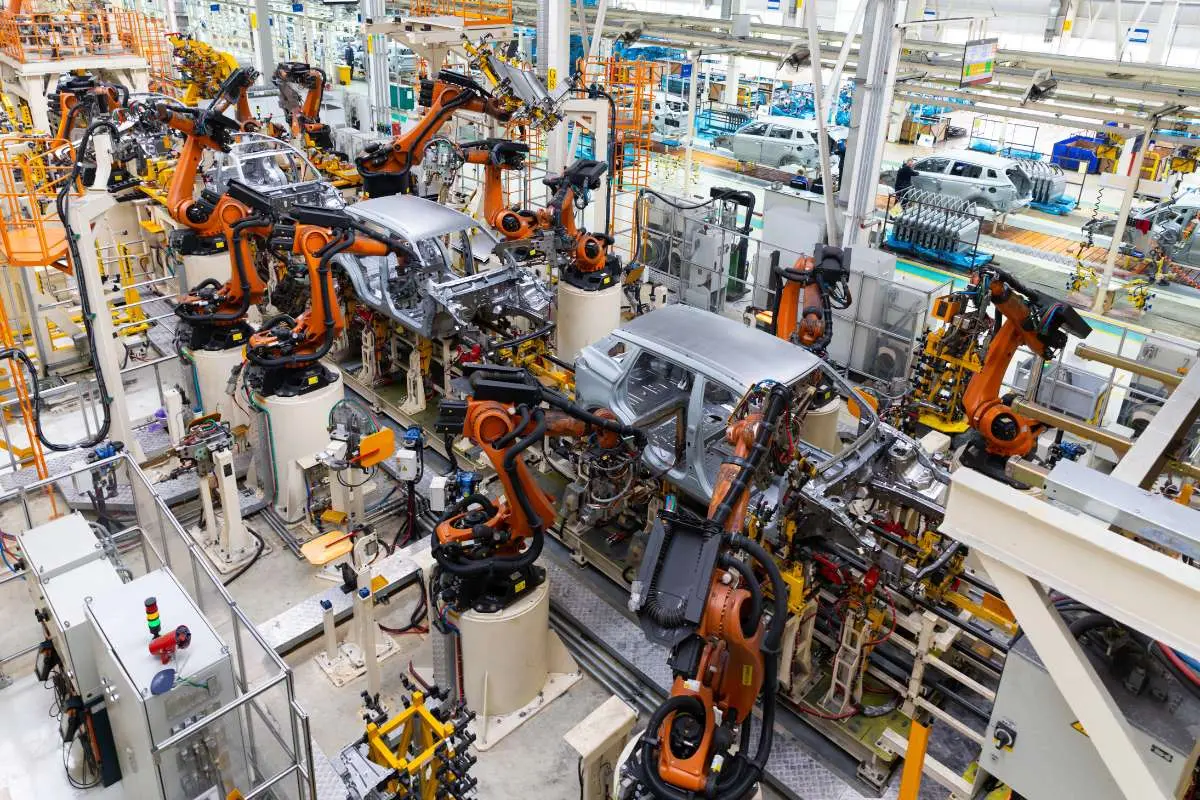
A factory change can get expensive quickly when the first test happens on the actual production floor. Siemens takes a different route with digital twins, using virtual models of products, machines, production processes, and plants to test changes before putting them into the physical world.
That makes simulation more than a fancy 3D model. It gives teams a chance to spot problems early.
Test first, build second
This is an important part of the Siemens smart manufacturing strategy because a digital model can help teams test an idea before committing time, equipment, and money to it.
At its Electronics Works Amberg, Siemens says simulation showed that planned machine modules would not meet the required cycle time. The team adjusted the modules in the digital model before making the physical change.
That is the practical appeal of smart manufacturing technologies:
Less “let’s install it and see.” More “let’s test it before we touch the factory.”
Automation is useful when it is tied to data, not treated as the whole strategy
It is easy to look at a highly automated factory and assume the robots are doing all the clever work. They are not. The bigger story is how those machines fit into a wider flow of data, software and production decisions.
Amberg puts the idea into numbers
Siemens says its Electronics Works Amberg produces around 17 million SIMATIC products each year. It also reports:
- 75% of the value chain is handled independently by machines and robots.
- The facility maintains a reported 99.9990% quality standard.
These are Siemens’ own figures for its Amberg facility, so they show what this particular factory has achieved, not an industry-wide benchmark.
The useful takeaway is not simply “buy more robots.” It is that automation becomes more valuable when it has the right information behind it. That is where smart manufacturing tools fit into the wider production system.
The Siemens smart manufacturing strategy treats automation as one part of that system, with data and software helping machines, processes, and people work together.
How the Siemens Smart Manufacturing Strategy Makes Data Measurable
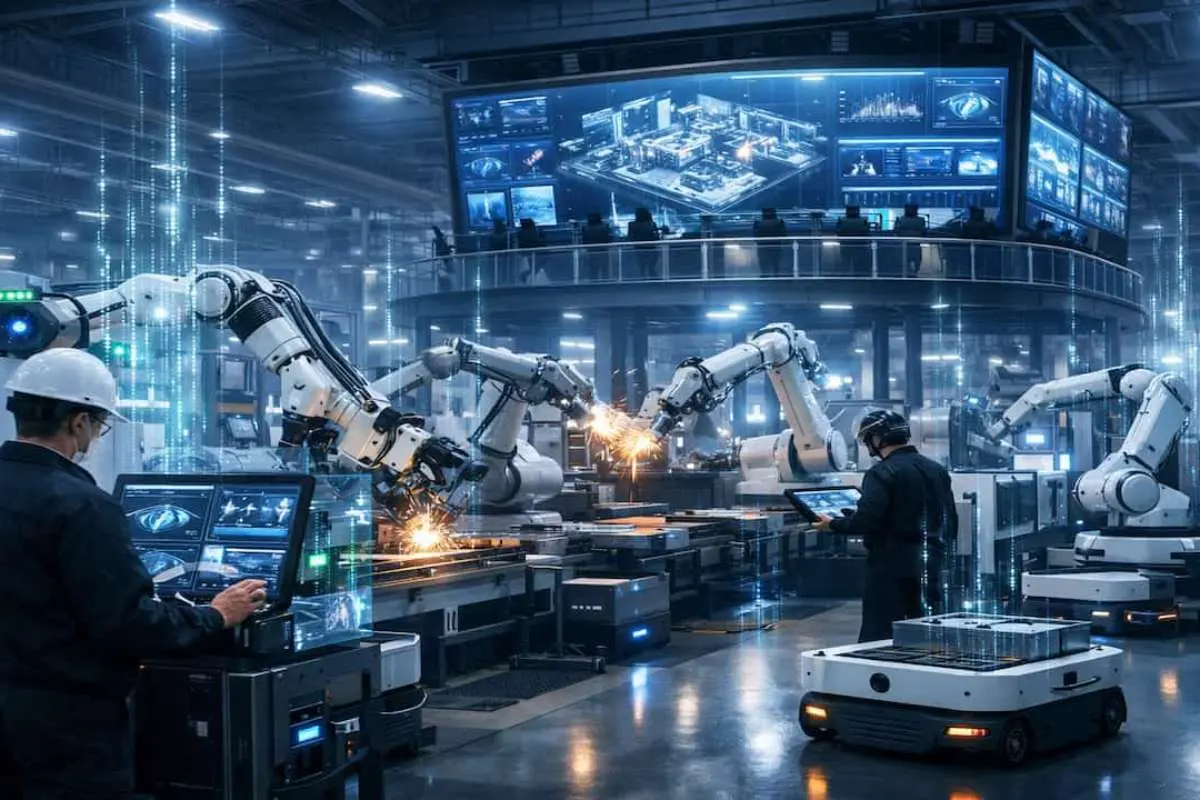
Collecting factory data is easy enough. Knowing whether that data is actually helping the factory is the harder part. A smart manufacturing setup needs clear measures that show whether a process is improving, slipping, or simply staying busy.
The useful measures usually include:
| What to measure | What it can tell you |
| Production quality | Whether defects or rework are changing |
| Cycle time | How quickly a process completes a unit |
| Throughput | How much the factory produces in a given period |
| Downtime | Where lost production time is building up |
| Changeover time | How efficiently production switches between products |
| Energy or resource use | Where production may be consuming more than necessary |
This is where smart manufacturing metrics become useful. They turn a stream of machine readings into something teams can act on.
The Siemens smart manufacturing strategy follows the same basic logic: data matters when it supports better decisions, not when it simply fills another dashboard.
And when those improvements can be tied to money, smart manufacturing ROI becomes easier to assess. The technology may be digital, but the questions are still very physical: Did output improve? Did waste fall? Did downtime shrink?
Siemens’ digital factory model shows why integration matters
Amberg is interesting for more than its level of automation. The bigger story is how different parts of the factory connect and share information instead of operating as separate islands.
A simplified view looks like this:
Product data → production planning → machines → quality checks → operational data → improvement
Siemens describes the Amberg facility as having end-to-end horizontal and vertical integration, connecting production with communication, software, and services.
What makes the model different?
Think of it less as a factory full of smart machines and more as a factory where those machines can contribute to one connected production loop.
That distinction matters because a manufacturer can have:
- Excellent automated equipment
- Plenty of production data
- Sophisticated software
- Strong quality systems
Yet still make disconnected decisions.
The case study on Siemens’ digital factory approach makes this integration easier to see. It shows why the Siemens smart manufacturing strategy is not really about any single technology. The value comes from connecting technologies so information can move through the production process and help teams improve what happens next.
What Siemens’ strategy says about scaling smart manufacturing
The Amberg example does not mean every manufacturer needs to build a Siemens-sized digital factory. The more useful lesson is how the pieces can be added and connected over time.
Siemens’ Digital Enterprise strategy brings together:
- Digital twins for modelling products and production
- Industrial AI for smarter analysis and decisions
- Software-defined automation for more flexible control
- Digital threads to connect information across the product and production lifecycle
The Siemens smart manufacturing strategy keeps evolving
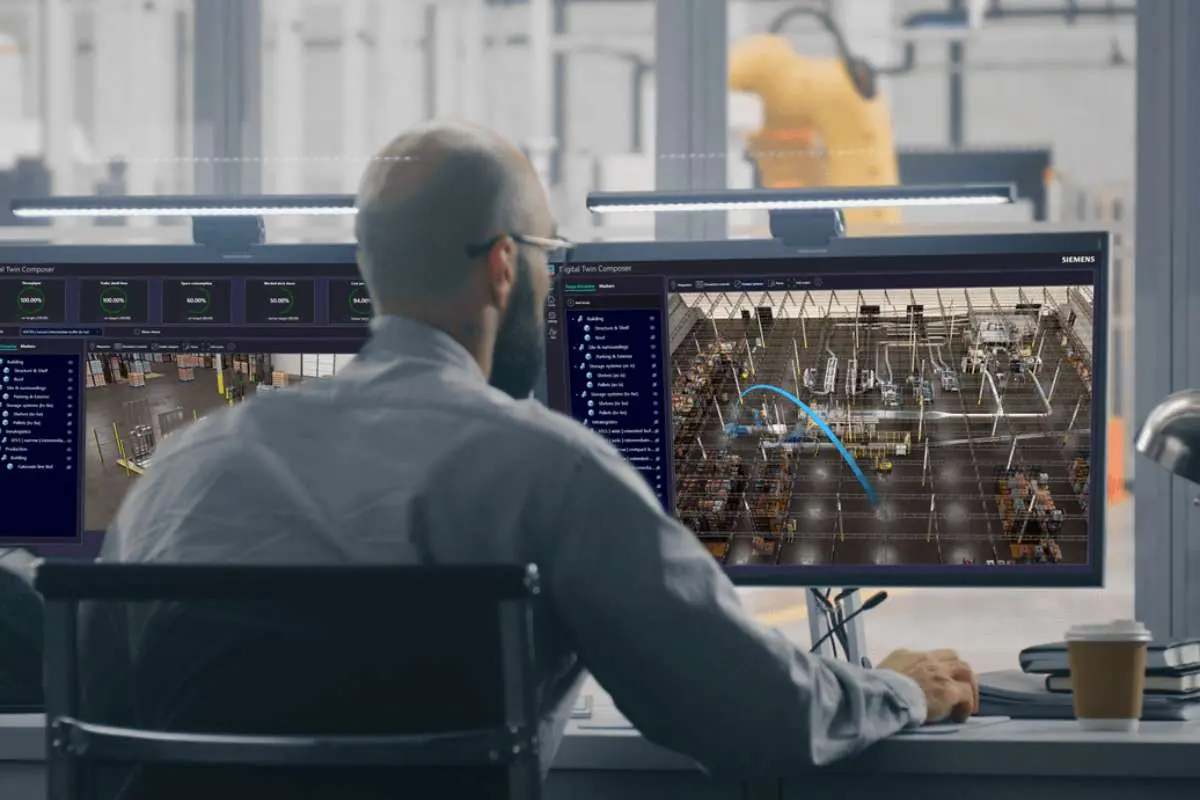
In 2025, Siemens highlighted industrial AI, software-defined automation and digital twin technology as key areas in its move toward AI-driven industry. It also pointed to a broader partner ecosystem as part of that direction.
For manufacturers, smart manufacturing lessons from top manufacturers are therefore less about copying a technology stack and more about understanding the architecture behind it.
The Siemens smart manufacturing strategy shows a simple principle: start with useful capabilities, connect them, then build from there.
Conclusion: The smartest part of Siemens’ factory is not one machine
The most useful lesson from Siemens is not that manufacturers need more robots, software or sensors. It is that technology works better when the factory has a clear system behind it.
Siemens’ approach connects the physical and digital sides of production, but that does not mean every manufacturer needs to copy Amberg. The scale, budget and production needs will be different, especially for businesses exploring smart manufacturing for small businesses.
Before adding another shiny piece of technology, ask:
- What production problem are we trying to solve?
- What data would help us make that decision?
- Which technology actually supports the process?
That thinking sits at the heart of the Siemens smart manufacturing strategy.
The practical approach is simpler: understand the process first, figure out what information is missing, then use technology where it can genuinely make the work better. From there, measure what changed and build on what works.
Because a factory does not become smart when it owns an impressive robot. It becomes smarter when the robot, the data, and the people know what they are trying to accomplish.
For the bigger picture, our guide to smart manufacturing brings these technologies, processes, and strategies together.
FAQs
1. What is Siemens’ approach to smart manufacturing?
Siemens connects automation, industrial software, data, AI, and digital twins to improve manufacturing across connected production systems.
2. How does the Siemens smart manufacturing strategy use digital twins?
It uses digital twins to model and test products, machines, and production processes virtually before making physical changes.
3. What is the Siemens Electronics Works Amberg known for?
The Amberg facility is known for combining automation, digitalization, and integrated production systems to manufacture SIMATIC products.
4. How does Siemens use AI in manufacturing?
Siemens applies industrial AI to analyze production data, support decisions, improve processes, and enable more adaptive manufacturing systems.
5. What can manufacturers learn from the Siemens smart manufacturing strategy?
Manufacturers can focus on connected systems, useful data, and measurable improvements rather than adopting technology simply because it is available.