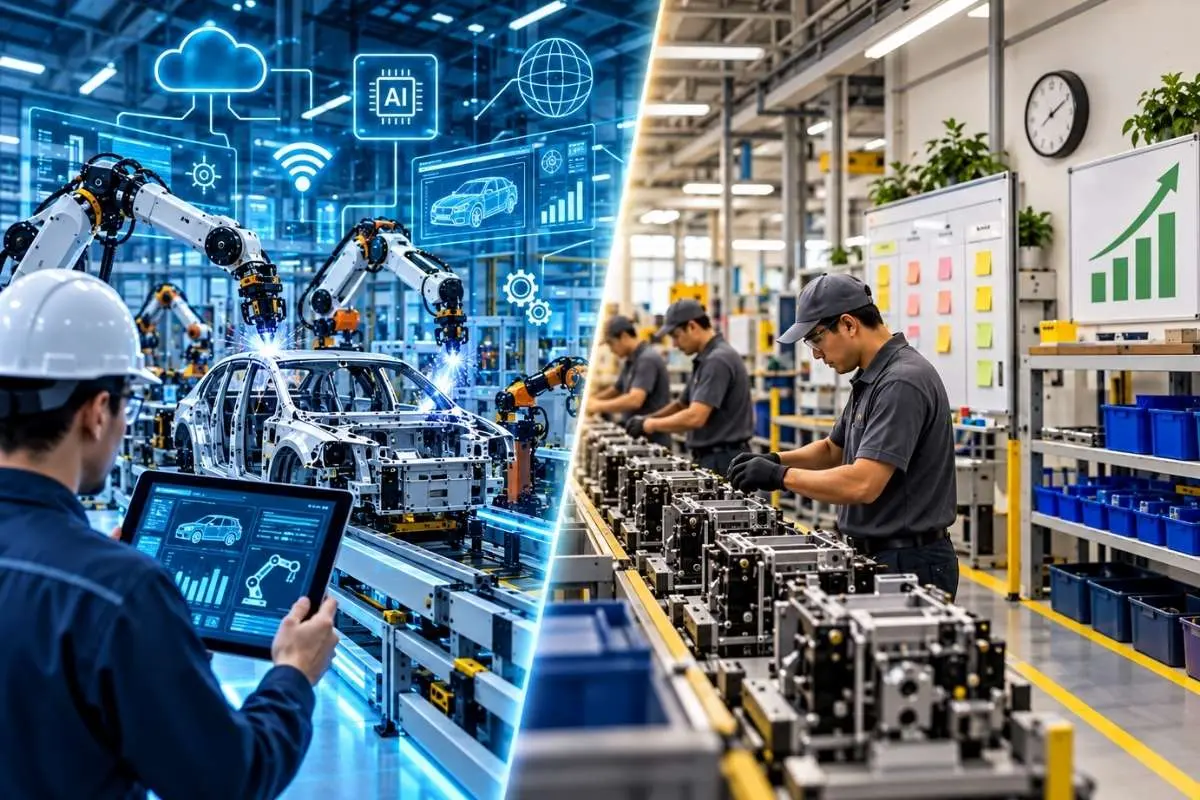
What do companies doing smart manufacturing right actually do differently? Usually, they are not simply buying more sensors, robots, or AI tools and hoping the factory becomes smarter by association. They start with a real production problem, then connect the right technology to it.
That might mean spotting equipment issues earlier, improving quality checks, or giving teams better production data. The result is a factory where technology supports better decisions instead of becoming another expensive screen on the wall.
In this article, we will look at real-world examples, the changes behind their results, the patterns worth borrowing, and the approaches that are better left alone. These Smart manufacturing lessons from top manufacturers show an important point: the interesting part is not the technology itself, but why it is used, where it fits, and what measurable result it produces.
What separates successful smart manufacturing projects from expensive experiments?
The difference often starts before anyone buys a sensor. Successful projects follow a simple chain: problem → data → technology → measurable result. The technology comes in because it solves something, not because someone found a shiny new tool.
That is a useful pattern to notice when looking at companies doing smart manufacturing right. They usually begin with a clear operational problem, check whether they have reliable data, change the process where needed, and decide how success will be measured.
| What to look for | Why it matters |
| Clear operational problem | Gives the project a purpose |
| Reliable data | Makes decisions more useful |
| Process change | Technology alone rarely fixes a process |
| Measurable metric | Shows whether the project worked |
| Scale path | Prevents another isolated pilot |
That is also why a smart manufacturing process should be treated as a connected improvement effort, rather than a one-off technology purchase.
The numbers show why this approach gets attention. Deloitte’s 2025 survey of 600 executives from large US manufacturing companies found reported improvements of 10% to 20% in production output, 7% to 20% in employee productivity, and 10% to 15% in unlocked capacity after smart manufacturing initiatives. These are survey findings, not universal benchmarks, and the respondents came from large manufacturers with at least $500 million in annual revenue and more than 1,000 employees.
How leading manufacturers turn factory data into measurable results
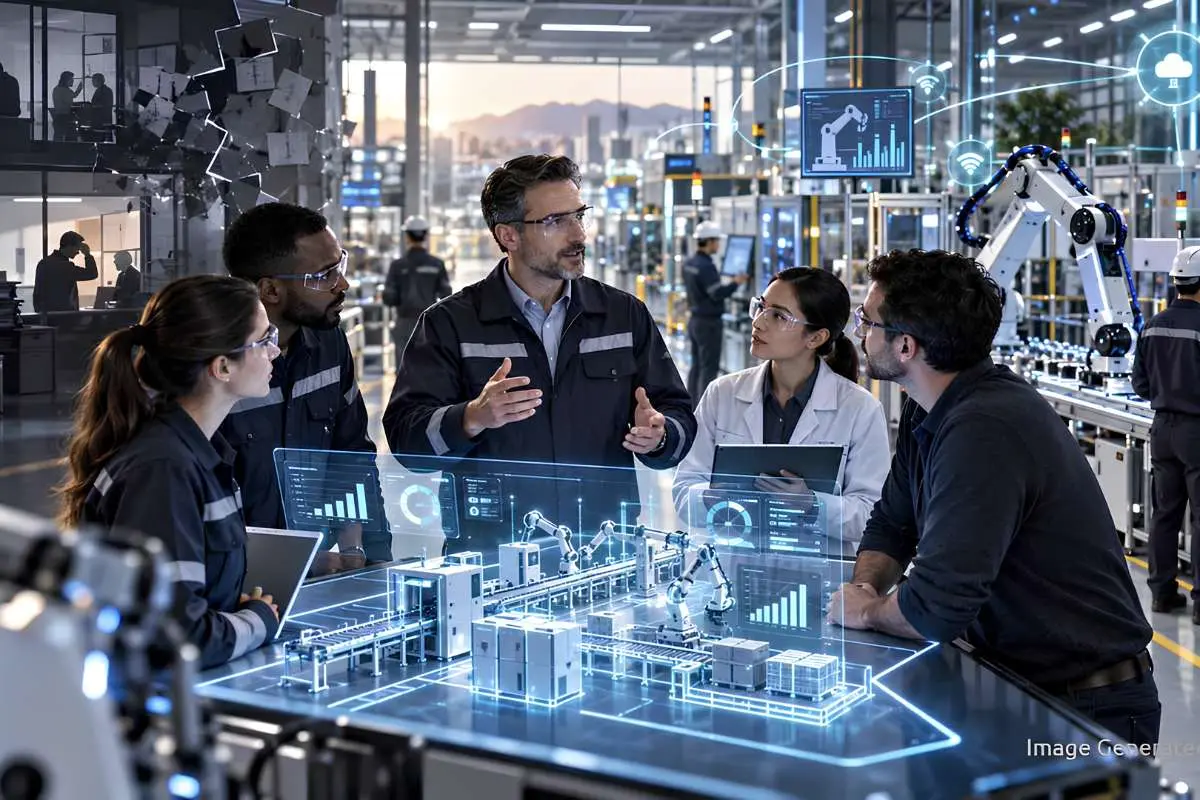
A factory can collect mountains of data and still make the same decisions it made 10 years ago. The difference is what happens after the data arrives. Companies doing smart manufacturing right tend to connect factory information to a decision someone can actually act on.
Here is what that can look like:
| Factory data | What it can help teams do |
| Machine performance | Spot early signs of equipment trouble |
| Production data | Find bottlenecks and improve throughput |
| Quality data | Trace defects back to their source |
| Order and process data | Improve lead times and scheduling |
| Energy data | Identify waste and reduce resource use |
The dashboard is not an achievement. The better decision is.
A maintenance team, for example, does not need another graph showing that a machine is vibrating. It needs to know whether that change suggests a problem worth investigating. That is where connected data starts earning its keep.
What successful manufacturers measure
This is why smart manufacturing metrics are so important. Manufacturers need a clear way to connect a technology project with an operational result.
That could mean tracking:
- Unplanned downtime
- Defect rates
- Production output
- Cycle time
- Lead time
- Labour productivity
For factories focused on equipment reliability, strategies that reduce downtime with smart manufacturing can turn machine data into an early warning system instead of another report gathering digital dust.
The results from leading factories show why this approach gets attention. The World Economic Forum reported in September 2025 that its latest Global Lighthouse Network cohort achieved an average 40% increase in labour productivity and 48% reduction in lead time through digital solutions.
These are Lighthouse sites selected for advanced transformation, so the figures show what leading operations have achieved, not what every factory should expect. That distinction matters. A smart factory is not built by copying someone else’s numbers. It is built by finding the numbers your own operation needs to improve.
Siemens shows why smart manufacturing is bigger than one technology
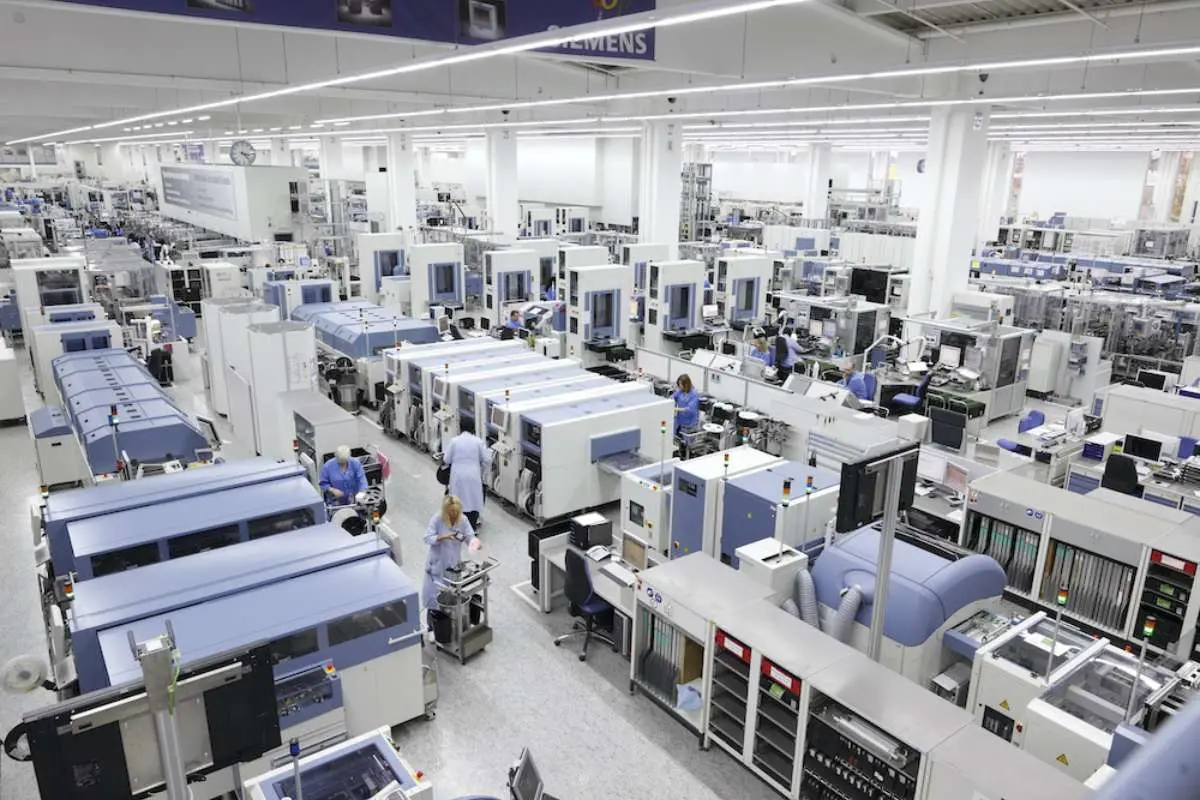
Siemens is a useful example because its approach is not built around one clever machine or a single AI tool. Its manufacturing systems bring together automation, connected equipment, industrial software and production data so different parts of the operation can work from the same information.
That matters because companies doing smart manufacturing right rarely treat each technology as a separate project. The Siemens smart manufacturing strategy shows how these capabilities can work together across planning, production, and quality instead of sitting in their own little digital islands.
One piece of this approach is the digital twin. In simple terms, it is a virtual representation of a physical product, machine, or process that can be used to understand and test changes before making them in the real world. A key part is the digital twin, a virtual model of a product, machine, or process that lets teams test changes before making them on the factory floor. Understanding what is a digital twin can help explain how this virtual layer connects the physical and digital sides of manufacturing.
What to notice
1. Technology connects to operations: Tools support real production work rather than existing for their own sake.
2. Data supports decisions: Information becomes useful when teams can act on it.
3. Systems work together: Automation, software, and data form a wider manufacturing system.
What the best smart factories do differently when they scale
A successful pilot is not the same as a successful transformation. Companies doing smart manufacturing right know that getting one machine or production line to work better is only the first step. The harder part is making that improvement work across more equipment, teams and sites.
That usually means getting a few basics right:
- Standardize data so different systems can work together.
- Connect systems instead of leaving information in separate silos.
- Train workers to use new tools confidently.
- Reuse proven solutions where the same problem appears elsewhere.
- Track results consistently across sites and processes.
- Scale after proving value, not simply because a pilot looked impressive.
The technology still matters, of course. But smart manufacturing technologies only create lasting value when they fit the process and the people using them.
And this approach is not reserved for giant factories. The same thinking behind large-scale transformations can guide smart manufacturing for small businesses too. The tools may be simpler and the budget smaller, but the starting point can be exactly the same: find a problem worth solving, prove the solution, then build from there.
The numbers matter, but so does the manufacturing problem
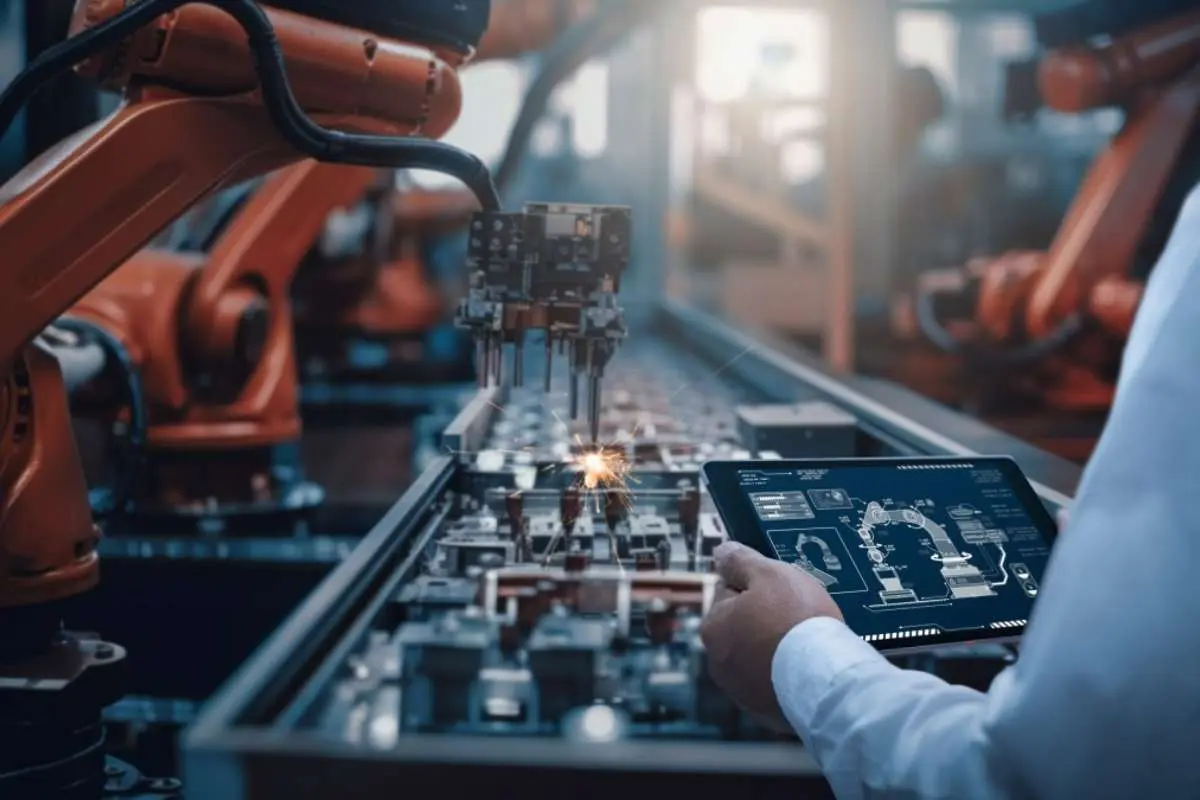
Results from leading factories are useful benchmarks, but they do not mean every manufacturer should buy the same technology. Companies doing smart manufacturing right start with the operational problem and work backward from there.
A factory struggling with repeated equipment failures may benefit from condition monitoring. One dealing with high defect rates might need better quality data. Another facing scheduling delays could gain more from connected production planning.
Start with the business case
Before investing, smart manufacturing ROI should connect the cost of a project to a measurable outcome, such as:
- Less downtime
- Fewer defects
- Higher output
- Shorter lead times
There is also a trap worth avoiding. Copying another manufacturer’s technology stack without understanding why it worked for them is one of the more common smart manufacturing mistakes.
The useful lesson from successful factories is not their exact technology mix. It is their habit of solving the right problem first.
What manufacturers can actually copy from these success stories
Companies doing smart manufacturing right can offer useful lessons, but the goal is not to recreate their factories. It is to understand the decisions behind their results.
Take this, not that
| Take from successful manufacturers | Don’t copy blindly |
| Start with a measurable problem | Their entire technology stack |
| Track operational results | Their exact investment size |
| Build on existing systems | Replace everything at once |
| Train the people using the system | Assume technology changes behavior |
| Scale proven use cases | Scale pilots because they look impressive |
The transferable lesson is the method, not the machinery. Your factory has its own processes, constraints, and priorities. The smartest move is to borrow what works conceptually, then build the solution around your own operation.
Conclusion: The smartest factory is not the one with the most technology
The examples in this article show what smart manufacturing can achieve when technology is tied to a real production need. But there is no universal technology stack that every factory needs to copy. Companies doing smart manufacturing right take a more practical approach: they solve the problem in front of them first.
As Ian Walls of Siemens Digital Industries Software put it while discussing the uneven adoption of digital manufacturing:
“The future is already here. It’s just not evenly distributed.”
— William Gibson
That is a useful way to look at smart manufacturing. Some factories may be further along, while others are still deciding where to begin. The right starting point is your own operation:
- What problem needs fixing?
- What information is missing?
- Which technology can help?
- How will the result be measured?
That keeps the investment focused and gives teams a clear reason for making the change. It also makes scaling easier because proven improvements have something solid behind them.
The biggest lesson from successful manufacturers is simple: start with the problem, prove the value, then scale what works.
The goal is not to build the fanciest factory on the block. It is to build one that knows what is going on before the production meeting does.
Frequently Asked Questions
1. Which industries use smart manufacturing most?
Automotive, electronics, aerospace, pharmaceuticals, food processing, and industrial equipment manufacturers widely use smart manufacturing technologies.
2. What do companies doing smart manufacturing right focus on?
Companies doing smart manufacturing right focus on measurable problems, useful data, connected systems, and improvements that support business goals.
3. How does smart manufacturing improve quality?
It uses production and machine data to identify process variations, detect defects earlier, and support more consistent quality control.
4. What technologies are commonly used in smart factories?
Common technologies include industrial IoT sensors, robotics, AI, machine learning, digital twins, cloud platforms, and manufacturing execution systems.
5. How can companies doing smart manufacturing right scale their results?
Companies doing smart manufacturing right typically prove a solution on a focused problem, measure results, then apply successful approaches across suitable operations.