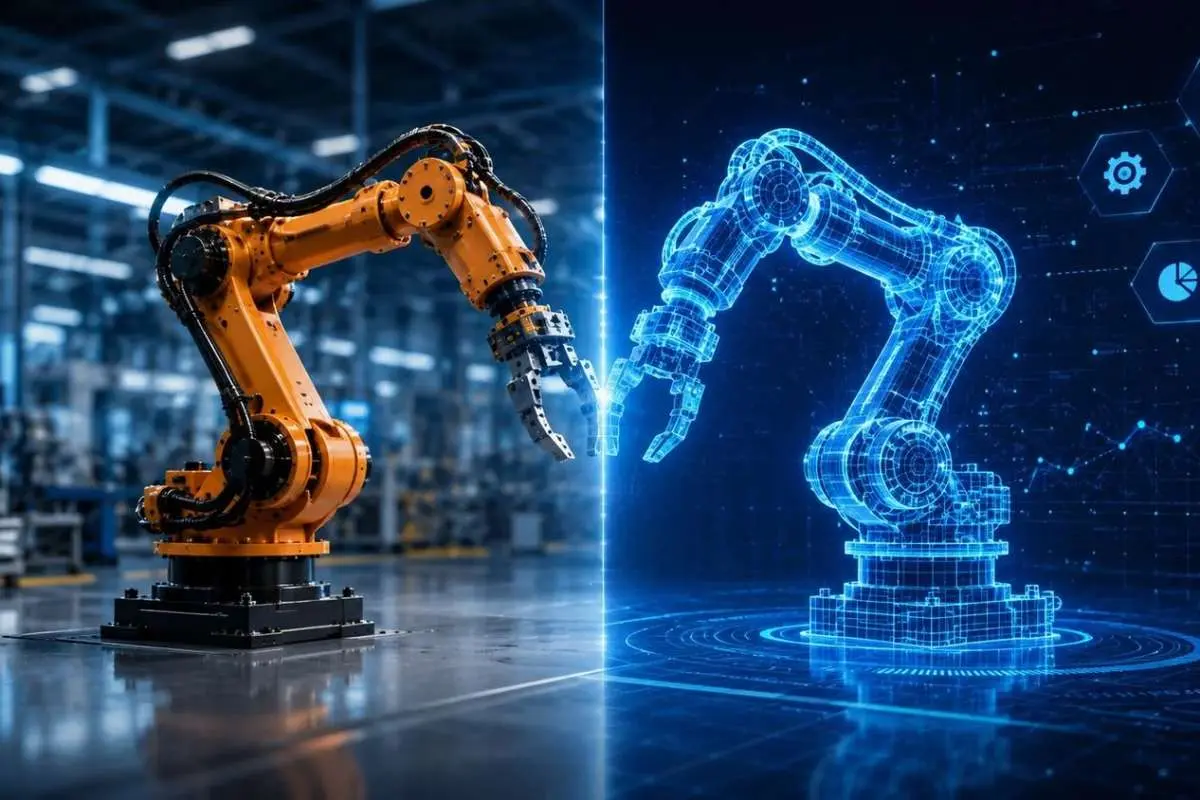
Imagine having a digital copy of a machine that can show you how it is performing, flag potential problems, and help you test changes before touching the real thing. That is the basic idea behind a digital twin. It is more than a 3D model because it stays connected to information from the physical system.
So, what is a digital twin really useful for? In a smart factory, it can help manufacturers understand what is happening, explore what might happen next, and make better decisions before taking action on the factory floor.
What Is a Digital Twin, and What Makes It Different From an Ordinary Digital Model?
A digital model shows what a machine or process looks like. A simulation tests how it might behave. A digital twin goes a step further by staying connected to the physical system through real-world data.
Think of the difference this way:
- Digital model: Shows the system.
- Simulation: Tests the system.
- Digital twin: Reflects the system as conditions change.
The simplest way to answer what is a digital twin, is to see it as a living digital representation of a physical system. Sensors, connected equipment, software, and smart manufacturing technologies keep it updated.
A twin can represent one machine, a production cell, or an entire production line. That connection makes it useful when factory conditions change.
How Does a Digital Twin Work Inside a Smart Factory?
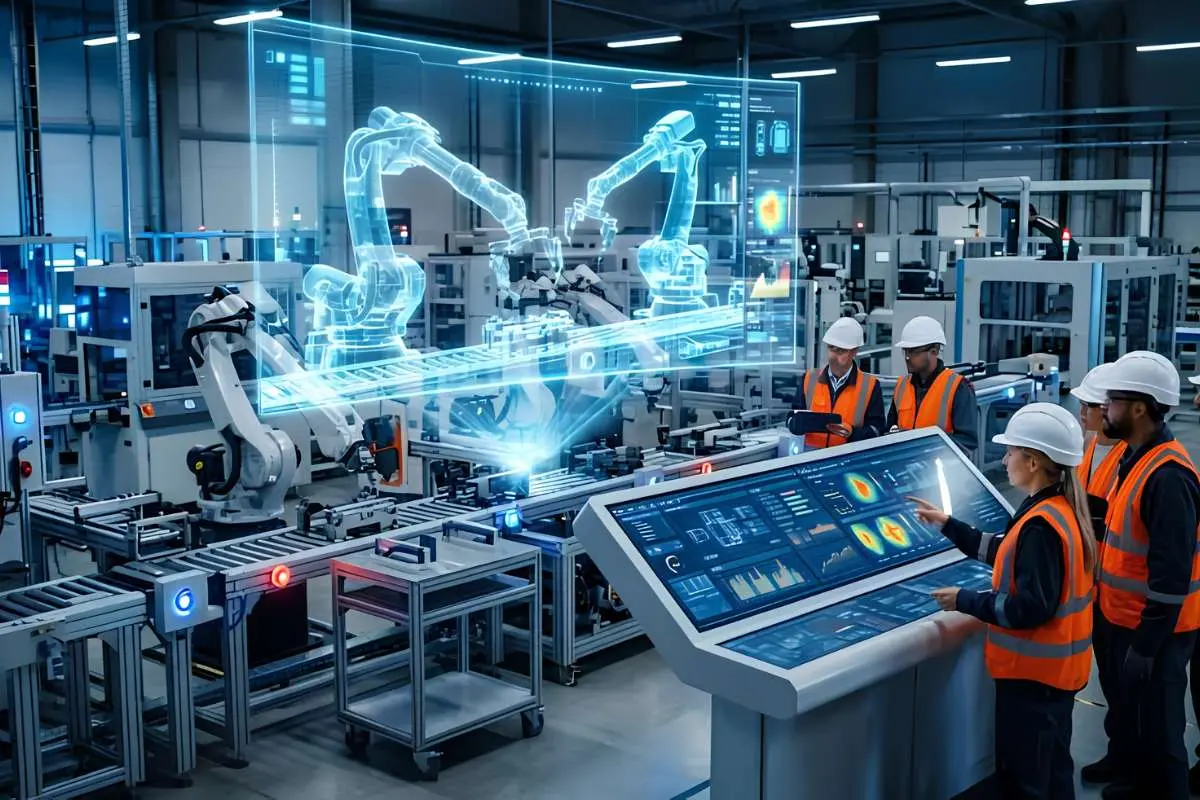
A digital twin works like a continuous feedback loop. Data from machines, sensors, IIoT systems, and production software keeps the digital representation aligned with what is happening on the factory floor.
Sense → Connect → Model → Analyze → Act
Sensors sense what is happening. Connected systems send that data to the twin, where it can model current conditions. Manufacturers can then analyze the information, spot patterns, and decide what action makes sense.
This can support a smart manufacturing process across a machine, production cell, or entire line. The right smart manufacturing tools help collect, visualize, and analyze the data.
Put simply, a digital twin keeps the physical factory and its digital counterpart in sync, giving manufacturers a clearer basis for better decisions.
Where Are Digital Twins Used in Manufacturing?
A digital twin becomes especially useful when manufacturers need to understand how a system behaves and what might improve it.
Here are four common uses:
- Predictive maintenance: Spot patterns that may signal equipment trouble before failure causes disruption.
- Production optimization: Test workflow or machine-setting changes before applying them to the real line.
- Quality improvement: See how process changes could affect output and consistency.
- What-if testing: Explore different scenarios without turning the factory floor into a science experiment.
For manufacturers looking to reduce downtime with smart manufacturing, the stakes are real. NIST estimates downtime can account for 8.3% to 13.3% of planned production time in U.S. discrete manufacturing, with related losses estimated at $245 billion.
Using smart manufacturing metrics such as throughput, cycle time, quality, and equipment performance helps turn the twin’s data into useful decisions.
What Value Can a Digital Twin Bring to a Smart Factory?
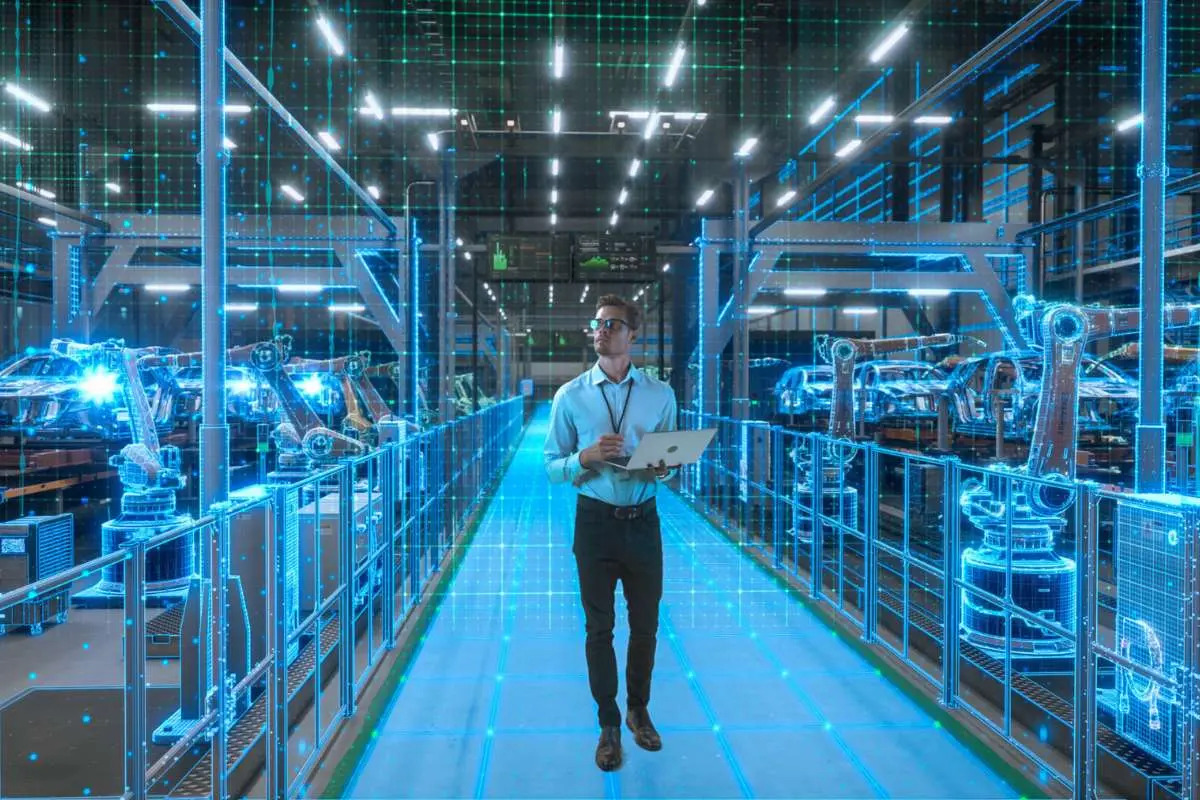
The real value of a digital twin is not having a shiny digital copy of your factory. It is using that digital view to make better decisions with less guesswork.
| What it helps with | Why it matters |
| Production visibility | See how equipment and processes are performing |
| Problem detection | Spot unusual patterns earlier |
| Process testing | Try changes without disrupting the real line |
| Maintenance planning | Act on equipment data before problems escalate |
| Decision-making | Compare options using real production information |
So, what is a digital twin worth to a manufacturer? That depends on the problem it solves. A strong smart manufacturing ROI case should connect the technology to a measurable improvement, not simply its novelty.
NIST estimates a potential $37.9 billion annual impact from widespread digital twin adoption in U.S. manufacturing, although the estimate includes assumptions and uncertainty. It is a useful benchmark, not a guaranteed return.
Can Smaller Manufacturers Use Digital Twins Too?
Digital twins are not only for factories with massive budgets and endless IT teams. A smaller manufacturer can start with one clear problem instead of trying to build a digital replica of the entire factory.
For example, a twin could focus on:
- One machine that causes frequent downtime
- One production cell that needs better visibility
- One process where testing changes is risky
This problem-first approach fits well with smart manufacturing for small businesses. NIST also highlights the need to make digital twins more accessible to smaller manufacturers through research, standards, and testbeds.
Start with one focused problem, prove the value, and expand from there. For an SME, that makes a digital twin a practical investment rather than an excuse to “digitize everything.”
Digital Twins Are Useful, But They Are Not Magic

A digital twin is only as useful as the foundation behind it. Before expecting it to improve a factory, manufacturers need:
- Reliable data feeding the twin
- An accurate model of the physical system
- Connected systems that can share information
- Good data quality as conditions change
- People with the skills to interpret and use the insights
This also helps clarify Industry 4.0 vs smart manufacturing. A digital twin is one capability within the wider transformation, not a replacement for it.
A digital twin is most useful when it helps manufacturers understand and improve a physical system. It is not a substitute for reliable data, strong processes, or clear goals.
Conclusion: So, What Should a Manufacturer Actually Do With a Digital Twin?
The best place to start is not with, “What cool thing can we build?” It is with, “What problem are we trying to understand or improve?”
If you’re still asking what a digital twin is, think of it as a practical digital view of a physical system that helps teams see, test, predict, and improve. Start with one useful problem, measure the result, and expand when the value is clear.
Technology matters. But the manufacturing decision helps you make matters more.
FAQ: What Is a Digital Twin?
1. What is the difference between a digital twin and simulation?
A digital twin connects to a physical system, while simulation tests scenarios using models and defined conditions.
2. What data does a digital twin need?
It can use sensor readings, machine data, production records, maintenance history, and other operational information.
3. Can digital twins predict equipment failures?
Yes. They can analyze equipment data and identify patterns that may indicate potential failures.
4. What Is a Digital Twin, and How Accurate Does It Need to Be?
Accuracy depends on its purpose, but reliable data and a suitable model are essential for useful results.
5. Are digital twins only useful for large manufacturers?
No. Smaller manufacturers can start with a single machine, process, or production cell.