What does a factory actually learn from manufacturers that have already made smart manufacturing work? Not that every production line needs more sensors, robots, or AI. The more useful lessons come from how leading manufacturers choose problems, connect technologies, involve people, and turn successful experiments into lasting improvements.
This article looks at those decisions through real examples from Siemens, Schneider Electric, GlobalFoundries, Haier, and others, focusing on the ideas worth borrowing rather than the technology worth buying.
Schneider Electric Shows What Problem-First Manufacturing Looks Like
Schneider Electric’s Lexington Smart Factory puts that thinking into practice. Instead of adding digital tools for the sake of it, the factory connected them to specific operational needs, particularly maintenance and process visibility. The result was a 20% reduction in mean time to repair for critical equipment where implemented, alongside a 90% reduction in paperwork.
The same principle appears on a much smaller scale at Stingray Spot Remover. As demand grew, the company improved production tanks, filling stations, packaging, staff training, and batch traceability rather than simply throwing automation at the problem. These are useful smart manufacturing lessons from top manufacturers: understand the bottleneck, choose the right intervention, and measure what changes.
That is where the process of reducing downtime with smart manufacturing reduce downtime with smart manufacturing should begin: with the problem, not the purchase order.
Smart Manufacturing Technologies Work Best When They Work Together
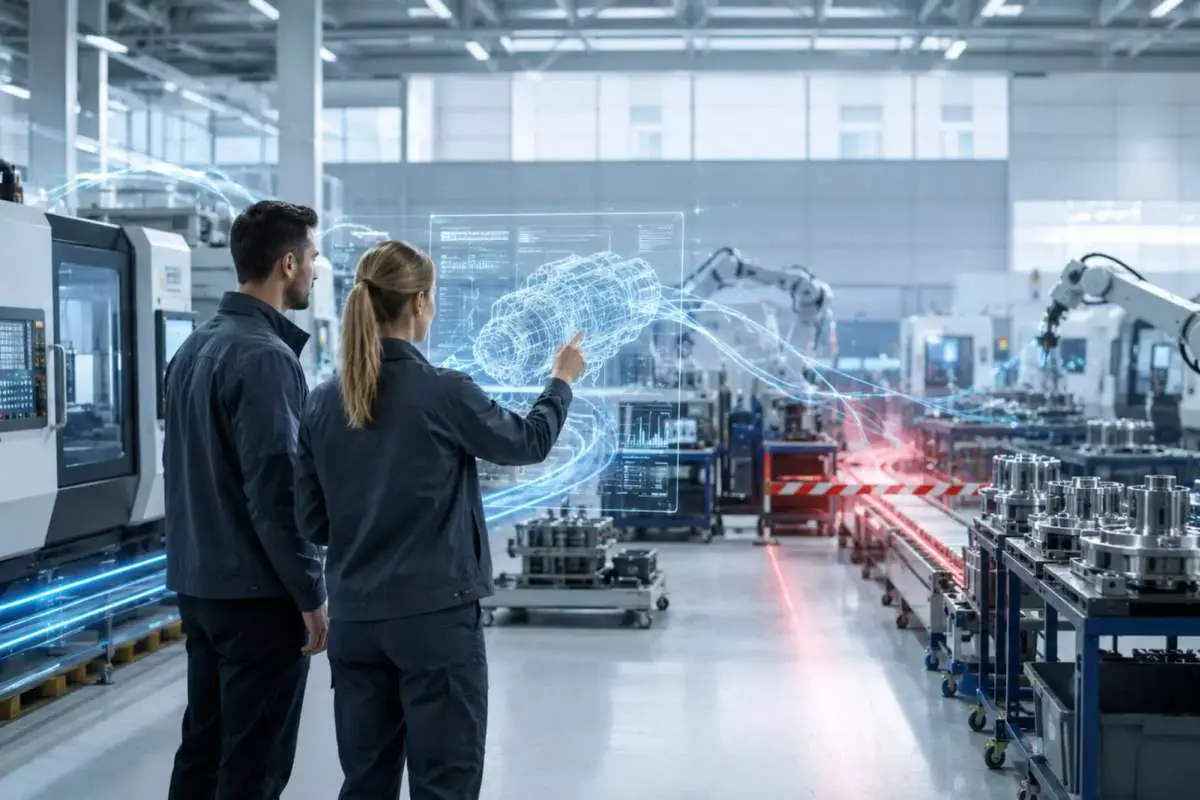
A factory gets more value when its systems can share what they know. At Siemens Electronics Works Amberg, production data, automation and analytics work together to give teams a clearer view of what is happening on the floor.
Test the change before changing the factory
Its digital twin capabilities let engineers test changes before touching the physical line. In one example, simulation helped Siemens identify a design issue and reach an eight-second cycle time before making the change for real.
Connect the tools, not just the machines
GlobalFoundries’ Singapore facility takes the same thinking further. Instead of betting on one tool, it combined predictive maintenance, machine learning, remote support, quality control and workflow digitization.
The result was a 40% improvement in labour productivity and a 30% improvement in new-product prototyping time, according to the World Economic Forum.
That is the real value of smart manufacturing technologies. When connected, they can turn separate pieces of information into a clearer picture of the whole process. This is also where understanding what is a digital twin becomes useful. It is not just a virtual model, but another way to test decisions before production pays the price.
That is one of the more useful smart manufacturing lessons from top manufacturers: the technology matters, but the connections between technologies often matter more.
What Leading Manufacturers Teach Us About Digital Transformation Is Less Glamorous Than You Think
The smart manufacturing lessons from top manufacturers are rarely about finding one magical technology. The harder, and more useful, lesson is learning how to scale improvements across the operation.
Technology: make better decisions before production pays the price
Siemens shows how data and simulation can help teams test changes before they reach the factory floor. Its approach turns production information into something engineers can act on, rather than another pile of numbers.
People: bring the workforce into the change
At Haier Chongqing, digital transformation also focused on employees. Its digital workforce tools and frontline improvement programs helped increase participation and reduce attrition, showing that better technology still needs people willing and able to use it.
Scale: make a good idea travel
Lenovo Monterrey shows what happens when digital improvements move beyond one production line. Its transformation reportedly achieved an 85% reduction in lead time, according to the World Economic Forum.
That is why the Siemens smart manufacturing strategy is worth studying: not because every factory needs to copy Siemens, but because companies doing smart manufacturing right know how to turn useful ideas into repeatable results.
The Process Still Matters After the Technology Arrives
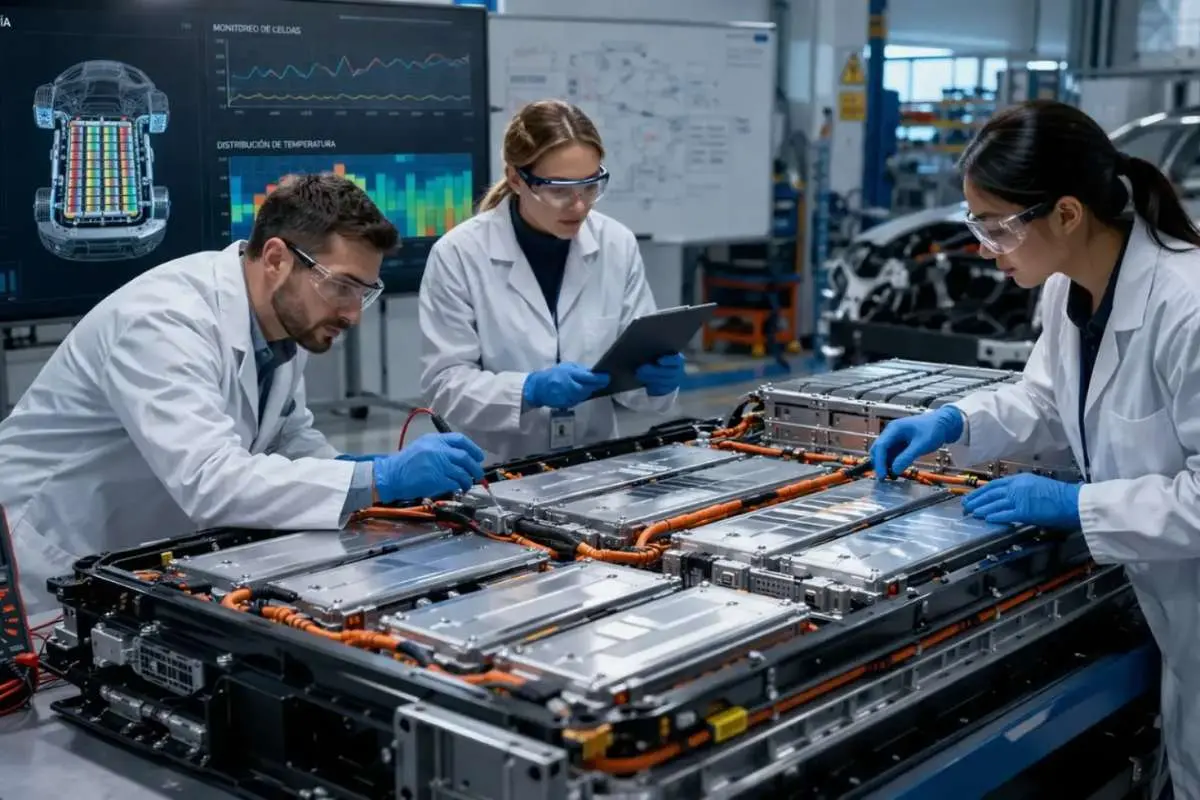
Buying technology is easy. Making it part of everyday production is where things get interesting. Stingray Spot Remover shows why. As the company grew, it invested in training, cross-training, production organization, batch records, and traceability alongside equipment and capacity improvements. Technology supported the process rather than becoming the process.
That is what a smart manufacturing process needs, and why smart manufacturing metrics matter. Without both, even the smart manufacturing lessons from top manufacturers can remain impressive ideas rather than repeatable improvements.
The Smartest Lesson Is Knowing What Not to Copy
The smart manufacturing lessons from top manufacturers are not about copying Siemens, Schneider Electric, or Lenovo line for line. They are about copying the thinking behind their results: find the problem, test the right solution, measure what changed, then scale what works.
That makes smart manufacturing for small businesses far more practical than it may sound. You do not need a replica of a billion-dollar factory. You need a clear problem, a sensible starting point, and enough discipline to avoid turning every new technology into another expensive experiment.
Conclusion: Take the lesson, not the shopping list
The leading manufacturers are not successful simply because they have more automation, sensors, or AI. They succeed because they know what problem they are solving, what result they want, and how to make the improvement stick.
That is the real takeaway from these smart manufacturing examples, and the right place to start exploring Smart Manufacturing as a complete approach.
Smart Manufacturing Lessons From Top Manufacturers: FAQs
1. What can manufacturers learn from leading smart factories?
They can learn to solve specific production problems, measure results, involve workers, and scale proven improvements.
2. How do manufacturers choose smart manufacturing technologies?
They identify operational gaps first, then select technologies that directly improve productivity, quality, visibility, or efficiency.
3. Why is digital transformation important in manufacturing?
It helps manufacturers improve decision-making, streamline processes, reduce waste, and respond faster to changing production demands.
4. Can small manufacturers adopt lessons from smart factories?
Yes. Small manufacturers can start with focused problems and scale affordable solutions as measurable benefits emerge.
5. What makes a smart manufacturing transformation successful?
Clear goals, connected systems, trained employees, measurable outcomes, and a process for scaling successful improvements make transformation sustainable.