Not every factory needs every tool
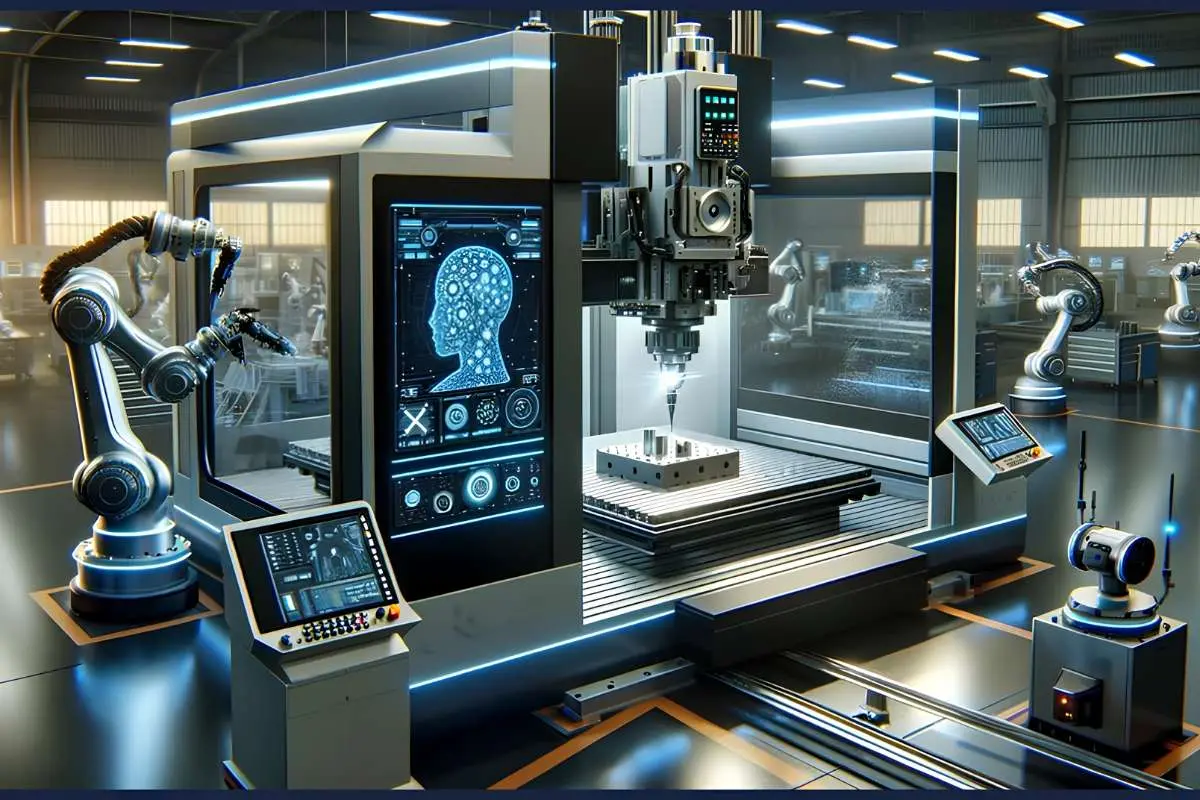
Modern factories have no shortage of technology. Sensors watch machines, analytics platforms crunch production data, automation systems handle repetitive work, and digital twins can model changes before they reach the line. The tricky part is knowing which tool actually solves the problem in front of you.
Technology is the capability; a tool is what your team uses to put that capability to work. The best smart manufacturing tools help a factory spot a problem, understand it, act on it, or prevent it before it becomes expensive.
What counts as a smart manufacturing tool?
A smart factory can use several types of tools, each with a different job:
- Data collection: Sensors and monitoring systems track machines and processes.
- Production software: Systems help plan and manage production.
- Analytics: Tools turn production data into trends, alerts, and insights.
- Automation: Control systems help machines perform tasks with less manual work.
- Simulation: Digital twins can test changes before they reach the production floor.
- Maintenance and quality: Tools help spot equipment issues and quality problems earlier.
The key is what happens after data is collected. Smart manufacturing tools are useful when they turn information into action. They build on smart manufacturing technologies such as sensors, IIoT, cloud computing, AI, and automation.
Smart manufacturing technologies are only useful when they solve a real production problem
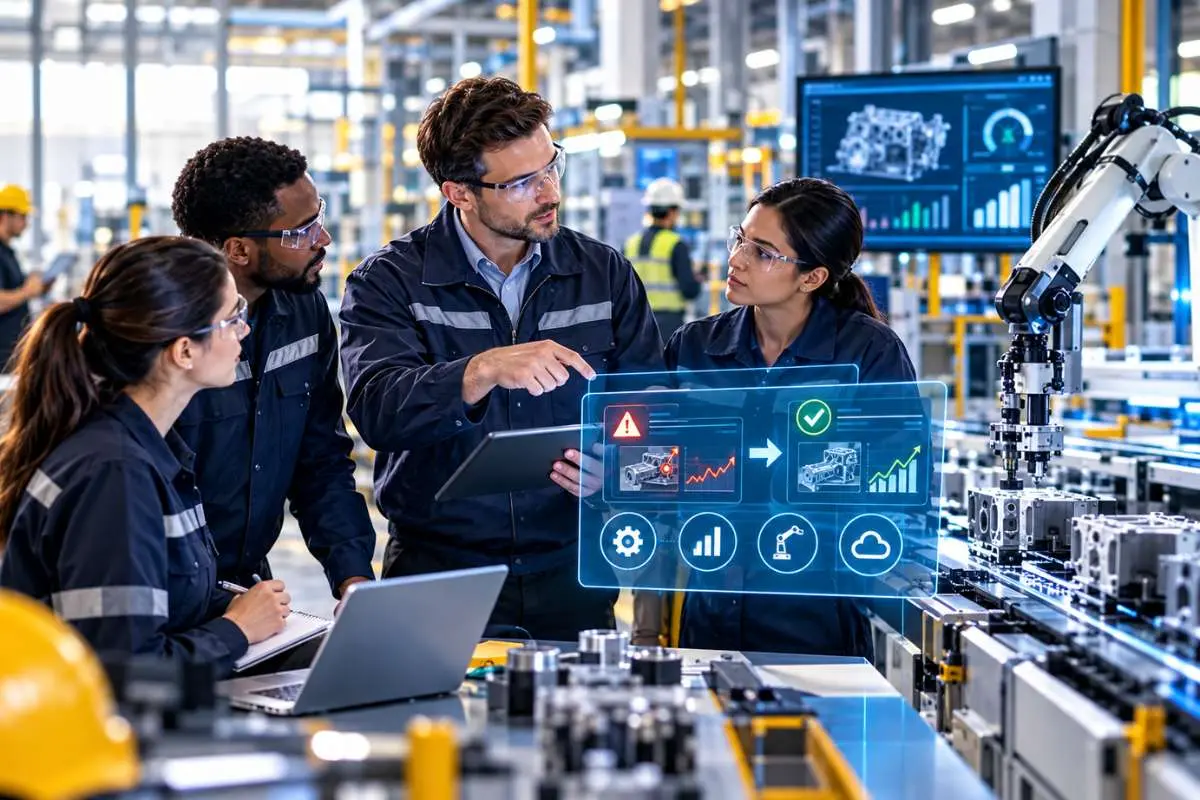
The technology itself is not the goal. The goal is fixing something that costs the factory time, money, or consistency.
Think of the progression as:
Visibility → Control → Optimization → Prediction
A monitoring system might flag unusual machine behavior. Analytics can reveal where production keeps losing time. Automation can take repetitive work off an operator’s plate, and a digital twin can help teams test a process change before touching the physical line.
That is where smart manufacturing tools earn their keep. Deloitte’s 2025 survey found that 41% of manufacturers ranked factory automation hardware and 34% ranked active sensors among their top two investment priorities for the next 24 months, showing how much attention is going toward the data and sensing foundation.
Build the smart manufacturing process before buying another tool
Buying a tool first and figuring out the problem later is an expensive way to learn. A better smart manufacturing process starts with the production issue, then works backward toward the technology.
A simple approach is:
- Identify the production problem.
- Find the data needed to understand it.
- Choose the smallest useful tool.
- Test it in one area.
- Measure the result.
- Scale only if the result holds up.
For example, if recurring machine stoppages are the problem, Reduce downtime with smart manufacturing rather than adding technology for its own sake. The same logic applies to other production goals. The best smart manufacturing tools fit the process, instead of forcing the process to fit the tool.
The right metrics tell you whether smart manufacturing tools are working
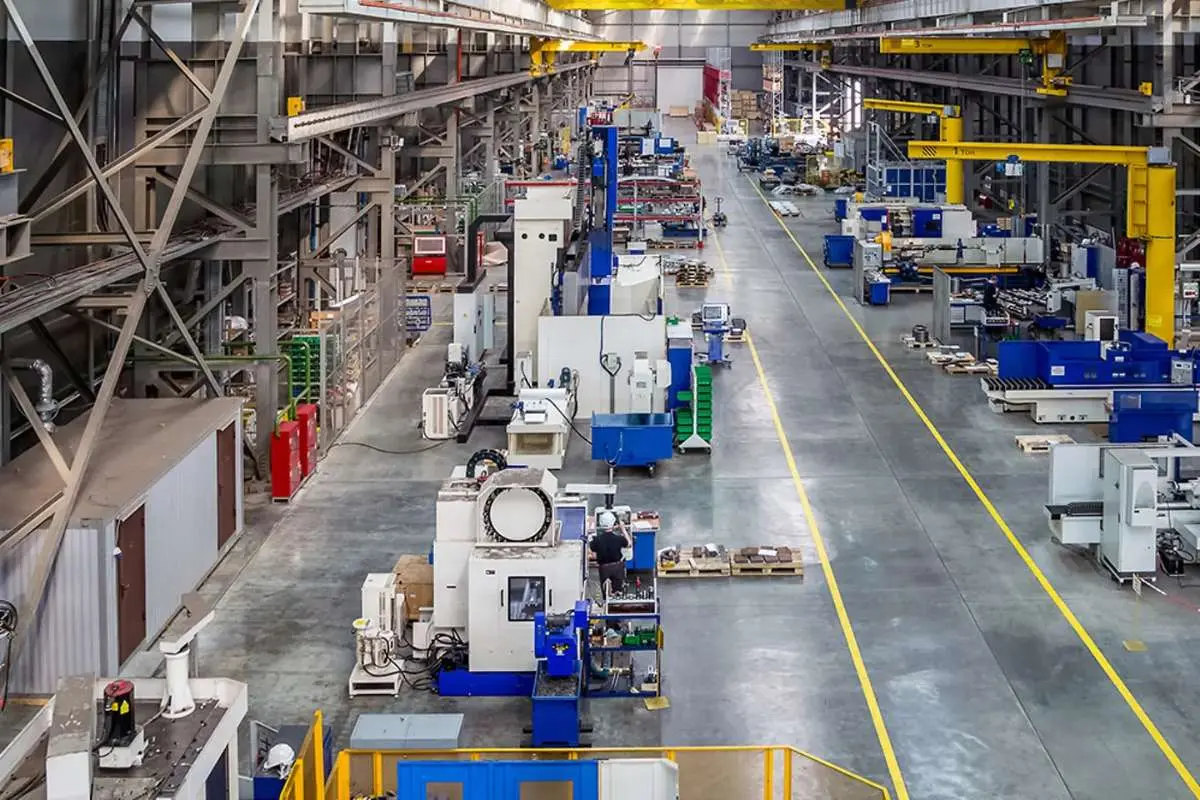
A new tool does not automatically mean a better process. If downtime was the problem, for example, you need to know how much downtime you had before the tool went in and whether that number actually changed afterward. The same applies to output, quality, cycle time, or capacity.
Useful measures can include:
- Downtime: How much production time is being lost?
- Throughput: How much is the line producing?
- First-pass yield: How often does production meet quality standards the first time?
- Cycle time: How long does each unit take?
- OEE: How effectively is equipment being used?
- Capacity utilization: How much available capacity is actually being used?
These are the kinds of measures covered by smart manufacturing metrics. Deloitte reports surveyed manufacturers saw 10% to 20% higher production output, 7% to 20% higher employee productivity, and 10% to 15% more unlocked capacity from smart manufacturing initiatives.
Those are survey-reported results, not guarantees. The point is that smart manufacturing tools need measurable outcomes to prove their value.
Smart manufacturing ROI starts with the problem, not the software
The price of a tool matters, but it is not the whole business case. Start with the problem it is meant to solve and what that problem is already costing you.
Think about it this way:
Tool cost → problem cost → measurable improvement → financial return
That is the basis of smart manufacturing ROI. A simple monitoring tool that reduces costly downtime can be a better investment than an expensive platform solving a small problem.
For small businesses adopting smart manufacturing, this matters even more, this matters even more. You do not need the biggest platform. You need smart manufacturing tools that solve a clear problem and justify their cost.
How do you choose smart manufacturing tools without overcomplicating the factory?
Before choosing a tool, look at the practical questions that matter on the factory floor:
| What to check | Why it matters |
| The problem | Does the tool solve a clearly defined production issue? |
| Integration | Can it work with your existing systems and equipment? |
| Data | Is the information it relies on accurate and reliable? |
| Usability | Can operators actually use it without unnecessary complexity? |
| Value | How quickly can you measure whether it is working? |
| Scalability | Can you expand it if the pilot delivers results? |
This can help avoid common smart manufacturing mistakes, such as buying technology because it looks impressive rather than because the factory needs it. The best smart manufacturing tools should make the operation easier to understand and improve, not simply add another dashboard to the wall.
Conclusion: Choose tools that make the factory easier to understand
The best smart manufacturing tools are not always the newest or most advanced. What matters is whether they help your team spot problems earlier, understand what is causing them, and make better decisions. A simple tool that solves a costly production issue can be far more useful than an expensive platform packed with features nobody needs.
The approach does not need to be complicated. Start with the problem. Choose the tool. Measure the result. Then scale. When each technology decision has a clear purpose, it becomes easier to build a practical smart manufacturing system that delivers real value.
FAQs About Smart Manufacturing Tools
1. What are smart manufacturing tools used for?
They collect data, monitor operations, automate tasks, improve decisions, and help manufacturers reduce waste, downtime, and production errors.
2. How do manufacturers choose the right manufacturing tools?
Start with a specific production problem, then assess integration, usability, data quality, scalability, and expected value.
3. What are the most common smart manufacturing tools?
Common examples include sensors, MES platforms, industrial analytics, automation systems, digital twins, and predictive maintenance software.
4. Can small manufacturers use smart manufacturing tools?
Yes. Smaller manufacturers can start with affordable tools targeting one measurable problem before expanding across operations.
5. How do you measure whether a manufacturing tool works?
Compare performance before and after implementation using metrics such as downtime, throughput, quality, cycle time, or OEE.